
Adrenergic System
Transmission
3 catecholamines: NA (most postgang. sympathetic, except sweat glands/some vasodilators) · Adr (adrenal medulla hormone, NOT peripheral transmitter) · DA (central — basal ganglia/limbic/CTZ; minor peripheral — renal/mesenteric vessels).
Synthesis: Tyrosine →(tyrosine hydroxylase, RATE-LIMITING, blocked by α-methyl-p-tyrosine)→ DOPA → Dopamine →(VMAT-2, blocked by reserpine)→ stored NA+ATP in vesicle.
Release: Ca²⁺-dependent exocytosis (nerve impulse) — modulated by presynaptic α2 autoreceptor (inhibitory feedback).
Termination = REUPTAKE (75-90%), NOT metabolism — NET/“uptake-1” blocked by cocaine, desipramine, guanethidine → potentiates NA. Indirect agonists (tyramine, amphetamine) hijack NET to enter neurone, displace stored NA → released by exchange diffusion (NOT exocytotic, NOT Ca²⁺-dependent).
Metabolism (minor role in terminating action): MAO(intraneuronal) + COMT(extraneuronal) → common endpoint VMA.
| Step | Drug | Effect |
|---|---|---|
| Synthesis (TH) | α-methyl-p-tyrosine | ↓NA (used pre-op in phaeochromocytoma) |
| Synthesis (false transmitter) | α-methyldopa | Replaces NA with weak false transmitter |
| Reuptake (NET) | Cocaine, desipramine, guanethidine | ↑NA effect; blocks indirect agonists |
| Vesicular storage (VMAT-2) | Reserpine | ↓NA (degraded by MAO instead) |
| Release | Guanethidine, bretylium | Abolishes transmission |
| Metabolism | MAO-I / COMT-I | ↑NA, DA |
Receptors
Ahlquist (1948): potency order Adr>NA>Iso = α; Iso>Adr>NA = β.
| α | β | |
|---|---|---|
| Antagonist | Phentolamine | Propranolol |
| Coupling | Gq(α1)/Gi(α2) | Gs |
| Effector | ↑IP3/DAG (α1); ↓cAMP,↑K+ (α2) | ↑cAMP, ↑Ca²⁺ channel |
α1 = postjunctional, effector organs (vasoconstriction, GU contraction, glands). α2 = mainly PREjunctional autoreceptor (↓NA release feedback); also postjunctional in brain/pancreatic β-cell(↓insulin)/platelets(aggregation). β1 = heart, JG cells(renin). β2 = bronchi/vessels/uterus/liver/GI/urinary tract. β3 = adipocytes(lipolysis), detrusor(relaxation — target of mirabegron for overactive bladder).
Actions by receptor
| α | β | |
|---|---|---|
| Vessels | Constrict→↑BP | Dilate(β2)→↓BP |
| Heart | ~none | Stimulate(β1): ↑rate/force/conduction |
| Bronchi | — | Dilate(β2) |
| Eye | Mydriasis(α1) | ↑aqueous secretion |
| Bladder | Trigone/prostate contract(α1) | Detrusor relax(β2,β3) |
| Uterus | Contract(α1) | Relax(β2) |
| Metabolic | ↓Insulin(α2, dominant) | Glycogenolysis/lipolysis/calorigenesis(β2/β3) |
3 catecholamine BP profiles: Adr = ↑systolic, diastolic ~unchanged/↓ (β2 offsets α), ↑CO. NA = ↑systolic+diastolic+mean (no β2 to offset α), REFLEX BRADYCARDIA (baroreceptor). Iso = ↑systolic, ↓diastolic (pure β1+β2, no α) → mean BP FALLS.
Vasomotor reversal of Dale: after α-blocker, Adr’s pressor effect → PURE depressor (unmasked β2 vasodilation). Explains: Adr dangerous with non-selective β-blocker on board (unopposed α→crisis); why α-block must precede β-block in phaeochromocytoma.
Adrenergic agonists
Direct (Adr, NA, Iso, phenylephrine, salbutamol) vs Indirect (tyramine, amphetamine — release stored NA) vs Mixed (ephedrine, mephentermine — both).
| Drug | Receptors | Key use |
|---|---|---|
| Adrenaline | α1,α2,β1,β2 (non-selective) | Anaphylaxis DOC, cardiac arrest, + LA (prolongs action, ↓toxicity/bleeding). CI: HTN, hyperthyroid, angina, halothane anaesthesia, patients on non-selective β-blockers |
| Noradrenaline | α1,α2,β1 (~no β2) | Septic shock pressor (+ fluids). Slow IV only — extravasation→necrosis. NEVER mix with NaHCO3 |
| Isoprenaline | β1+β2 pure, NO α | Bridge to pacing (idioventricular rate); superseded in asthma |
| Dopamine | Dose-dependent: low=D1(renal vasodilation+natriuresis+↑GFR); mod=β1/D1(inotropy); high=α1(vasoconstriction) | Cardiogenic/septic shock — ONLY pressor that ↑BP AND ↑urine output together |
| Dobutamine | β1-selective (weak α) | Inotrope in pump failure post-MI; less arrhythmogenic than Iso/DA |
| Ephedrine | Mixed, indirect-predominant | Longer oral duration (resists MAO/COMT); central effects too |
| Salbutamol etc | β2-selective | Asthma/COPD — minimizes cardiac stim vs non-selective agonists |
α-blockers
Competitive, receptor-level (vs adrenergic NEURONE blockers = act on storage/release machinery, e.g. reserpine/guanethidine — key distinguishing point: neurone blockers do NOT block injected Adr’s action, receptor blockers DO).
General effects: ↓PVR→↓BP+postural hypotension(worse with hypovolemia) · reflex tachycardia(±more if α2 also blocked) · nasal stuffiness+miosis · ↑BHP urine flow(α1A) · inhibited ejaculation.
| Drug | Type | Key point |
|---|---|---|
| Phenoxybenzamine | Non-selective, IRREVERSIBLE (covalent) | Lasts 3-4 days; phaeochromocytoma pre-op (1-2wk oral + IV intraop) — allows contracted blood volume to re-expand before surgery |
| Phentolamine | Non-selective, reversible, rapid/short | Blocks α2 too→more tachycardia. Dx/intraop phaeochromocytoma, clonidine-withdrawal/cheese-reaction HTN, extravasated NA/DA infiltration antidote |
| Prazosin | α1-selective (1000:1) | Less reflex tachycardia (α2 intact). First-dose effect (postural hypotension/syncope) → start low, bedtime; tolerance develops. Antihypertensive + BHP |
| Terazosin/Doxazosin | α1-selective, longer-acting | Once-daily; prostate-apoptosis effect (α1-independent) |
| Tamsulosin/Silodosin | α1A-selective (uroselective) | Little BP effect — BHP-specific; retrograde ejaculation, floppy iris syndrome (cataract surgery) |
Uses: Phaeochromocytoma (see below) · Raynaud’s · BHP.
β-blockers
Classification: 1st gen non-selective(propranolol, timolol, nadolol, pindolol, sotalol) · 2nd gen β1-selective/cardioselective(atenolol, metoprolol, bisoprolol, esmolol, acebutolol) · 3rd gen +vasodilatory(labetalol/carvedilol=non-selective+α1 block; nebivolol/betaxolol/celiprolol=β1-selective+vasodilatory).
ISA(pindolol, acebutolol, labetalol) = partial agonist activity → less bradycardia/withdrawal/lipid change. MSA(propranolol, pindolol, acebutolol, metoprolol, labetalol) = local anaesthetic-like, high-dose only.
Effects: ↓HR/contractility/conduction, ↑AV refractory period · initial ↑PVR(unopposed α1) then ↓ overall(chronic, via ↓CO) · ↓renin(β1) · bronchoconstriction(β2 — hazard in asthma/COPD) · ↓glycogenolysis+masks/delays hypoglycemia recovery · chronic non-selective use: ↓HDL:LDL.
ADRs: bradycardia/heart block/CHF precipitation · worsens PVD(unopposed α) · CONTRAINDICATED Prinzmetal angina(unopposed α coronary spasm) · bronchospasm · CNS(sleep/depression, more with lipid-soluble) · masks hypoglycemia · withdrawal syndrome = angina/MI/death (β-receptor upregulation) → ALWAYS taper.
Uses: HTN · angina/post-MI(↓O2 demand, ↓reinfarction/mortality) · atrial arrhythmias · CHF — carvedilol/metoprolol/bisoprolol reduce mortality (counterintuitive: negative inotrope helping HF) · glaucoma(timolol topical, ↓aqueous production; betaxolol=β1-selective=fewer systemic effects) · migraine prophylaxis · hyperthyroidism(+propranolol inhibits T4→T3, useful in thyroid storm) · essential tremor · acute anxiety · HOCM · dissecting aortic aneurysm.
Propranolol vs Atenolol:
| Propranolol | Atenolol | |
|---|---|---|
| Selectivity | Non-selective | β1-selective |
| Lipid solubility | High → crosses BBB → CNS effects | Low → few CNS effects |
| MSA | Yes (high dose) | No |
| Potency | Less | More |
| Duration | Shorter | Longer (OD) |
| Essential tremor | Effective | Ineffective |
Phaeochromocytoma — worked example
Dx: ↑urinary VMA/normetanephrine (standard) · phentolamine test (>35 systolic/>25 diastolic BP fall — real false+/false- rates).
Rx: Surgery definitive. α-block ALWAYS before β-block — giving β first removes β2 vasodilation offsetting tumour’s α constriction → unopposed-α hypertensive crisis (reverse vasomotor-reversal-of-Dale logic). Phenoxybenzamine pre-op(1-2wk oral)+intraop(IV) — allows contracted blood volume to re-expand. Prazosin = alternative. β-blocker added ONLY after adequate α-block, if tachycardia/arrhythmia persists.
Clinical relevance
One fact explains nearly everything dangerous in this topic: Adr/NA act on BOTH α and β; blocking one unmasks the other. → Adr + non-selective β-blocker = unopposed α crisis. → β-block before α-block in phaeochromocytoma = same crisis. → Vasomotor reversal of Dale is the lab demonstration of exactly this principle.
Adrenergic Transmission
Three closely related catecholamines act as signal molecules in this system: noradrenaline (the transmitter at nearly all postganglionic sympathetic endings, with the notable exceptions of sweat glands and some vasodilator fibres), adrenaline (the major hormone of the adrenal medulla, not a peripheral neurotransmitter), and dopamine (a major central transmitter — basal ganglia, limbic system, chemoreceptor trigger zone — with a limited peripheral role, chiefly renal and mesenteric blood vessels).
Synthesis proceeds from the amino acid phenylalanine through tyrosine → DOPA → dopamine → noradrenaline (→ adrenaline only in adrenal medullary cells, which alone possess the final methylating enzyme). Tyrosine hydroxylase is the specific, rate-limiting step; its inhibitor, metyrosine, is used clinically to reduce catecholamine synthesis before and during surgery for phaeochromocytoma.
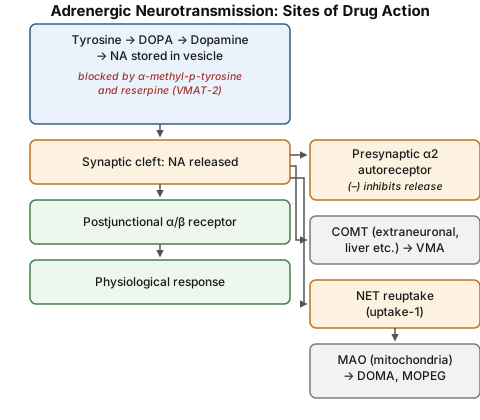
Storage, release, and reuptake. Noradrenaline is packaged into vesicles by the vesicular monoamine transporter (VMAT-2, blocked by reserpine — causing catecholamine depletion) and stored complexed with ATP. Release is calcium-dependent exocytosis, triggered by the nerve impulse, and is itself modulated by presynaptic α2 autoreceptors (inhibitory — activation reduces further release). Termination of noradrenaline’s action depends overwhelmingly on reuptake, not metabolism: an efficient neuronal amine pump (norepinephrine transporter, NET — “uptake-1”) recaptures 75–90% of released noradrenaline, and this reuptake step, not enzymatic breakdown, is what actually ends its postjunctional action. Cocaine and desipramine block this pump, potentiating noradrenaline’s effect. A separate, quantitatively minor extraneuronal uptake (uptake-2, via OCT transporters) exists in other tissues.
Indirect-acting sympathomimetics (tyramine, amphetamine) exploit this same NET transporter to enter the neurone, then displace stored noradrenaline into the cytoplasm, from where it is released by exchange diffusion rather than calcium-dependent exocytosis — a mechanistically distinct release pathway from the physiological one.
Metabolism (MAO intraneuronally, COMT extraneuronally, converging on the common end-metabolite VMA) plays only a minor role in terminating neuronally released catecholamine action — reuptake does most of that work — but MAO inhibitors (used in depression) and COMT inhibitors both potentiate catecholamine action by slowing this secondary clearance route.
This single schematic is worth returning to for any question on how a specific drug affects sympathetic transmission — every major antihypertensive/antiadrenergic drug class (reserpine, guanethidine, cocaine, MAO inhibitors, α-methyl-p-tyrosine, α-methyldopa) acts at one clearly identifiable step in this sequence, summarized in the table below.
| Step | Action | Drug | Effect |
|---|---|---|---|
| Synthesis | Inhibits tyrosine hydroxylase | α-methyl-p-tyrosine (metyrosine) | Depletes noradrenaline |
| Synthesis | False transmitter pathway | α-methyldopa | Replaces noradrenaline with a weaker false transmitter |
| Axonal reuptake (NET) | Blocks | Cocaine, desipramine, guanethidine | Potentiates noradrenaline; blocks indirect agonists (tyramine) |
| Vesicular uptake (VMAT-2) | Blocks | Reserpine | Depletes noradrenaline (degraded by MAO instead of stored) |
| Impulse-coupled release | Inhibits | Guanethidine, bretylium | Abolishes adrenergic transmission |
| Neuronal store | Exchange diffusion | Tyramine, amphetamine | Indirect sympathomimetic action |
| Metabolism | MAO/COMT inhibition | MAO inhibitors, COMT inhibitors | Potentiates noradrenaline/dopamine |
Adrenergic Receptors
Ahlquist’s 1948 classification into α and β receptors — based on two distinct rank orders of agonist potency (Adr > NA > Isoprenaline for α; Isoprenaline > Adr > NA for β) — remains the foundation, later confirmed by the discovery of selective antagonists for each.
| α | β | |
|---|---|---|
| Agonist potency order | Adr > NA > Isoprenaline | Isoprenaline > Adr > NA |
| Selective antagonist | Phentolamine | Propranolol |
| Coupling | Gq (α1) / Gi (α2) | Gs |
| Effector | ↑IP3/DAG, ↓cAMP (α2), ↑K+ channel (α2) | ↑cAMP, ↑Ca2+ channel |
α subtypes: α1 is post-junctional on effector organs — vascular/genitourinary smooth muscle contraction, glandular secretion — coupled through Gq to raise IP3/DAG. α2 is chiefly pre-junctional on the nerve terminal itself, where its activation inhibits further noradrenaline release (a negative-feedback autoreceptor), though it also has post-junctional roles in the brain, pancreatic β cells (where it reduces insulin release), and platelets (aggregation) — coupled through Gi to lower cAMP.
β subtypes: β1 predominates in the heart and renal juxtaglomerular cells (renin release); β2 predominates in bronchi, blood vessels, uterus, liver, and GI/urinary tract smooth muscle; β3 is found on adipocytes (lipolysis, thermogenesis) and detrusor muscle (relaxation — the rationale for the β3-selective agonist mirabegron in overactive bladder).
Actions of Catecholamines, by Receptor
| System | α actions | β actions |
|---|---|---|
| Blood vessels | Constriction (α1, α2) → ↑BP | Dilatation (β2) → ↓BP |
| Heart | Little direct action | Stimulation (β1): ↑rate, force, conduction velocity |
| Bronchi | — | Dilatation (β2) |
| Eye | Mydriasis (α1, radial muscle contraction) | Slight ciliary relaxation, ↑aqueous secretion |
| Intestine | Sphincter contraction | Relaxation (β2) |
| Bladder | Trigone/prostate contraction (α1) | Detrusor relaxation (β2, β3) |
| Uterus | Contraction (α1) | Relaxation (β2) |
| Metabolic | Insulin secretion inhibited (α2, dominant) | Glycogenolysis, lipolysis, calorigenesis (β2/β3); mild insulin/glucagon augmentation (β2) |
Because adrenaline acts on both α and β receptors while noradrenaline acts mainly on α (with only β1, essentially no β2) and isoprenaline is a pure β agonist, the three catecholamines produce characteristically different haemodynamic profiles when infused: adrenaline raises systolic BP but can lower or leave diastolic BP largely unchanged at lower doses (β2 vasodilatation partly offsetting α constriction) with an overall rise in cardiac output; noradrenaline raises systolic, diastolic, and mean BP consistently (no β2 to oppose the α constriction), and reflexively slows the heart via the baroreceptor reflex despite its direct β1 stimulant action; isoprenaline raises systolic but drops diastolic BP (pure β1 cardiac stimulation plus β2 vasodilatation), so mean BP generally falls.
Vasomotor reversal of Dale: after an α-blocker has been given, injected adrenaline’s effect converts from a pressor (BP rise) to a pure depressor (BP fall) response — because the α-mediated vasoconstriction is now blocked, unmasking adrenaline’s underlying β2-mediated vasodilatation. This is the classic pharmacological demonstration that adrenaline acts on both receptor types simultaneously, and it is precisely this same imbalance that makes giving adrenaline dangerous in a patient already on a non-selective β-blocker (see below).
Adrenergic Agonists (Sympathomimetics)
Classified by mechanism: direct (act as agonists on the receptor itself — adrenaline, noradrenaline, isoprenaline, phenylephrine, salbutamol), indirect (release stored noradrenaline via the neuronal transporter — tyramine, amphetamine), and mixed (both direct receptor action and indirect release — ephedrine, mephentermine).
Adrenaline — non-selective (α1, α2, β1, β2). Given SC/IM for systemic effect (onset within minutes, lasting up to 2 hours); orally inactive (destroyed by intestinal/hepatic MAO and COMT). Clinical uses centre on its combination of cardiac stimulation, bronchodilation, and vasoconstriction: anaphylactic shock (drug of choice), cardiac arrest, and as a local vasoconstrictor added to local anaesthetics (prolongs action, reduces systemic absorption/toxicity, reduces surgical field bleeding). Adverse effects at higher/inadvertent IV doses include marked BP rise risking cerebral haemorrhage, ventricular arrhythmias, angina, and MI — contraindicated in hypertension, hyperthyroidism, and angina, and specifically dangerous during halothane anaesthesia (arrhythmia risk) or in patients on non-selective β-blockers (unopposed α action can cause a severe hypertensive response).
Noradrenaline — α1, α2, and β1 (essentially no β2). Given only by slow IV infusion (extravasation causes local tissue necrosis — never mix with sodium bicarbonate, which causes rapid oxidation at alkaline pH). Used as a pressor agent, alongside volume replacement, only when strong vasoconstriction is genuinely needed (e.g. septic shock with persistent hypotension despite fluids).
Isoprenaline — pure, non-selective β agonist (β1 + β2, no α action at all). Occasionally used to maintain idioventricular rate before pacemaker implantation; superseded by selective β2 agonists for asthma.
Dopamine — dose-dependent, genuinely distinct actions at three ranges: low-dose infusion acts on D1 receptors in renal/mesenteric vessels, causing vasodilatation and a natriuretic effect that raises GFR; moderate doses add β1/D1-mediated positive inotropy with relatively little chronotropic effect; only high doses recruit α1-mediated vasoconstriction. Used in cardiogenic and septic shock and acute heart failure specifically because it can raise both blood pressure and urine output simultaneously — a combination most other pressors cannot offer — titrated by monitoring BP and urine flow.
Dobutamine — a dopamine derivative, but not a dopamine-receptor agonist at all; acts mainly on β1 (relatively selective), with weak α activity. Increases cardiac contractile force and output with comparatively little effect on peripheral resistance, BP, or heart rate (less arrhythmogenic and less chronotropic than isoprenaline or dopamine) — the standard inotropic choice in pump failure after MI, cardiac surgery, and short-term severe CHF management.
Ephedrine — an indirectly-predominant, mixed-action sympathomimetic alkaloid; central effects (alertness, delayed sleep) alongside peripheral α/β action; longer oral duration than the catecholamines since it resists MAO/COMT breakdown.
Salbutamol and other β2-selective agonists (terbutaline, salmeterol, formoterol) — bronchodilators; their selectivity for β2 over β1 minimizes cardiac stimulation compared to non-selective β agonists, the pharmacological reason they, not isoprenaline, are now first-line for asthma/COPD symptom relief.
α-Adrenergic Blocking Drugs
Competitive (equilibrium-type) antagonists at α receptors, distinct in mechanism from adrenergic neurone blockers (which act on the nerve terminal’s storage/release machinery rather than the receptor) — the two categories differ in whether injected adrenaline’s action is blocked (true for receptor antagonists, not for neurone blockers) and whether a single drug blocks α or β selectively versus indiscriminately reducing all sympathetic function.
General effects of α blockade: reduced peripheral resistance and venous return → fall in BP, with marked postural hypotension (impaired venous return on standing) worsened by hypovolaemia; reflex tachycardia (baroreceptor-mediated, amplified by loss of the α2 autoreceptor brake on noradrenaline release); nasal stuffiness and miosis (α blockade in nasal vessels and iris radial muscle); improved urine flow in benign prostatic hypertrophy (α1A blockade relaxing bladder neck/prostatic smooth muscle); inhibited ejaculation (can present as a form of impotence).
Phenoxybenzamine — a haloalkylamine forming irreversible covalent bonds with the receptor; non-equilibrium, non-competitive-in-effect blockade lasting 3–4 days until fresh receptors are synthesized. Used primarily in phaeochromocytoma — both as definitive medical therapy in inoperable/malignant disease and, more commonly, as 1–2 weeks of preoperative preparation before tumour resection, because chronic catecholamine excess has actually contracted the patient’s blood volume (fluid shifted extravascularly), and α-blockade before surgery prevents a hypertensive crisis during tumour handling while volume is being restored.
Prazosin (and congeners terazosin, doxazosin, alfuzosin, tamsulosin, silodosin) — highly selective α1 blockers (prazosin: roughly 1000:1 α1:α2 selectivity), which is exactly why they cause comparatively little reflex tachycardia (α2 autoreceptor feedback on noradrenaline release stays intact, unlike phenoxybenzamine/phentolamine). Prazosin’s characteristic “first-dose effect” — marked postural hypotension and syncope with the very first dose — is managed by starting with a low bedtime dose; tolerance to this specific effect develops with continued use. Used primarily as an antihypertensive and in BHP (relieving bladder outlet obstruction by relaxing trigone/prostatic smooth muscle). The newer congeners differ mainly in half-life and receptor-subtype selectivity: terazosin and doxazosin are longer-acting (once-daily) and share a prostate-apoptosis-promoting effect independent of α1 blockade; tamsulosin and silodosin are relatively uroselective (preferential α1A affinity, the subtype dominant in bladder base/prostate) and cause little change in BP, making them useful specifically for BHP symptom relief without antihypertensive effect — though this uroselectivity brings its own distinct side effect, retrograde ejaculation, and the intraoperative floppy iris syndrome during cataract surgery.
Phentolamine — rapid-onset, short-duration, non-selective (α1 + α2) blocker; because it also blocks the α2 autoreceptor brake, noradrenaline release increases and tachycardia is prominent. Used diagnostically and intraoperatively in phaeochromocytoma, for hypertension from clonidine withdrawal or tyramine/MAO-inhibitor (“cheese”) reactions, and — its most distinctive niche — local infiltration to counteract tissue vasoconstriction from extravasated noradrenaline/dopamine infusions.
β-Adrenergic Blocking Drugs
Competitive antagonists at β receptors; propranolol is the prototype.
Classification by receptor selectivity and additional properties:
- First-generation (non-selective β1+β2): propranolol, timolol, nadolol, pindolol, sotalol.
- Second-generation (β1-selective/“cardioselective”): atenolol, metoprolol, bisoprolol, esmolol, acebutolol.
- Third-generation (with additional vasodilatory action): labetalol and carvedilol (non-selective β + α1 blockade), nebivolol, betaxolol, celiprolol (β1-selective + vasodilatory).
Some (pindolol, acebutolol, labetalol) have intrinsic sympathomimetic activity (ISA) — partial β-agonist activity in the absence of catecholamines — which makes them less likely to cause bradycardia, withdrawal symptoms, and adverse lipid changes. Several (propranolol, pindolol, acebutolol, metoprolol, labetalol) also have membrane-stabilizing activity (local-anaesthetic-like), relevant mainly at high doses.
Pharmacological effects, all essentially extensions of removing sympathetic β drive: cardiac — ↓rate, ↓contractility, ↓conduction velocity, ↑AV nodal refractory period, ↓automaticity of ectopic foci, ↓myocardial O2 demand; vascular — initial unopposed α1-mediated rise in peripheral resistance, offset over chronic use by the fall in cardiac output, so BP falls overall with continued therapy; renin release reduced (β1 in the juxtaglomerular apparatus); bronchial smooth muscle constricted (β2 blockade — hazardous in asthma/COPD, minimized but not eliminated by cardioselective agents); metabolic — inhibited glycogenolysis, delayed recovery from and masked warning signs of hypoglycaemia (caution in diabetics on insulin/sulfonylureas), unfavourable HDL:LDL shift with chronic non-selective use.
Adverse effects: bradycardia/heart block/precipitated CHF in low-reserve hearts; worsened peripheral vascular disease (unopposed α); contraindicated in Prinzmetal (variant) angina (unopposed α-mediated coronary vasospasm); bronchospasm in asthma/COPD; CNS effects (sleep disturbance, depression — more with lipid-soluble agents like propranolol); masked/delayed hypoglycaemia recovery; muscle fatigue; and — critically — withdrawal syndrome: abrupt cessation after chronic use can precipitate angina, MI, or sudden death, due to upregulation (supersensitivity) of β receptors during the period of blockade, which is why β-blockers must always be tapered rather than stopped abruptly.
Therapeutic uses: hypertension (all grades, especially with coexisting angina, MI, or arrhythmia); angina prophylaxis and post-MI (reduced myocardial O2 demand, improved exercise tolerance, reduced reinfarction/mortality with long-term use); atrial arrhythmias (atrial fibrillation/flutter, PSVT — rarely ventricular arrhythmias); chronic congestive heart failure (specific agents — carvedilol, metoprolol, bisoprolol — reduce mortality, a genuinely counter-intuitive but well-established use of a negative inotrope in heart failure); glaucoma (topical — reduce aqueous humour production; timolol is the standard agent; betaxolol’s β1-selectivity limits systemic pulmonary/cardiac side effects); prophylaxis of migraine; hyperthyroidism (controls tachycardia/tremor/anxiety; propranolol additionally inhibits peripheral T4→T3 conversion, useful in thyroid storm); essential tremor; acute anxiety states (controls the somatic/autonomic symptoms — palpitation, tremor, sweating); hypertrophic obstructive cardiomyopathy; and dissecting aortic aneurysm (reduces the rate of systolic pressure development).
Propranolol vs Atenolol — the standard exam comparison, and worth knowing as a paired contrast rather than two separate drug profiles: propranolol is non-selective, highly lipid-soluble (crosses the BBB freely, producing central side effects), has membrane-stabilizing activity at high dose, is less potent, has a shorter unmodified duration, and — because it reaches the CNS — is effective for essential tremor. Atenolol is β1-selective, poorly lipid-soluble (few central effects), has no membrane-stabilizing activity, is more potent, longer-acting (once daily), and is ineffective for essential tremor precisely because it doesn’t reach the relevant central sites.
Phaeochromocytoma — A Worked Clinical Application
Phaeochromocytoma (a catecholamine-secreting adrenal medullary tumour, causing intermittent or persistent hypertension) is the clinical scenario that ties α- and β-blocker pharmacology together most directly, and is worth holding as a single worked example rather than scattered facts.
Diagnosis: elevated urinary catecholamine metabolites (VMA, normetanephrine) is the standard biochemical test; the phentolamine test (IV phentolamine producing a >35 mmHg systolic / >25 mmHg diastolic BP fall) is a pharmacological provocation test with real false-positive/false-negative rates, used less as first-line today.
Management: surgical removal is definitive. Critically, α-blockade must always precede β-blockade if both are needed — giving a β-blocker first, before adequate α-blockade, removes the β2-mediated vasodilatation that has been partially offsetting the tumour’s α-mediated vasoconstriction, precipitating a severe unopposed-α hypertensive crisis (the same vasomotor-reversal-of-Dale logic in reverse). Phenoxybenzamine is used preoperatively for 1–2 weeks (oral) and intraoperatively (IV) specifically because catecholamine excess has contracted intravascular volume, and adequate α-blockade time allows this volume to re-expand before the haemodynamic swings of tumour handling; prazosin is an alternative. Only once α-blockade is established is a β-blocker added if needed for persistent tachycardia/arrhythmia.
Clinical Relevance
Nearly every adverse interaction and every rational combination decision in this system comes back to the same underlying logic: adrenaline and noradrenaline act on both α and β receptors, and blocking one without the other unmasks the effect of the receptor left untouched. This is why adrenaline is dangerous in a patient on a non-selective β-blocker (unopposed α → hypertensive crisis), why β-blockade must never precede α-blockade in phaeochromocytoma management, and why vasomotor reversal of Dale is not a historical curiosity but the direct explanation for a genuinely dangerous prescribing error.
Diagram 1 — Adrenergic Neurotransmission and Sites of Drug Action
What to draw: A vertical trunk — synthesis/storage → synaptic release → postjunctional receptor → physiological response → extraneuronal (COMT) metabolism — with the presynaptic α2 autoreceptor feedback loop and the NET-reuptake-to-MAO pathway branching off release as short side chains, kept narrow rather than spread into wide side-by-side columns (mobile-width constraint).
Labelling requirements: the synthesis box names the two blockers that matter (α-methyl-p-tyrosine at tyrosine hydroxylase, reserpine at VMAT-2) directly on the diagram since that distinction is the specific exam trap (see below); the reuptake-blocking drugs (cocaine, desipramine, guanethidine) are named in notes.md prose rather than on the diagram itself, per the density limit — the diagram’s job is to place reuptake correctly in the sequence, not enumerate every drug that touches it.
Common exam-marking mistakes:
- Placing reserpine and guanethidine at the same step — reserpine blocks vesicular storage (VMAT-2), guanethidine blocks impulse-coupled release; both deplete/abolish transmission but by genuinely different mechanisms, and examiners specifically probe this distinction.
- Omitting reuptake (NET/uptake-1) as the dominant route of terminating noradrenaline’s action — a common error is treating enzymatic metabolism (MAO/COMT) as primary, when reuptake actually accounts for the majority of synaptic clearance.
- Missing the presynaptic α2 autoreceptor feedback loop — without it, the diagram cannot explain why phentolamine (which blocks α2 as well as α1) causes more reflex tachycardia than prazosin (α1-selective, autoreceptor feedback intact).
Diagram 2 — Vasomotor Reversal of Dale
What to draw: Two side-by-side blood pressure tracings (or before/after bars) showing adrenaline’s effect on BP before and after an α-blocker is given — pressor (BP rise) response converting to a pure depressor (BP fall) response.
Labelling requirements: label which receptor is responsible for each phase — the initial pressor response as α-mediated vasoconstriction, and the unmasked depressor response after blockade as β2-mediated vasodilatation. The point of this diagram is entirely mechanistic (why the reversal happens), so both labels are load-bearing, not decorative.
Common exam-marking mistakes:
- Presenting this as a curiosity rather than connecting it to its two live clinical consequences: adrenaline given to a patient on a non-selective β-blocker (unopposed α → dangerous BP rise), and the α-before-β sequencing rule in phaeochromocytoma management — both are the same underlying receptor-imbalance logic in mirror image.
Short Essays (2)
Essays (2)
Short Answers (32)
Short Notes (9)
Multiple Choice Questions (4)
My Sticky Notes
Personal revision notes, mnemonics and reminders.
