
Antihypertensives
Overview
HT = BP level where treatment measurably ↓CV mortality (≥140/90; ≥150/90 if age>60, JNC8). Mostly essential/primary (no cause). Sympathetic+RAS contribute to tone in ALL (not just HT) — most drug classes interfere with one of these two systems.
Diuretics
Thiazides (HCZ, chlorthalidone): mild antihypertensives alone but still 1st-line (proven trial record). Mechanism: initial ↓plasma volume(5-15%)→↓CO → compensatory volume restoration BUT persistent ↓TPR (small ~5% Na+ deficit softens vascular smooth muscle, blunts response to NA/AngII). Max efficacy at LOW dose (25mg/day HCZ) — higher dose = more diuresis, NOT more BP drop, just more side effects. Potentiates ALL other classes EXCEPT dihydropyridine CCBs. INEFFECTIVE in CKD (use high-ceiling diuretic instead — though furosemide is a WEAKER antihypertensive than thiazide despite stronger diuresis, due to brief action allowing compensatory reabsorption).
Indapamide: chlorthalidone-related, ↓BP at doses with minimal diuresis/electrolyte disturbance — preferred over HCZ now.
Aldosterone antagonists (spironolactone, eplerenone): modest alone, valuable added to thiazide (prevents K+ loss + independent effect). Used in resistant HT. Spironolactone hormonal SE (gynaecomastia) avoided by eplerenone.
ACE-I / ARB
ACE-I (enalapril, ramipril): 1st-line ALL grades (except bilateral renal artery stenosis). ~50% control alone, ~90% + diuretic/β-blocker. Extra benefits: ↓diabetic nephropathy progression, regress LVH, improve renal blood flow → preferred in diabetes/CKD/LVH/CHF/angina/post-MI. Better in younger+white (higher renin). Dry cough (↑bradykinin) = commonest reason for stopping.
ARB (losartan, valsartan): same efficacy, NO cough/angioedema (doesn’t ↑bradykinin) → has OVERTAKEN ACE-I use. NEVER combine ACE-I+ARB for HT (no benefit, ↑hyperkalemia/renal risk).
CCBs
All 3 subclasses equally effective, but only DHPs (amlodipine) used for HT — verapamil/diltiazem’s negative inotropy/dromotropy better suited to angina/arrhythmia, risk worsening CHF/conduction defects. No sedation, no lipid/uric acid effect, safe in asthma/PVD. Ankle edema (reflex postcapillary venoconstriction, NOT true fluid retention). Short-acting nifedipine NOT used (adrenergic surges→↑mortality in CAD) — amlodipine/verapamil/diltiazem exempt from this risk. Best in elderly, Black patients, low-renin HT, pregnancy-safe (weakens labor contractions though).
β-blockers
MILD antihypertensive (30-40% effective alone). NO LONGER FIRST-LINE (JNC8/NICE) — inferior for 1° MI/stroke prevention vs other classes, unfavorable lipid profile (non-selective), QoL drawbacks. Used ONLY for compelling indications: stable CHF (carvedilol/metoprolol/bisoprolol/nebivolol=mortality benefit), post-MI, high CAD risk. Abrupt stop→rebound HT+angina/MI (receptor upregulation).
Combined α+β: Labetalol (faster, IV for emergencies/preeclampsia) · Carvedilol (+long-term CHF).
α1-blockers
Prazosin/terazosin/doxazosin: NOT first-line despite good metabolic profile — fluid retention+tolerance on monotherapy; ALLHAT: doxazosin monotherapy DOUBLED CHF incidence. “First-dose effect” (start low, bedtime) — MILDER reflex tachycardia than non-selective α-blockers (α2 autoreceptor spared). Non-selective (phentolamine, phenoxybenzamine): reserved for catecholamine-driven states (phaeochromocytoma, clonidine withdrawal, cheese reaction) — blocking α2 too removes autoreceptor brake → more tachycardia, unsuitable routine use.
Central sympatholytics
Clonidine: imidazoline, partial agonist high affinity+intrinsic activity at α2A (brainstem vasomotor centre) → ↓sympathetic outflow → ↓BP+bradycardia. Now 3rd/4th line (SE burden). WITHDRAWAL SYNDROME (miss 1-2 doses) → rebound HT crisis mimicking phaeochromocytoma (2 mechanisms: sudden central disinhibition releases stored catecholamines + peripheral receptor supersensitivity from chronic use). Rx: clonidine itself, α+β blocker, or vasodilator — NEVER pure β-blocker alone (unopposed α → worse, same logic as pheo). Other uses: opioid/alcohol withdrawal, menopausal vasomotor sx, diabetic neuropathy diarrhea.
Methyldopa: →α-methyl-NA centrally (α2 agonist), same fundamental mechanism as clonidine. SAFER withdrawal (mild rebound, uncommon) unlike clonidine. Now used ONLY in PREGNANCY (long safety record, mother+fetus). SE: sedation, +Coombs test (~1/6, rarely hemolytic anemia), rare hepatitis/lupus.
Direct vasodilators
Hydralazine: arteriolar-selective (NOT venous), ↓diastolic>systolic BP. Strong REFLEX response (tachycardia, ↑CO, ↑renin→aldosterone→Na/water retention) → can precipitate angina + tolerance UNLESS + diuretic/β-blocker. 2nd-line add-on now. Used in pregnancy HT emergencies (preeclampsia) + with isosorbide dinitrate in CHF (extra survival benefit beyond ACE-I/diuretic/digoxin in specific population). Acetylator status affects lupus-like SE risk (slow acetylators more).
Minoxidil: more powerful vasodilator (opens ATP-K+ channels), NOT used orally now (fluid retention, cardiac ischemia/CHF risk) — topical use ONLY, for alopecia (discovered as oral SE).
Sodium nitroprusside: rapid(seconds)/ultra-short(2-5min) IV, arteriolar+venous, precisely titratable → hypertensive EMERGENCIES. Metabolized→NO(vasodilator)+CYANIDE→liver→thiocyanate. Prolonged high-dose→cyanide/thiocyanate toxicity (metabolic acidosis, CNS effects). Light/alkali-sensitive — cover infusion bottle.
Historical: Adrenergic neurone blockers
Reserpine: irreversible VMAT2 inhibition → depletes NA/DA/5-HT. “Hit-and-run” drug (effect outlasts presence). High dose→sedation/depression (DA depletion). Guanethidine: blocks impulse-coupled NA release via uptake into nerve ending. Both OBSOLETE for HT now (SE burden) — reserpine = pharmacological tool only.
Compelling indications table
| Indication | Preferred class |
|---|---|
| Heart failure | Diuretics, ACE-I/ARB, selected β-blockers |
| Post-MI | ACE-I/ARB, β-blockers |
| High CAD risk | Diuretics, ACE-I/ARB, β-blockers |
| Diabetes | ACE-I/ARB, CCB |
| CKD | ACE-I/ARB |
| Stroke prevention | Diuretics, ACE-I/ARB, CCB |
No compelling indication → age/race guide choice: younger non-Black (↑renin)→ACE-I/ARB; older/Black any age (↓renin)→CCB or thiazide.
Stepped care (NICE)
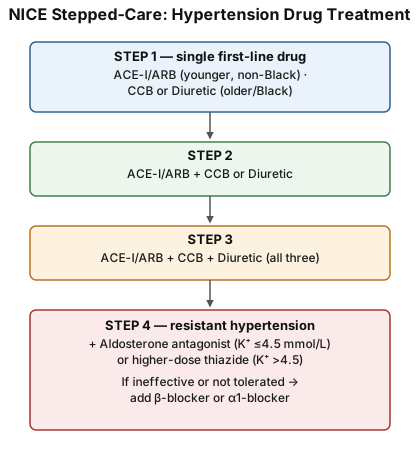
Step1: single drug (ACE-I/ARB young non-Black; CCB/diuretic older/Black) → Step2: +CCB or diuretic → Step3: ALL THREE (ACE-I/ARB+CCB+diuretic) → Step4 (RESISTANT): +aldosterone antagonist (K+≤4.5) OR higher-dose thiazide (K+>4.5) → if still failing: +β-blocker or α1-blocker.
β-blocker+diuretic combo AVOIDED — ↑new-onset diabetes risk beyond either alone.
Clinical relevance
Choose antihypertensive that ALSO treats the comorbidity — ACE-I slows diabetic nephropathy (thiazide doesn’t), β-blocker prevents post-MI sudden death (CCB doesn’t). Equal BP-lowering ≠ equal patient benefit — the compelling-indications table and stepped-care order both encode this same lesson.
Overview
Hypertension is defined operationally, not by a fixed biological cutoff — it is that level of blood pressure at or above which long-term treatment measurably reduces cardiovascular mortality (conventionally ≥140/90 mmHg, revised to ≥150/90 for patients over 60 by JNC8). The vast majority of cases are essential (primary) hypertension with no single identifiable cause, though the sympathetic nervous system and renin-angiotensin system both contribute to vascular tone and cardiac output in hypertensives just as they do in normotensives — most antihypertensive drug classes work precisely by interfering with one or another arm of these two regulatory systems.
Diuretics
Thiazides (hydrochlorothiazide, chlorthalidone) are, despite being only mild antihypertensives on their own, still a first-choice drug class after decades of use, because of a well-worked-out mechanism and an unusually favourable trial record. The antihypertensive action unfolds in stages: an initial 5–15% reduction in plasma/extracellular volume lowers cardiac output; over 2–4 weeks, compensatory mechanisms restore volume and cardiac output nearly to baseline, but the fall in BP persists because total peripheral resistance stays reduced — most likely a consequence of a small (~5%) persisting sodium deficit reducing intracellular sodium in vascular smooth muscle, softening the vessel wall and blunting its response to constrictor stimuli (noradrenaline, angiotensin II). Maximal antihypertensive efficacy is reached at a low dose (25 mg/day hydrochlorothiazide) — higher doses produce more diuresis but no further BP reduction, only more side effects, which is exactly why modern low-dose thiazide regimens (12.5–25 mg/day) largely avoid the hypokalaemia, dyslipidaemia, hyperuricaemia, and glucose intolerance that gave thiazides a poor reputation at the older 50 mg/day dosing. Thiazides potentiate essentially every other antihypertensive class (except dihydropyridine CCBs) by preventing the plasma-volume expansion that would otherwise blunt those drugs’ effect — the pharmacological reason thiazides appear in so many combination regimens regardless of what else is being used. They are ineffective in chronic kidney disease, where high-ceiling diuretics (furosemide) are substituted instead — though furosemide is, paradoxically, a weaker antihypertensive than thiazides despite being a far stronger diuretic, because its brief duration of action (4–6 hours) allows compensatory proximal tubular sodium reabsorption to reassert itself for the rest of the day.
Indapamide, chemically related to chlorthalidone, lowers BP at doses producing comparatively little diuresis and correspondingly milder electrolyte disturbance — increasingly favoured over hydrochlorothiazide for this reason.
Aldosterone antagonists (spironolactone, eplerenone) are modest antihypertensives alone but valuable added to a thiazide, both to prevent thiazide-induced potassium loss and for an independent, additive antihypertensive effect — increasingly used in resistant hypertension given aldosterone’s separate role in driving vascular/cardiac fibrosis and hypertrophy. Spironolactone’s hormonal side effects (gynaecomastia, menstrual irregularity) are largely avoided by eplerenone.
ACE Inhibitors and Angiotensin Receptor Blockers
ACE inhibitors (enalapril, ramipril, lisinopril, and others) are first-line in essentially all grades of hypertension (renovascular hypertension with bilateral renal artery stenosis is the specific exception), controlling roughly half of patients as monotherapy and up to 90% combined with a diuretic or β-blocker. Their particular value lies beyond blood pressure control alone: they improve renal blood flow, retard progression of diabetic (and non-diabetic) nephropathy, and regress left ventricular/vascular hypertrophy — making them the preferred choice specifically in diabetes, chronic kidney disease, left ventricular hypertrophy, heart failure, angina, and post-MI patients. They tend to work better in younger and white patients than in older or Black patients (lower renin status in the latter groups blunts the response). Persistent dry cough, from unmetabolized bradykinin accumulating (ACE also normally degrades bradykinin), is the most common reason for discontinuation.
Angiotensin receptor blockers (losartan, valsartan, candesartan, telmisartan) achieve comparable antihypertensive efficacy without raising bradykinin levels, so the characteristic ACE-inhibitor cough, along with angioedema, is far less common — this is now the single biggest reason ARB use has overtaken ACE inhibitor use in practice. ACE inhibitors and ARBs should never be combined for hypertension (no added benefit, added risk of hyperkalaemia/renal impairment).
Calcium Channel Blockers (CCBs)
All three subclasses (dihydropyridines — amlodipine; phenylalkylamine — verapamil; benzothiazepine — diltiazem) are equally effective antihypertensives, lowering peripheral resistance without compromising cardiac output, but dihydropyridines are the ones actually used for hypertension — verapamil and diltiazem’s negative inotropic/dromotropic action makes them better suited to angina/arrhythmia control than to routine BP management, and risks worsening heart failure or conduction defects where dihydropyridines are safe. CCBs cause no sedation, no impairment of physical work capacity, no adverse lipid/uric acid effect, and are not contraindicated in asthma or peripheral vascular disease — genuinely clean drugs from a side-effect standpoint, aside from ankle oedema (reflex postcapillary venoconstriction raising local hydrostatic pressure, not true fluid retention) and, importantly, short-acting dihydropyridine formulations (regular nifedipine) are not used for hypertension — repeated adrenergic surges from rapid onset/offset have been linked to increased mortality/reinfarction risk in coronary disease patients, a risk that does not extend to slow-acting formulations (amlodipine) or to verapamil/diltiazem. CCBs are particularly effective in elderly patients, Black patients, and low-renin hypertensives, and are safe in pregnancy (though they can weaken uterine contractions during labour).
β-Adrenergic Blockers
Mild antihypertensives on their own (effective as monotherapy in only 30–40% of patients, mostly mild disease), and no longer considered first-line for routine monotherapy by current guidelines (JNC8, NICE) — trial evidence (LIFE, ALLHAT) found them inferior to low-dose thiazide, ACE inhibitors/ARBs, or CCBs for primary prevention of MI and stroke, and they carry an unfavourable lipid profile (non-selective agents) along with quality-of-life drawbacks (fatigue, reduced libido, subtle cognitive effects) not shared by the other first-line classes. They remain the right choice specifically where a compelling indication exists — stable heart failure (carvedilol, metoprolol, bisoprolol, nebivolol specifically shown to reduce mortality), post-MI, and high coronary artery disease risk — and abrupt withdrawal risks rebound hypertension and precipitated angina/MI, the same receptor-upregulation logic covered under the Adrenergic System.
Combined α+β blockers: labetalol (faster-acting than pure β-blockers, used IV for hypertensive emergencies, hyperadrenergic states, and specifically preferred in preeclampsia) and carvedilol (also used long-term in CHF).
α1-Adrenergic Blockers
Prazosin and its longer-acting congeners (terazosin, doxazosin) are not first-line despite genuinely favourable metabolic effects (no impairment of glucose tolerance, slightly favourable lipid profile) — fluid retention and tolerance develop with monotherapy, necessitating dose escalation, and the ALLHAT trial found doxazosin monotherapy doubled the incidence of heart failure relative to a diuretic. Prazosin’s characteristic “first-dose effect” (marked postural hypotension with the first dose, managed by a low bedtime starting dose) reflects its selectivity — because it spares the presynaptic α2 autoreceptor (unlike non-selective α-blockers), reflex tachycardia is comparatively mild, but venodilatation still drops venous return sharply enough on standing to cause symptomatic hypotension initially. Non-selective α-blockers (phentolamine, phenoxybenzamine) are reserved for special situations where circulating catecholamines specifically drive the hypertension — phaeochromocytoma, clonidine-withdrawal, and tyramine/MAO-inhibitor (“cheese”) reactions — because blocking both α1 and α2 removes the autoreceptor brake on noradrenaline release, provoking reflex tachycardia that makes them unsuitable for routine use.
Central Sympatholytics
Clonidine, an imidazoline partial agonist with high affinity and high intrinsic activity at α2A receptors in the brainstem vasomotor centre, reduces sympathetic outflow, producing a fall in BP and bradycardia (enhanced vagal tone contributes). It has fallen from a once-popular antihypertensive to a 3rd/4th-line drug because of frequent side effects (sedation, dry mouth, depression) and, most importantly, a genuinely dangerous withdrawal syndrome: missing doses for 1–2 days can produce a rebound hypertensive crisis closely resembling phaeochromocytoma (tachycardia, restlessness, sweating, raised catecholamines) — caused by sudden release of centrally-inhibited sympathetic outflow combined with peripheral adrenergic supersensitivity that develops during chronic therapy. This is managed with clonidine itself, an α+β blocker, or a potent vasodilator (nitroprusside) — never a pure β-blocker alone, which would leave α-mediated vasoconstriction unopposed (the same vasomotor-reversal-of-Dale logic seen with phaeochromocytoma management). Clonidine has genuine secondary uses beyond hypertension: opioid/alcohol withdrawal (suppresses the shared sympathetic overactivity), menopausal vasomotor symptoms, and diabetic-neuropathy-related diarrhoea.
Methyldopa is converted centrally to α-methylnoradrenaline, itself a selective α2 agonist, reducing sympathetic outflow by the same fundamental mechanism as clonidine but with distinct pharmacokinetics and a notably safer withdrawal profile (rebound hypertension is mild and uncommon, unlike clonidine). Methyldopa is now rarely used except specifically in pregnancy, where it has an exceptionally long track record of safety for both mother and foetus — this single indication is essentially the entire reason the drug remains in use. Adverse effects worth knowing: sedation, a positive Coombs’ test in roughly 1/6 of patients (rarely progressing to actual haemolytic anaemia), and rare hepatitis/lupus-like syndrome.
Direct Vasodilators
Hydralazine directly relaxes arteriolar (not venous) smooth muscle, reducing peripheral resistance and diastolic BP more than systolic — but this triggers a strong reflex hyperdynamic response (tachycardia, increased cardiac output, renin release → aldosterone → sodium/water retention) that can precipitate angina and produces tolerance to the antihypertensive effect unless a diuretic and/or β-blocker is co-administered to blunt these compensatory mechanisms. It is now a second-line add-on rather than monotherapy, notably still used in pregnancy-related hypertensive emergencies (preeclampsia) and, combined with isosorbide dinitrate, in heart failure specifically in patients (historically identified as predominantly African-American in the landmark trials) who gain extra survival benefit from this combination beyond ACE inhibitor/diuretic/digoxin therapy. Slow versus fast acetylator status affects hydralazine metabolism and the risk of a lupus-like syndrome at higher doses, more common in slow acetylators.
Minoxidil, an even more powerful vasodilator (its active metabolite opens ATP-sensitive K+ channels, hyperpolarizing smooth muscle) is no longer used orally for hypertension because of pronounced fluid retention and cardiac ischaemia/heart failure risk — its clinical niche today is entirely topical, for androgenetic alopecia, an application discovered as a side effect of the oral drug.
Sodium nitroprusside is a rapid-onset (seconds), extremely short-acting (2–5 minutes) IV vasodilator relaxing both arterioles and veins, making it precisely titratable against a continuous infusion — the standard choice for genuine hypertensive emergencies requiring second-by-second control. It is metabolized to release nitric oxide (the actual vasodilator) plus cyanide, which the liver converts to thiocyanate; prolonged high-dose infusion risks cyanide/thiocyanate accumulation and toxicity (metabolic acidosis, CNS effects), and the solution itself is light- and alkali-sensitive, requiring a covered infusion bottle.
Adrenergic Neurone Blockers (Historical)
Reserpine (from Rauwolfia serpentina, used in Ayurvedic medicine long before its isolation) irreversibly inhibits the vesicular monoamine transporter, depleting noradrenaline, dopamine, and 5-HT — a genuine “hit-and-run” drug whose effect outlasts its presence in the body, since depleted stores are only slowly restored. Higher doses cause sedation and mental depression through central monoamine depletion. Guanethidine blocks impulse-coupled noradrenaline release after being taken up into the nerve ending by the same transporter that handles noradrenaline itself. Both are now obsolete for hypertension due to their side-effect burden, retained only as pharmacological tools (reserpine) or of historical interest — but they remain useful anchors for understanding how a drug can lower BP by acting on the adrenergic neurone itself rather than on a postsynaptic receptor, a mechanistically distinct category from every receptor-blocking antihypertensive above it.
Selecting and Combining Antihypertensive Drugs
Compelling indications override the general algorithm — a patient with heart failure, post-MI status, high coronary risk, diabetes, or chronic kidney disease has a specific drug class (or classes) indicated regardless of where they’d otherwise sit in a stepped approach, per the table below.
| Compelling indication | Preferred class(es) |
|---|---|
| Heart failure | Diuretics, ACE inhibitors/ARBs, selected β-blockers |
| Post-MI | ACE inhibitors/ARBs, β-blockers |
| High coronary artery disease risk | Diuretics, ACE inhibitors/ARBs, β-blockers |
| Diabetes | ACE inhibitors/ARBs, CCBs |
| Chronic kidney disease | ACE inhibitors/ARBs |
| Recurrent stroke prevention | Diuretics, ACE inhibitors/ARBs, CCBs |
For patients with no compelling indication, age and race guide first-line selection — younger, non-Black patients (generally higher renin status) respond better to ACE inhibitors/ARBs; older patients and Black patients of any age (generally lower renin status) respond better to a CCB or thiazide-type diuretic.
The NICE stepped-care approach starts with a single first-line drug (ACE inhibitor/ARB, CCB, or diuretic depending on age/race/compelling indication), adds a second first-line class if BP remains uncontrolled, then a third — using all three major first-line classes together before ever escalating beyond them. Only in genuinely resistant hypertension (uncontrolled on three appropriately-dosed first-line drugs) does a fourth agent enter — an aldosterone antagonist (if serum potassium is comfortably below the upper limit) or a higher thiazide dose, with a β-blocker or α1-blocker reserved as a further fallback if even that fails or isn’t tolerated. Combining a β-blocker with a diuretic is specifically discouraged, since together they measurably raise the risk of new-onset diabetes beyond what either produces alone.
Clinical Relevance
The stepped-care logic and the compelling-indications table are really the same underlying principle stated two ways: choose the antihypertensive that also treats whatever else the patient has (diabetes, heart failure, CKD, prior MI) rather than picking blind from a list, because several drug classes that lower BP equally well diverge sharply in their effect on these comorbidities — ACE inhibitors slow diabetic nephropathy where a thiazide does nothing for it; a β-blocker prevents sudden death post-MI where a CCB offers no such protection. Blood pressure numbers alone under-specify the right choice; the whole patient does not.
Diagram 1 — NICE Stepped-Care Approach to Hypertension Drug Treatment
What to draw: A four-step vertical ladder — single first-line drug → add a second first-line class → add the third first-line class (all three together) → resistant hypertension requiring a fourth agent (aldosterone antagonist or higher-dose thiazide, then β-blocker/α1-blocker as a further fallback).
Labelling requirements: Step 4 must show the serum potassium branch point explicitly (aldosterone antagonist only if K+ ≤4.5 mmol/L, higher-dose thiazide if K+ >4.5) — this is a concrete, examinable safety check, not incidental detail, since aldosterone antagonists risk dangerous hyperkalaemia in exactly the patients who’d otherwise be offered them.
Common exam-marking mistakes:
- Showing β-blockers as part of the first three steps — current guidelines specifically excluded them from first-line status; they only appear as a Step 4 fallback.
- Omitting that all three first-line classes (ACE-I/ARB, CCB, diuretic) are used together at Step 3 before any escalation beyond them — a common error is jumping to a fourth drug class before exhausting combinations of the first three.
Diagram 2 — Clonidine Withdrawal Syndrome Mechanism
What to draw: Two parallel pathways converging on a rebound hypertensive crisis — (1) sudden loss of central α2-mediated sympathetic inhibition releasing a large stored pool of catecholamines, and (2) peripheral adrenergic receptor supersensitivity that has developed during chronic clonidine therapy, both feeding into the same clinical picture (tachycardia, sweating, anxiety, severe BP rise).
Labelling requirements: label both contributing mechanisms explicitly and separately — a diagram that shows only “stops taking clonidine → BP rises” without naming the two distinct physiological contributors (central disinhibition and peripheral supersensitivity) loses the reasoning behind why the syndrome resembles phaeochromocytoma so closely.
Common exam-marking mistakes:
- Suggesting a pure β-blocker as management for the crisis — this would leave the surge of catecholamine-driven α-vasoconstriction completely unopposed, the same unmasking-of-α logic seen with phaeochromocytoma and non-selective β-blockade elsewhere in this subject; the correct answer is clonidine itself, an α+β blocker, or a direct vasodilator.
Long Essays (2)
Short Essays (3)
Essays (5)
Short Answers (18)
Short Notes (11)
My Sticky Notes
Personal revision notes, mnemonics and reminders.
