
Cholinergic System
Transmission
ACh sites: all ganglia, all postgang. parasympathetic, few postgang. sympathetic (sweat glands), skeletal NMJ, CNS.
Synthesis: Choline uptake (rate-limiting, blocked by hemicholinium) → ChAT + acetyl-CoA → ACh → packaged by vesicular transporter (blocked by vesamicol) → exocytosis (blocked by botulinum toxin; black widow venom = massive release then depletion) → hydrolyzed instantly by AChE (true — at all cholinergic sites) vs BuChE (pseudo — plasma, metabolizes ingested esters, minor synaptic role).
Receptors
Muscarinic (GPCR): M1(Gq)-ganglia/gastric glands/CNS-learning · M2(Gi)-heart-bradycardia+↓AV conduction+autoreceptor · M3(Gq)-smooth muscle contraction+glands+miosis+endothelial NO/vasodilatation · M4,M5-CNS modulation.
Nicotinic (ligand-gated ion channel): NM-skeletal muscle endplate, blocked by tubocurarine · NN-ganglia+adrenal medulla, blocked by hexamethonium.
Cholinergic agonists
Muscarinic actions of ACh: ↓HR/AV conduction · vasodilatation(NO) · ↑GI tone/peristalsis+sphincter relax(cramps) · detrusor contract+sphincter relax(voiding) · bronchoconstriction · ↑secretions(sweat/saliva/lacrimal/tracheobronchial — NOT milk/bile) · miosis+↓IOP. Nicotinic: ganglion stimulation(both symp+parasymp), skeletal fasciculation.
Choline esters: ACh itself NOT used clinically (too fleeting/nonselective). Bethanechol = postop/postpartum urinary retention, neurogenic bladder. Alkaloids: Pilocarpine = 3rd-line open-angle glaucoma miotic (topical, 4-8h). Muscarine = early mushroom poisoning (atropine reverses); phalloidin-type = delayed, hepatotoxic, NO antidote.
Anticholinesterases
Carbamates (physostigmine, neostigmine, pyridostigmine, +edrophonium/tacrine/donepezil/rivastigmine/galantamine which are non-carbamate structurally but act similarly): carbamylate esteratic site → REVERSIBLE (spontaneous reactivation 30min-6h). Organophosphates (dyflos, echothiophate, malathion/parathion, sarin/tabun): phosphorylate esteratic site → reactivation over DAYS or never → can “AGE” (lose alkyl group) → PERMANENTLY resistant → functionally IRREVERSIBLE.
Edrophonium: non-covalent (anionic site only), reactivates <10min → too brief for treatment, used ONLY as diagnostic test.
Lipid-soluble (physostigmine, OPs) → cross BBB → CNS+muscarinic effects prominent. Lipid-insoluble quaternary (neostigmine) → NO BBB crossing → skeletal muscle effects prominent (direct endplate action too), NO central effects.
| Drug | Key point |
|---|---|
| Physostigmine | Natural, tertiary amine, crosses BBB+cornea — glaucoma adjunct, antidote for atropine poisoning (reverses central+peripheral) |
| Neostigmine | Quaternary, poor oral absorption(20-30× dose needed), NO BBB/cornea penetration — 1st line myasthenia gravis, also urinary retention/paralytic ileus |
| Pyridostigmine | Like neostigmine, less potent, LONGER acting → preferred for myasthenia (less frequent dosing) |
| Edrophonium | Ultra-brief (10-30min) — DIAGNOSTIC only (myasthenia test, crisis differentiation) |
| Donepezil/rivastigmine/galantamine | Cerebroselective — Alzheimer’s (tacrine abandoned — hepatotoxic) |
Uses: Glaucoma(miotic, 3rd line) · Myasthenia gravis · Postop urinary retention/paralytic ileus · Reversal of non-depolarizing NM blockade (+ atropine first, to block muscarinic effects) · Atropine poisoning → physostigmine · Alzheimer’s.
Myasthenia Gravis
Autoimmune (~1:10,000), Ab vs NM nicotinic receptor at endplate → receptor loss + junction damage → fatigable weakness (ocular/facial/pharyngeal first → limb → respiratory).
Dx: Edrophonium (Tensilon) test — dramatic brief improvement (myasthenia-specific); + circulating Ab demonstration.
Rx: Anticholinesterases (pyridostigmine/neostigmine, symptomatic only) · Thymectomy (thymoma/younger patients — antigen source) · Corticosteroids/immunosuppressants (azathioprine/cyclosporine — Ab suppression; azathioprine slow onset, good maintenance) · Plasmapheresis (removes Ab, dramatic but short-lived, useful in crisis).
Myasthenic vs Cholinergic crisis — HIGH YIELD:
| Myasthenic | Cholinergic | |
|---|---|---|
| Cause | Under-treatment | Anti-ChE OVERDOSE |
| Edrophonium | IMPROVES | WORSENS |
| Rx | ↑anti-ChE dose | Withhold anti-ChE + atropine + ventilate |
Ventilator ready BEFORE test (cholinergic crisis can transiently worsen). Note: standard textbook/exam teaching — real-world practice increasingly avoids provoking an unstable crisis patient this way, favouring ventilatory support + withholding anti-ChE first.
OP Poisoning
Irreversible AChE inhibition → ACh accumulates everywhere (muscarinic+nicotinic+central).
Signs: Muscarinic(sweating/salivation/lacrimation/↑tracheobronchial secretions/bronchospasm/vomiting/cramps/miosis/bradycardia/hypotension/incontinence) · Nicotinic(fasciculations/weakness/paralysis) · Central(headache/confusion/convulsions/coma — death usually respiratory failure).
Dx: history + signs + ↓blood cholinesterase.
Rx general: decontaminate, gastric lavage, airway, artificial respiration, cautious slow IV diazepam for convulsions.
Rx specific:
- Atropine 2mg IV stat, repeat q5-10min (DOUBLING dose) until fully atropinized, continue 7-10 days. Blocks MUSCARINIC only — does NOT touch nicotinic paralysis.
- Oximes (pralidoxime) 1-2g IV slow. Binds anionic site → dephosphorylates → REACTIVATES enzyme → restores neuromuscular transmission. Must give BEFORE “aging.” Ineffective in carbamate poisoning.
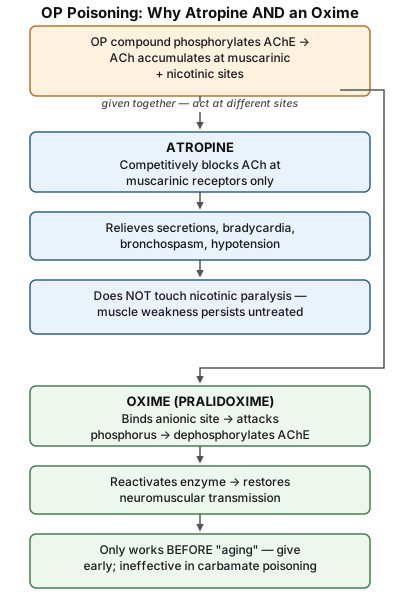
Why BOTH needed: atropine = downstream receptor block (muscarinic only); oxime = fixes the actual enzyme lesion (muscarinic+nicotinic) but time-critical.
Antimuscarinics (Anticholinergics)
= competitive muscarinic antagonists ONLY (nicotinic antagonists are “ganglion/NM blockers,” different name).
Atropine (prototype, non-selective across M1-M5):
- CNS: stimulant at high dose (restless→hallucination→delirium→resp depression→coma); low dose = peripheral only; ↓parkinsonian tremor; antimotion sickness (mild)
- CVS: tachycardia (M2 block at SA node) — paradoxical transient initial BRADYCARDIA at low dose (blocks presynaptic M1 autoreceptor); NO consistent BP effect
- Eye: mydriasis + cycloplegia (7-10 days) + ↑IOP risk (narrow-angle glaucoma danger)
- Smooth muscle: ↓GI tone(constipation, relieves spasm) · bronchodilation(useful in COPD — vagal tone = major reversible component there) · ↓ureter/bladder tone(urinary retention risk in BPH, but useful in neurogenic bladder)
- Glands: ↓↓ saliva/sweat/tracheobronchial/lacrimal (dry mouth/eyes); ↓gastric volume MORE than pH (less effective than H2 blockers)
- Temp: ↑ at high dose (↓sweating + central) — “atropine fever,” esp. children
Sensitivity order (low→high dose needed): secretions+eye < bronchial muscle+heart < GI/bladder smooth muscle < gastric secretion.
Atropine vs Hyoscine:
| Atropine | Hyoscine | |
|---|---|---|
| CNS | Stimulant (even low dose = mild) | DEPRESSANT (sedation, amnesia) even low dose |
| Potency | Heart, bronchial muscle, intestine | Eye, secretory glands |
| Duration | Longer | Shorter |
| Antimotion sickness | ++ | +++ (stronger) |
Atropine substitutes (quaternary): incomplete oral absorption, NO CNS/eye effects, longer acting, SOME ganglion-blocking → postural hypotension+impotence as EXTRA side effects.
- Ipratropium/tiotropium: inhaled, bronchoselective, doesn’t ↓secretion volume or impair mucociliary clearance (advantage over atropine) — more effective in COPD than asthma
- Propantheline/oxyphenonium/glycopyrrolate: antisecretory-antispasmodic, largely superseded by H2 blockers/PPIs for PUD; glycopyrrolate still used for preanaesthetic drying (no CNS effect)
- Vesicoselective (oxybutynin, tolterodine, solifenacin): detrusor overactivity/urge incontinence
- Antiparkinsonian (trihexyphenidyl, biperiden): drug-induced parkinsonism treatment of choice (levodopa ineffective + worsens psychosis — problem is relative cholinergic excess, not dopamine deficiency)
Clinical relevance
Both signature cholinergic-system emergencies hinge on ONE fact: atropine blocks muscarinic effects ONLY, never nicotinic. OP poisoning → atropine controls secretions/bradycardia but NOT paralysis → oxime non-negotiable. Myasthenic vs cholinergic crisis → opposite ends of the same anti-ChE dose-response curve, edrophonium response tells you which side you’re on.
Cholinergic Transmission
Acetylcholine (ACh) is the transmitter at all autonomic ganglia, all postganglionic parasympathetic nerve endings, a few postganglionic sympathetic endings (sweat glands, some vasodilator fibres), the skeletal neuromuscular junction, and multiple central sites.
Synthesis, storage, release, and destruction. Choline is taken up into the nerve terminal by a Na+-dependent cotransporter — the rate-limiting step of ACh synthesis, blocked by hemicholinium. Choline acetyltransferase then combines it with acetyl-CoA to form ACh, which is packaged into synaptic vesicles by a vesicular transporter blocked by vesamicol. A nerve action potential triggers synchronized exocytotic release of many vesicles at once (botulinum toxin blocks this release step; black widow spider venom does the opposite, causing massive release followed by depletion). Once released, ACh is hydrolyzed almost instantaneously by acetylcholinesterase (AChE, “true” cholinesterase) — strategically located at every cholinergic site — while butyrylcholinesterase (“pseudo” cholinesterase, in plasma and elsewhere) plays a lesser role, mainly metabolizing ingested esters rather than terminating synaptic transmission.
Cholinergic Receptors
ACh acts on two structurally and mechanistically distinct receptor classes.
Muscarinic receptors are G protein-coupled receptors, selectively activated by muscarine and blocked by atropine. Five subtypes exist (M1–M5); M1, M3 (and M5) couple through Gq to phospholipase C, generating IP3/DAG and raising intracellular Ca2+; M2 (and M4) couple through Gi/Go, opening K+ channels and inhibiting adenylyl cyclase.
| Subtype | Main location | Effect |
|---|---|---|
| M1 | Autonomic ganglia, gastric glands, CNS (cortex, hippocampus) | Gastric acid secretion, learning/memory, ganglionic depolarization |
| M2 | Heart (SA/AV node), presynaptic autoreceptors | Bradycardia, slowed AV conduction, ↓ACh release (autoinhibition) |
| M3 | Visceral/bronchial smooth muscle, iris, ciliary muscle, exocrine glands, vascular endothelium | Smooth muscle contraction, glandular secretion, miosis, endothelial NO release → vasodilatation |
| M4, M5 | Mainly CNS nerve terminals | Modulate release of other neurotransmitters |
Nicotinic receptors are ligand-gated cation channels (pentameric, ion channel built into the receptor itself), activated by nicotine and blocked by tubocurarine or hexamethonium. Two subtypes matter clinically:
- NM — skeletal muscle endplate; mediates skeletal muscle contraction; blocked by tubocurarine.
- NN — autonomic ganglia (both sympathetic and parasympathetic) and adrenal medulla; the primary route of ganglionic transmission; blocked by hexamethonium.
Cholinergic Agonists (Cholinomimetics)
Drugs that reproduce ACh’s actions either directly (choline esters, cholinomimetic alkaloids) or indirectly, by protecting endogenous ACh from breakdown (anticholinesterases).
Actions of ACh (as prototype), by receptor:
Muscarinic actions: bradycardia and slowed AV conduction (heart); vasodilatation via endothelial NO release (blood vessels — though ACh can paradoxically vasoconstrict if the endothelium is damaged, since it then reaches smooth muscle M3 receptors directly); increased tone/peristalsis and sphincter relaxation (GI tract — cramps and evacuation); detrusor contraction with trigone/sphincter relaxation (bladder voiding); bronchoconstriction and increased airway secretion (risk in asthmatics); increased secretion from all parasympathetically innervated glands (sweat, salivary, lacrimal, tracheobronchial, gastric — but not milk or bile); miosis and ciliary muscle contraction, lowering intraocular pressure.
Nicotinic actions: stimulation of both sympathetic and parasympathetic ganglia (at higher doses); skeletal muscle fasciculation/twitching (direct endplate stimulation).
Choline esters — acetylcholine itself is never used clinically (too evanescent, too non-selective); methacholine, carbachol, and bethanechol differ in their muscarinic-vs-nicotinic selectivity and susceptibility to the two cholinesterases (summarized by which esterase hydrolyzes each). Bethanechol is the one with a real, if limited, clinical role — postoperative/postpartum non-obstructive urinary retention and neurogenic bladder — though its side effects (colic, involuntary voiding, flushing, sweating, bronchospasm) are prominent.
Cholinomimetic alkaloids — pilocarpine (from Pilocarpus) is the clinically important one: applied topically, it penetrates the cornea, produces prompt miosis and ciliary contraction, and lowers intraocular pressure for 4–8 hours, making it a (now third-line) option in open-angle glaucoma, useful also for breaking iris adhesions by alternating with a mydriatic. Muscarine itself (found in Inocybe and some Amanita species) has no therapeutic use but is the basis of one recognizable pattern of mushroom poisoning — early-onset, purely muscarinic symptoms reversed promptly by atropine, distinct from the delayed, hepatotoxic phalloidin-type poisoning of Amanita phalloides, which has no specific antidote.
Anticholinesterases
These inhibit cholinesterase, allowing endogenously released ACh to accumulate and act more intensely and for longer — so their actions qualitatively mirror direct cholinergic agonists, differing mainly in how strongly they hit muscarinic, ganglionic, skeletal-muscle, and CNS sites, which in turn depends on lipid solubility.
Chemical/mechanistic classes:
- Carbamates (physostigmine, neostigmine, pyridostigmine, and the non-carbamate-structured but carbamate-acting edrophonium, tacrine, donepezil, rivastigmine, galantamine) — carbamylate the enzyme’s esteratic site; the carbamylated enzyme reactivates spontaneously over roughly 30 minutes to 6 hours, so this inhibition is genuinely reversible.
- Organophosphates (dyflos, echothiophate, and — with only toxicological relevance — the insecticides malathion/parathion and nerve agents like sarin/tabun) — phosphorylate the same esteratic site, but the phosphorylated enzyme reactivates spontaneously only over days, if at all, and can undergo “aging” (loss of an alkyl group) that renders it permanently resistant to any reactivation, chemical or otherwise. This is functionally irreversible inhibition and is the single most important fact governing OP poisoning management.
Edrophonium is a special case: it doesn’t form a covalent bond with the enzyme at all — it binds the anionic site alone through weak hydrogen bonds, giving it an extremely brief action (reactivation in under 10 minutes), which is exactly why it is used purely as a diagnostic agent rather than for sustained treatment.
Lipid-soluble agents (physostigmine, organophosphates) cross into the CNS and produce marked central and muscarinic effects; lipid-insoluble quaternary agents (neostigmine and its congeners) do not cross the blood-brain barrier, produce more prominent skeletal muscle effects (they also act directly on the endplate’s nicotinic receptors), and have no central action at all.
Individual Anticholinesterases
| Drug | Key features |
|---|---|
| Physostigmine | Natural alkaloid, tertiary amine, well absorbed orally, crosses BBB and cornea, CNS effects present — used as a 0.1% eye drop adjunct in glaucoma, and historically as the antidote for atropine/belladonna poisoning (because it reverses both central and peripheral antimuscarinic effects) |
| Neostigmine | Synthetic quaternary ammonium, poor oral absorption (needs 20–30× the parenteral dose), does not cross BBB or cornea, prominent direct skeletal-muscle action — first-line drug for myasthenia gravis; also increases gut/bladder smooth muscle tone, useful in postoperative urinary retention and paralytic ileus |
| Pyridostigmine | Resembles neostigmine, less potent but longer-acting — needs less frequent dosing in myasthenia |
| Edrophonium | Very brief action (10–30 min) via weak, non-covalent binding — used purely as the diagnostic test for myasthenia gravis and to distinguish myasthenic from cholinergic crisis |
| Donepezil, rivastigmine, galantamine | Centrally acting, cerebroselective — used for symptomatic benefit in Alzheimer’s disease by raising brain ACh levels (tacrine, an older member of this group, has fallen out of use due to hepatotoxicity) |
Uses of Anticholinesterases
- Glaucoma — miotics increase ciliary muscle tone and outflow facility, lowering intraocular pressure; now third-line, reserved for add-on therapy in advanced/aphakic cases.
- Myasthenia gravis (see below).
- Postoperative urinary retention and paralytic ileus — neostigmine increases smooth muscle tone in the gut and bladder detrusor while relaxing the corresponding sphincters, promoting both peristalsis/evacuation and bladder voiding.
- Reversal of non-depolarizing neuromuscular blockade — edrophonium/neostigmine raise ACh concentration at the NMJ enough to out-compete a competitive (non-depolarizing) blocker; atropine must be given first to block the muscarinic side effects that would otherwise accompany this.
- Belladonna (atropine) poisoning — physostigmine specifically, because it is the one anticholinesterase that reverses both the central and peripheral effects of atropine.
- Alzheimer’s disease — donepezil, rivastigmine, galantamine, as above.
Myasthenia Gravis
An autoimmune disease (roughly 1 in 10,000 population) in which antibodies target the nicotinic receptor at the skeletal muscle endplate, obliterating up to two-thirds or more of the functional receptor population and structurally damaging the junction. The clinical picture is fatigable weakness — worse with repeated activity, improving with rest — classically starting in eyelid, ocular, facial, and pharyngeal muscles before progressing to limb and, in severe cases, respiratory muscles.
Diagnosis: the edrophonium (Tensilon) test — IV edrophonium produces dramatic, brief improvement in muscle power in myasthenia gravis specifically (not in other muscular dystrophies); circulating anti-receptor antibodies can also be demonstrated directly.
Treatment:
- Anticholinesterases (pyridostigmine usually preferred for its longer action, or neostigmine) are first-line symptomatic therapy — they allow the same ACh molecules to interact repeatedly with the reduced pool of available receptors, improving strength without touching the underlying autoimmune process.
- Thymectomy is generally advised, particularly with a thymoma or in younger patients — the thymus is thought to harbour the antigenic source driving antibody production, and thymectomy can produce gradual improvement or even complete remission.
- Corticosteroids and immunosuppressants (azathioprine, cyclosporine) suppress antibody production directly and are used for induction and maintenance of remission — azathioprine has a slow onset (months) but is good for long-term maintenance.
- Plasmapheresis physically removes circulating antibody — dramatic but often short-lived improvement, valuable specifically in myasthenic crisis.
Myasthenic crisis vs cholinergic crisis is the single most exam-favoured distinction in this topic, precisely because the two look similar (both present as severe weakness) but demand opposite management:
| Myasthenic crisis | Cholinergic crisis | |
|---|---|---|
| Cause | Disease exacerbation / under-treatment | Anticholinesterase overdose — persistent endplate depolarization |
| Edrophonium response | Improves | Worsens |
| Management | Increase anticholinesterase dose | Withhold anticholinesterase, give atropine, ventilatory support if needed |
Classical teaching holds that IV edrophonium can be used to tell the two apart at the bedside — improvement indicates myasthenic crisis, worsening indicates cholinergic crisis — with a ventilator kept ready beforehand precisely because the test can transiently worsen a cholinergic crisis. This is standard textbook teaching and genuinely examined content, but worth knowing as a boundary: provoking an unstable, possibly cholinergic-crisis patient with an anticholinesterase carries real risk (bradyarrhythmia, cardiac arrest), and many clinicians now favour securing ventilation and withholding anticholinesterases first, confirming the cause afterward, over performing this test at the bedside during an actual crisis.
Overtreatment with anticholinesterases produces cholinergic crisis through persistent endplate depolarization — the same mechanism, taken too far, that improves strength at the correct dose becomes paralytic at excess dose.
Organophosphorus (OP) Poisoning
OP compounds (parathion, malathion, and the nerve agents) irreversibly inhibit cholinesterase, causing ACh to accumulate at every muscarinic, nicotinic, and central cholinergic site simultaneously. This is one of the most common poisonings worldwide, typically from agricultural insecticide exposure.
Clinical picture, organized by receptor type:
- Muscarinic: profuse sweating, salivation, lacrimation, increased tracheobronchial secretions, bronchospasm, vomiting, abdominal cramps, miosis, bradycardia, hypotension, involuntary urination and defecation.
- Nicotinic: muscle twitching, fasciculations, weakness, and — from prolonged endplate depolarization — paralysis.
- Central: headache, restlessness, confusion, convulsions, coma; death is usually from respiratory failure (a combination of bronchospasm/secretions, respiratory muscle paralysis, and central depression).
Diagnosis rests on history of exposure, the characteristic muscarinic/nicotinic/central symptom pattern, and a reduced blood cholinesterase activity.
Treatment:
General measures — remove contaminated clothing and wash the skin; gastric lavage (if ingested) until the return is clear; maintain the airway and give artificial respiration if needed; diazepam, given cautiously and slowly IV, to control convulsions.
Specific measures:
- Atropine — the first drug given, 2 mg IV stat, repeated (doubling the dose if needed) every 5–10 minutes until the patient is fully atropinized (dilated non-reactive pupils, tachycardia, dry secretions), then continued for 7–10 days. Atropine works by competitively blocking the muscarinic effects of the accumulated ACh — it does not touch the nicotinic effects at all, which is why it alone cannot reverse the neuromuscular paralysis.
- Oximes (pralidoxime, obidoxime) — cholinesterase reactivators that specifically address what atropine cannot: they bind the enzyme’s anionic site, attack the phosphorus atom bound at the esteratic site, and dephosphorylate (reactivate) the enzyme, restoring neuromuscular transmission. Pralidoxime is given IV slowly, 1–2 g. Timing is everything — oximes must be given before the phosphorylated enzyme undergoes aging, after which no chemical reactivation is possible by any means. Oximes are ineffective in carbamate poisoning (where the enzyme reactivates on its own regardless) and carry mild anti-cholinesterase activity of their own.
This atropine-plus-oxime combination is the pharmacological core of OP poisoning management precisely because the two drugs act on entirely different problems: atropine buys time by blocking the consequences of excess ACh at muscarinic sites, while the oxime addresses the actual lesion — the poisoned enzyme itself — at both muscarinic and nicotinic sites, but only if given in time.
Delayed toxicity: prolonged OP exposure can cause a distinct, delayed neurotoxicity unrelated to the acute cholinergic crisis.
Antimuscarinic (Anticholinergic) Drugs
Competitive antagonists at muscarinic receptors, restricted by convention to this specific meaning — nicotinic antagonists are called ganglion blockers or neuromuscular blockers instead, not “anticholinergics.”
Atropine is the prototype, derived from Atropa belladonna and related solanaceous plants; it blocks all muscarinic subtypes essentially non-selectively.
Actions by system:
- CNS — an overall stimulant at higher doses (restlessness, hallucination, delirium, followed by respiratory depression and coma), though low doses produce mainly peripheral effects since entry into the brain is limited; suppresses parkinsonian tremor/rigidity by blocking relative central cholinergic overactivity; has antimotion-sickness activity (more prominent with hyoscine, below).
- CVS — tachycardia is the dominant effect (M2 blockade at the SA node, unmasking sympathetic tone); a paradoxical transient initial bradycardia can occur at low IM/SC doses, thought to reflect blockade of presynaptic M1 autoreceptors that normally limit further ACh release. No consistent effect on blood pressure, since vascular tone is not primarily under cholinergic control.
- Eye (topical) — mydriasis, loss of light reflex, and cycloplegia lasting 7–10 days; can raise intraocular pressure, particularly hazardous in narrow-angle glaucoma.
- Smooth muscle — relaxes GI tone/motility (constipation, but relieves spasm), relaxes bronchial muscle (bronchodilatation, especially useful in COPD where vagal tone is the major reversible component), relaxes ureter/bladder (urinary retention risk in men with prostatic hypertrophy, but useful for neurogenic bladder/detrusor hyperreflexia).
- Glands — markedly reduces salivary, sweat, tracheobronchial, and lacrimal secretion (dry mouth/eyes, difficulty speaking/swallowing); reduces gastric acid volume more than its pH (less effective than H2 blockers for this purpose).
- Body temperature — rises at higher doses (inhibited sweating plus central effect) — children are especially prone to “atropine fever.”
Hyoscine (scopolamine) differs from atropine chiefly in being CNS-depressant even at low doses (sedation, amnesia — versus atropine’s stimulant profile), having a stronger antimotion-sickness effect, being more potent on the eye and secretory glands (versus atropine’s relatively greater potency on heart, bronchial muscle, and intestine), and having a shorter duration of action.
Relative sensitivity to atropine follows a consistent order across tissues: salivary/sweat/bronchial secretions and the eye are blocked at the lowest doses, then bronchial muscle and heart, then GI/bladder smooth muscle, and only at the highest doses gastric secretion and smooth muscle — a hierarchy worth knowing because it explains why a dose sufficient to dry secretions may still leave gastric acid output relatively unaffected.
Atropine Substitutes
Quaternary compounds share a family of properties distinct from atropine/hyoscine: incomplete oral absorption, poor CNS/eye penetration (no central or ocular effects after systemic dosing), generally longer action, and — because they retain some nicotinic ganglion-blocking activity at clinical doses — postural hypotension and impotence as additional side effects not seen with atropine itself.
- Ipratropium and tiotropium bromide — inhaled, act selectively on bronchial muscarinic receptors without reducing airway secretion volume or impairing mucociliary clearance (an advantage over atropine); more effective in COPD than in asthma, since vagal tone is the dominant reversible component in COPD specifically. Tiotropium’s tighter, more sustained binding to M1/M3 (with comparatively less M2 binding) gives once-daily dosing and avoids some of the ACh-release-promoting effect that M2 blockade would otherwise cause.
- Propantheline, oxyphenonium, glycopyrrolate, clidinium, isopropamide — antisecretory-antispasmodic agents historically used for peptic ulcer disease, gastritis, and irritable bowel syndrome, now largely superseded for acid suppression by H2 blockers and proton pump inhibitors; glycopyrrolate specifically remains useful for preanaesthetic medication (drying secretions without central sedative effects, since it doesn’t cross the BBB).
- Vesicoselective agents (oxybutynin, tolterodine, darifenacin, solifenacin) — used for detrusor overactivity, urge incontinence, and neurogenic bladder.
- Antiparkinsonian agents (trihexyphenidyl, procyclidine, biperiden) — correct the relative central cholinergic excess in parkinsonism, and specifically in drug-induced parkinsonism from antipsychotic dopamine-receptor blockade, where they are the treatment of choice (levodopa is ineffective here and can worsen the underlying psychosis, since the problem is excess relative cholinergic tone from dopamine blockade, not a true dopamine deficiency).
Clinical Relevance
The cholinergic system supplies two of the most reliably tested clinical scenarios in pharmacology, and both hinge on the same underlying logic — atropine blocks muscarinic effects only, never nicotinic ones. In OP poisoning, this is why atropine alone controls secretions and bradycardia but cannot reverse the neuromuscular paralysis, making the oxime non-optional rather than a “nice to have.” In myasthenic vs cholinergic crisis, edrophonium’s response is diagnostic precisely because the two states sit on opposite sides of the same anticholinesterase dose-response curve — too little drug (myasthenic crisis, edrophonium helps) versus too much (cholinergic crisis, edrophonium — which itself is an anticholinesterase — makes it worse).
Diagram 1 — Autonomic Control of the Pupil
What to draw: A cross-section of the iris showing the sphincter pupillae (circular, parasympathetic/M3 innervation) and dilator pupillae (radial, sympathetic/α1 innervation), with arrows showing which drug class acts on which muscle to produce miosis or mydriasis.
Labelling requirements: label both muscles and both autonomic supplies explicitly, and mark where each drug class acts: muscarinic agonists/anticholinesterases → sphincter contraction → miosis; antimuscarinics → sphincter relaxation → (relative) mydriasis; α-adrenergic agonists → dilator contraction → mydriasis; α-adrenergic antagonists/adrenergic neurone blockers → dilator relaxation → (relative) miosis.
Common exam-marking mistakes:
- Showing only one muscle (usually the sphincter) and omitting the dilator, which loses half the marks for a question asking to explain both mydriatic and miotic drug action from one diagram.
- Mislabeling which receptor (M3 vs α1) controls which muscle — a frequently swapped pair.
Diagram 2 — OP Poisoning: Atropine vs Oxime Mechanism
What to draw: Two parallel branches from a shared starting point (OP-phosphorylated AChE, ACh accumulating at all cholinergic sites) — one showing atropine’s competitive block at muscarinic receptors, the other showing the oxime physically reactivating the enzyme — converging conceptually on why neither drug alone is sufficient.
Labelling requirements: the diagram must show atropine acting downstream of the enzyme problem (blocking the receptor) versus the oxime acting directly on the enzyme itself (fixing the actual lesion) — this distinction is the entire reason both are given together rather than either alone, and is worth stating as its own labelled point, not left implicit in the boxes.
Common exam-marking mistakes:
- Describing atropine as “the antidote” for OP poisoning without qualifying that it addresses only the muscarinic component — a frequent short-answer error that misses that neuromuscular paralysis is untouched by atropine alone.
- Omitting the time-sensitivity of oxime therapy (must precede enzyme “aging”) — a detail examiners specifically probe because it has a direct treatment-timing consequence, not just a mechanistic one.
Short Essays (2)
Essays (8)
Short Answers (37)
Short Notes (8)
Multiple Choice Questions (6)
My Sticky Notes
Personal revision notes, mnemonics and reminders.
