
Drugs for Heart Failure
Digoxin — Mechanism
Partial Na⁺/K⁺-ATPase inhibition (NEVER complete) → ↑intracellular Na⁺ → NCX extrudes Ca²⁺ less efficiently → ↑Ca²⁺ available to SR (SERCA2/phospholamban loading) → bigger RyR2-mediated Ca²⁺ release per beat → ↑troponin C binding → positive inotropy, no change in fibre length.
Rate/rhythm: ↓HR (vagal + direct SA depression) · shortens atrial/ventricular ERP BUT markedly ↑AV nodal ERP (vagal+direct) = basis for AF rate control. ECG (at THERAPEUTIC levels, not just toxicity): ↓T wave, ↑PR, ↓QT, “reverse tick” ST depression.
Vascular: mild direct constriction, usually offset by ↓sympathetic tone (better CO). Renal: ↑RBF/GFR (indirect, haemodynamic) → mild diuresis.
Pharmacokinetics
| Parameter | Value |
|---|---|
| Oral bioavailability | 60–80% |
| Protein binding | ~25% |
| t½ | ~40h |
| Elimination | Renal, unchanged |
| Therapeutic | 0.5–1.4 ng/mL |
| Toxic | >2 ng/mL |
| Steady state | ~4×t½ ≈ 6–7 days |
Narrow therapeutic index (~2× margin) drives everything clinical about this drug.
Toxicity
Extracardiac SE precede cardiac toxicity in ~2/3 cases — anorexia/N/V/visual disturbance (yellow-green halos) = early warning, not incidental.
Cardiac: ANY arrhythmia possible (Ca²⁺-overload → delayed afterdepolarizations) · classic = pulsus bigeminus · AV block also occurs (paradoxical alongside ectopy).
Management: stop drug · KCl for tachyarrhythmia+hypokalaemia (K⁺ competes with digoxin at the same ATPase site) · lidocaine (ventricular) · propranolol (supraventricular) · atropine/pacing (AV block) · DC cardioversion relatively CONTRAINDICATED (VF risk in Ca²⁺-overloaded myocardium) · Digoxin-specific Fab (Digibind/DigiFab) for severe toxicity.
Precautions: hypokalaemia · elderly · renal/hepatic disease · thyroid disease (hypothyroid=more sensitive) · pre-existing VT · partial AV block · WPW (enhances accessory pathway conduction while slowing AV node → paradoxical ↑ventricular rate in AF → VF risk).
Interactions
Diuretics(hypokalaemia,#1 interaction) · IV calcium(additive Ca²⁺ overload) · quinidine/verapamil/diltiazem/captopril/propafenone/amiodarone → ↑digoxin levels via P-gp inhibition (dose ↓ needed) · antacids/kaolin-pectin/cholestyramine(↓absorption) · AV-depressing drugs(additive block risk).
Uses
AF/AFl rate control (NOT curative, via AV ERP↑; less preferred than β-blocker/CCB alone but PREFERRED if HF coexists) · PSVT(~1/3 success, inferior to adenosine/verapamil/esmolol) · Heart failure (below).
Heart Failure Pathophysiology
Systolic dysfunction (↓contractility, ↓EF) vs diastolic dysfunction (↓relaxation/filling, preserved EF).
Vicious cycle (systolic): ↓CO → dilatation (Frank-Starling compensation) → Laplace (wall tension∝pressure×radius) → MORE tension needed for same pressure → ↑O2 demand → further dilatation.
Compensatory mechanisms (adaptive short-term, harmful chronically): Frank-Starling · sympathetic activation(↑HR/contractility short-term; chronically ↑O2 demand+arrhythmia+β-downregulation) · RAS activation(↓renal perfusion→RAS→AngII[afterload]+aldosterone[preload]) · natriuretic peptides ANP/BNP(counter-regulatory, overwhelmed in established HF).
Two Treatment Goals
Goal A (symptom relief): diuretics, inotropes, RAS-inhibitors(also symptomatic here), vasodilators, digoxin. Goal B (mortality benefit/disease-modifying): ACE-I/ARB, evidence-based β-blockers, aldosterone antagonists, ARNI(sacubitril). Key dissociation: inotropes help Goal A, several WORSEN Goal B (long-term mortality) — feel-better-today ≠ live-longer.
Drug Classes
Diuretics: high-ceiling(furosemide)=mainstay for congestion, NO proven mortality benefit, Goal A only. Thiazides limited role (ineffective at ↓GFR) except add-on. Metolazone+loop = classic combo for diuretic resistance (compensatory distal tubule hypertrophy blunts chronic loop response).
ACE-I/ARB: cornerstone Goal B, essentially all stages. ↓afterload(AngII)+↓preload(aldosterone) + slows remodelling(hypertrophy/fibrosis).
β-blockers: PARADOX — negative inotropes yet carvedilol/metoprolol succinate/bisoprolol/nebivolol = proven mortality benefit (Goal B), NOT class effect (specific agents/doses only). CRITICAL: start LOW dose, STABLE/compensated patients ONLY, titrate slowly — NEVER in acute decompensation (can precipitate cardiogenic shock). Opposite of usual initiation pattern = the exam trap.
Aldosterone antagonists: Spironolactone (RALES) — mortality benefit in NYHA III-IV at a dose TOO LOW for meaningful diuresis → benefit = direct anti-fibrotic/anti-remodelling action, not diuretic. Eplerenone = same benefit, no gynaecomastia. Watch hyperkalaemia esp. + ACE-I/ARB.
ARNI: Sacubitril-valsartan = neprilysin inhibitor(↑natriuretic peptides ANP/BNP by blocking their degradation) + ARB. Superior to ACE-I alone. Neprilysin also degrades bradykinin → angioedema risk → washout period required switching from ACE-I (never combined).
Direct vasodilators: Hydralazine+isosorbide dinitrate — complementary (hydralazine=afterload, nitrate=preload). Survival benefit specifically in self-identified Black patients (A-HeFT trial); add-on or ACE-I/ARB alternative if renal impairment.
Inotropes beyond digoxin (acute decompensation/cardiogenic shock ONLY, short-term, NO long-term mortality benefit, several WORSEN it):
- Dobutamine: β1-selective, less tachy/arrhythmia risk — first-line acute inotrope.
- Dopamine: dose-dependent (low=renal dopaminergic vasodilation; mid=β1 inotropy; high=α-vasoconstriction) — used when BP support also needed.
- Milrinone/inamrinone: PDE-3 inhibitors, “inodilators” (↑cAMP → inotropy+vasodilation), bypass β-receptor (useful if β-receptors downregulated/pt on β-blocker) BUT chronic use ↑mortality (arrhythmia) → short-term/bridge only.
Ivabradine: pure If-current blockade → ↓HR ONLY, no negative inotropy (same mechanism as in angina). Add-on if HR≥70 despite max β-blocker, or if β-blocker CI. ↓HF hospitalization.
Clinical Relevance
Organizing idea = Goal A/Goal B split. Real management layers both: diuretics/inotropes for the acute crisis, disease-modifying agents (ACE-I/ARB, β-blocker, aldosterone antagonist, ARNI) for long-term survival. Exam questions distinguishing “relieves congestion fastest” vs “reduces mortality” are testing this exact distinction.
Cardiac Glycosides
Digoxin is the prototype cardiac glycoside — a steroid nucleus (aglycone/genin, responsible for pharmacological activity) linked to sugar residues (digitoxose, which determine potency and pharmacokinetics but not the mechanism itself).
Mechanism of Positive Inotropy
Digoxin binds the α-subunit of the Na⁺/K⁺-ATPase on the cardiac myocyte membrane and inhibits it partially (never completely — total inhibition would be lethal, not therapeutic). This is the single mechanistic fact every downstream effect traces back to:
- Na⁺/K⁺-ATPase inhibition → intracellular Na⁺ rises (small amount).
- The Na⁺/Ca²⁺ exchanger (NCX), which normally extrudes Ca²⁺ in exchange for importing Na⁺, runs less efficiently against this smaller inward Na⁺ gradient — net effect, less Ca²⁺ is extruded from the cell per beat.
- More Ca²⁺ is available for the sarcoplasmic reticulum (SR) Ca²⁺-ATPase (SERCA2, itself regulated by phospholamban) to load into the SR.
- Each subsequent action potential triggers a bigger Ca²⁺-induced-Ca²⁺-release from the SR via ryanodine receptors (RyR2) → more cytosolic Ca²⁺ available to bind troponin C → stronger contraction (positive inotropy) without a change in resting fibre length.
Other Cardiac and Extracardiac Effects
- Rate: negative chronotropy — direct depression of SA node plus enhanced vagal tone (centrally mediated and via baroreceptor sensitization, itself partly a consequence of improved cardiac output reducing sympathetic drive).
- Electrophysiology: shortens atrial/ventricular action potential and effective refractory period (ERP) at therapeutic doses, but prolongs AV nodal ERP markedly (vagal + direct action) — this is what makes digoxin useful for ventricular rate control in atrial fibrillation. ECG changes: ↓T wave amplitude/inversion, ↑PR interval, ↓QT interval, characteristic “reverse tick” ST depression — these ECG changes reflect drug effect, not necessarily toxicity, and appear even at therapeutic levels.
- Vascular: mild direct vasoconstriction, usually outweighed by the fall in sympathetic tone from improved cardiac output.
- Renal: improves renal blood flow and GFR secondary to improved cardiac output → mild diuresis (an indirect haemodynamic effect, not a direct tubular action).
- CNS: therapeutic doses have minimal CNS effect; toxic doses cause anorexia, nausea, vomiting (partly local, partly via the chemoreceptor trigger zone), and visual disturbances (yellow-green halos around lights, blurred vision).
Pharmacokinetics
| Parameter | Digoxin |
|---|---|
| Oral bioavailability | 60–80% |
| Plasma protein binding | ~25% (low) |
| Elimination half-life | ~40 hours |
| Route of elimination | Predominantly renal, unchanged |
| Therapeutic plasma level | 0.5–1.4 ng/mL |
| Toxic plasma level | >2 ng/mL (narrow therapeutic index) |
| Time to steady state | ~4 half-lives ≈ 6–7 days (without a loading dose) |
The narrow therapeutic index — barely a 2-fold margin between therapeutic and toxic levels — is the single fact that governs almost everything about digoxin’s clinical use: dose individualization, monitoring, and vigilance for interactions that shift the margin in either direction.
Toxicity
Extracardiac symptoms typically precede cardiac toxicity in roughly two-thirds of cases — anorexia, nausea, vomiting, and visual disturbances are an early-warning system, not incidental side effects, and a clinician who waits for arrhythmia to suspect digoxin toxicity has already missed the earlier signal.
Cardiac toxicity: virtually any arrhythmia is possible (digoxin’s toxic mechanism — Ca²⁺ overload triggering delayed afterdepolarizations — is arrhythmogenic through multiple pathways at once), but pulsus bigeminus (coupled ectopic beats) is the classically described pattern. AV block (from excessive vagal/direct AV nodal depression) can also occur, apparently paradoxical alongside the ectopy-prone ventricle.
Management of toxicity:
- Stop the drug (and any interacting drug).
- Correct hypokalaemia with KCl if tachyarrhythmias are present (digoxin competes with K⁺ for the same Na⁺/K⁺-ATPase binding site — low K⁺ increases digoxin binding and toxicity at any given dose).
- Lidocaine for ventricular arrhythmias.
- Propranolol for supraventricular arrhythmias.
- Atropine or temporary pacing for significant AV block.
- DC cardioversion is relatively contraindicated — the digitalis-toxic, Ca²⁺-overloaded myocardium is prone to precipitating fatal ventricular fibrillation with a synchronized shock.
- Digoxin-specific antibody Fab fragments (Digibind/DigiFab) for severe, life-threatening toxicity — bind free digoxin and pull the bound fraction off tissue receptors by mass action, the definitive antidote.
Precautions and Contraindications
Hypokalaemia, elderly patients, renal or hepatic disease (reduced clearance/altered sensitivity), thyroid disease (hypothyroid patients are more sensitive, hyperthyroid less so — thyroid status shifts the effective therapeutic window), pre-existing ventricular tachyarrhythmia, partial AV block (risk of complete block), and Wolff-Parkinson-White syndrome (digoxin can enhance conduction down the accessory pathway while slowing the AV node, paradoxically increasing ventricular rate during atrial fibrillation and precipitating ventricular fibrillation — a specific, examinable contraindication).
Drug Interactions
- Diuretics: hypokalaemia from loop/thiazide diuretics is the single most important interaction — it potentiates digoxin toxicity by the K⁺-competition mechanism above.
- Calcium: IV calcium can precipitate acute toxicity in a digitalized patient (additive on the same final pathway — intracellular Ca²⁺ overload).
- Quinidine, verapamil, diltiazem, captopril, propafenone, amiodarone: all raise digoxin levels, chiefly by inhibiting P-glycoprotein (which normally limits digoxin’s oral absorption and promotes its renal/biliary excretion) — a dose reduction is routinely needed when any of these is co-prescribed.
- Adrenergics: additive arrhythmogenic risk.
- Antacids, kaolin-pectin, cholestyramine: reduce digoxin absorption if co-administered.
- Any drug that depresses AV conduction (β-blockers, verapamil, diltiazem): additive risk of high-grade AV block when combined with digoxin.
Uses
- Atrial fibrillation/flutter — ventricular rate control. Digoxin is not curative (does not restore sinus rhythm) and works via AV nodal ERP prolongation. It is generally less preferred than a β-blocker or non-dihydropyridine CCB for rate control because digoxin’s vagally-mediated effect is blunted during exertion/sympathetic activation — exactly when rate control matters most — but it remains useful, or is preferred, when heart failure coexists, since β-blockers/verapamil/diltiazem’s negative inotropy is unwelcome in that setting while digoxin’s positive inotropy is not.
- Paroxysmal supraventricular tachycardia (PSVT): modest efficacy (~1/3 success), inferior to adenosine, verapamil, or esmolol as first-line.
- Heart failure — discussed in context below.
Pathophysiology of Heart Failure
Heart failure is the state in which the heart cannot pump enough blood to meet the body’s metabolic demands (or can only do so at an elevated filling pressure). Two broad patterns:
- Systolic dysfunction: impaired contractility, reduced ejection fraction — the ventricle cannot eject normally.
- Diastolic dysfunction: impaired relaxation/filling with preserved ejection fraction — the ventricle cannot fill normally at a normal pressure.
In systolic dysfunction, a self-worsening cycle operates: reduced cardiac output → ventricular dilatation (to try to maintain stroke volume via the Frank-Starling mechanism) → by the Laplace relationship (wall tension ∝ pressure × radius), a dilated ventricle needs more wall tension to generate the same pressure → higher myocardial O2 demand and further contractile inefficiency → further dilatation. This is why “let the heart dilate to compensate” is a trap, not a solution, and why drugs that unload the ventricle (reduce preload/afterload) directly interrupt this cycle rather than merely treating a symptom.
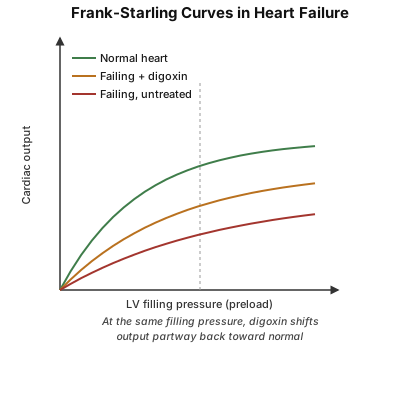
The failing heart’s ventricular function curve is both lower and flatter than normal — at any given filling pressure, it produces less cardiac output, and pushing filling pressure higher yields diminishing returns rather than a proportional rise. Digoxin’s positive inotropic effect shifts this curve up and to the left, partway back toward normal (never fully restoring it), which is the haemodynamic basis for its historical use in systolic heart failure with reduced ejection fraction.
Compensatory mechanisms, all initially adaptive, all ultimately harmful if sustained:
- Frank-Starling mechanism: increased end-diastolic fibre length increases contraction force — works initially, fails once the ventricle over-dilates past the optimal point on the length-tension curve.
- Sympathetic activation: raises heart rate and contractility short-term, but chronically increases O2 demand, causes arrhythmia risk, and downregulates β-receptors (why abrupt β-blocker withdrawal is dangerous, and paradoxically why carefully-initiated β-blockade helps long-term).
- Renin-angiotensin-aldosterone system (RAS) activation: reduced renal perfusion is read by the kidney as volume depletion → RAS activation → angiotensin II (vasoconstriction, afterload) and aldosterone (Na⁺/water retention, preload) — both raise the heart’s workload further, the central reason ACE-I/ARB and aldosterone antagonists are disease-modifying rather than merely symptomatic.
- Natriuretic peptides (ANP, BNP): released from stretched atrial/ventricular myocardium, promote natriuresis and vasodilation — a genuine counter-regulatory system, but ultimately overwhelmed by the RAS/sympathetic drive in established heart failure. This is the physiological basis for both BNP as a diagnostic/prognostic biomarker and for augmenting this pathway therapeutically (see ARNI, below).
Two Distinct Treatment Goals
It matters clinically which goal a given drug serves, because a drug can achieve one while doing nothing for (or even working against) the other:
Goal A — relieve congestive/low-output symptoms (breathlessness, oedema, fatigue): diuretics, positive inotropes, RAS inhibitors (also symptomatic here via afterload/preload reduction), direct vasodilators, digoxin.
Goal B — arrest or reverse disease progression, improve survival: ACE-I/ARB, evidence-based β-blockers, aldosterone antagonists, the neprilysin inhibitor sacubitril (as part of ARNI). Notably, inotropes that help Goal A do not help Goal B and several actively worsen long-term mortality — this dissociation (a drug that makes a patient feel better today while shortening their life) is one of the most important and most examined concepts in this topic.
Drug Classes
Diuretics
High-ceiling (loop) diuretics — furosemide — are the mainstay for relieving congestive symptoms (pulmonary/peripheral oedema) by reducing preload; they have no proven independent mortality benefit and serve Goal A only. Thiazides have only a limited role in heart failure (ineffective once GFR falls, as in most established HF) except as an add-on. Metolazone (a thiazide-like diuretic effective even at reduced GFR) is added to a loop diuretic specifically to overcome diuretic resistance (a state where chronic loop diuretic use causes compensatory distal tubule hypertrophy, blunting further response) — this thiazide-plus-loop combination produces a synergistic, sometimes profound diuresis and needs close electrolyte monitoring. Spironolactone is added both for its own disease-modifying effect (below) and to counter the K⁺ loss from loop/thiazide diuretics.
ACE Inhibitors and ARBs
Cornerstone, Goal B, disease-modifying therapy in systolic heart failure — indicated at essentially every stage. By blocking angiotensin II formation (ACE-I) or action (ARB), they reduce both afterload (vasoconstriction) and preload (aldosterone-driven Na⁺/water retention), directly interrupting the RAS-driven vicious cycle described above, and independently slow the maladaptive ventricular remodelling (hypertrophy, fibrosis) that angiotensin II otherwise drives. Started at low dose and up-titrated to target/maximum tolerated dose, monitoring renal function and K⁺.
β-Blockers in Heart Failure
A genuine paradox worth sitting with: β-blockers are negative inotropes, yet carvedilol, metoprolol succinate (extended-release), bisoprolol, and nebivolol have all demonstrated a clear mortality benefit in stable, compensated systolic heart failure — Goal B, not merely Goal A. The mechanism is thought to work through blunting the chronic sympathetic overactivity that itself drives remodelling, arrhythmia, and further β-receptor downregulation. This benefit is specific to a handful of agents and doses studied in trials, not a class effect assumed to generalize.
The critical caveat, repeated because it is the actual exam trap: β-blockers must be started at a very low dose, in stable/compensated patients only, and up-titrated slowly — never during acute decompensation, where the acute negative inotropic effect can precipitate cardiogenic shock. This is the opposite pattern from most drug initiation and is exactly why it is tested.
Aldosterone Antagonists
Spironolactone — the RALES-trial demonstration that adding low-dose spironolactone to standard therapy (ACE-I, loop diuretic, ± digoxin) reduced mortality in severe (NYHA III–IV) heart failure was a landmark finding, because the dose used was too low to produce a meaningful diuretic effect — the benefit is attributed to blocking aldosterone’s direct pro-fibrotic, pro-remodelling action on the myocardium, independent of its renal action. Eplerenone offers the same mortality benefit without spironolactone’s anti-androgenic side effects (gynaecomastia). Hyperkalaemia is the key monitoring concern, especially when combined with ACE-I/ARB.
ARNI (Angiotensin Receptor-Neprilysin Inhibitor)
Sacubitril-valsartan combines valsartan (an ARB) with sacubitril, a neprilysin inhibitor — neprilysin is the enzyme that normally degrades natriuretic peptides (ANP, BNP), so inhibiting it augments the body’s own counter-regulatory natriuretic-peptide system (described above) while simultaneously blocking angiotensin II via the ARB component. This combination showed superior mortality benefit compared with an ACE inhibitor alone and has become preferred over an ACE-I/ARB alone in appropriate patients. Neprilysin also degrades bradykinin, so sacubitril-valsartan carries an angioedema risk requiring a washout period when switching from an ACE inhibitor (which already raises bradykinin) — the two drugs are never given together.
Direct Vasodilators
Hydralazine + isosorbide dinitrate, used together (hydralazine’s arteriolar dilation reducing afterload, the nitrate’s venodilation reducing preload — complementary, not redundant), showed a survival benefit in heart failure specifically in self-identified Black patients in the landmark A-HeFT trial, and is used as an add-on (or ACE-I/ARB alternative when these are not tolerated, e.g. due to renal impairment) in that population, or as an add-on in others with persistent symptoms.
Positive Inotropes Beyond Digoxin
Used for acute decompensated heart failure/cardiogenic shock, short-term only — none of these has a proven long-term mortality benefit, and several worsen it with chronic use, exemplifying the Goal A/Goal B dissociation:
- Dobutamine: a β1-selective agonist, increases contractility with comparatively less tachycardia/arrhythmia risk than non-selective agonists — first-line inotrope for acute decompensation.
- Dopamine: dose-dependent receptor profile (low dose — dopaminergic renal vasodilation; intermediate — β1 inotropy; high dose — α-mediated vasoconstriction), used when blood pressure support is also needed alongside inotropic support.
- Milrinone (and the older inamrinone): phosphodiesterase-3 (PDE3) inhibitors — block cAMP breakdown in cardiac and vascular smooth muscle, producing both positive inotropy and vasodilation (“inodilators”). Useful when β-receptors are downregulated (chronic heart failure, or a patient already on a β-blocker) since the mechanism bypasses the β-receptor entirely, but long-term use increases mortality (arrhythmia), restricting them to short-term/bridge use.
Ivabradine
Blocks the SA node “funny” (If) current, producing pure heart-rate reduction with no negative inotropic effect (mechanism identical to its use in angina, see Antianginal Drugs). Added in heart failure patients who remain symptomatic with a resting heart rate ≥70/min despite maximal tolerated β-blocker dose (or when a β-blocker is contraindicated), with a demonstrated reduction in heart-failure hospitalization.
Clinical Relevance
The single organizing idea for this entire topic is the Goal A / Goal B split: a drug that relieves symptoms today (diuretics, inotropes) is not automatically a drug that prolongs life, and a drug that prolongs life (ACE-I/ARB, evidence-based β-blockers, aldosterone antagonists, ARNI) is not automatically the fastest way to relieve an acutely breathless patient. Real heart-failure management layers both — diuretics/inotropes for the crisis, the disease-modifying agents for the years afterward — and exam questions that ask “which drug reduces mortality” versus “which drug relieves congestion fastest” are testing whether this distinction has actually been understood, not just memorized as a drug list.
Diagram 1 — Frank-Starling Curves: Digoxin in Heart Failure
What to draw: Three ventricular function curves on the same axes (filling pressure/preload on x, cardiac output on y), each rising steeply then flattening (a diminishing-returns/saturating shape, not a straight line) — normal heart highest and steepest, untreated failing heart lowest and flattest, failing heart on digoxin shifted partway between the two.
Labelling requirements: a reference vertical line at one fixed filling pressure, crossing all three curves, is not optional decoration — it is the actual teaching point (at the same preload, the three states produce three different outputs), and a diagram without it just shows three vaguely similar curves without making the comparison concrete.
Common exam-marking mistakes:
- Drawing digoxin’s curve as restoring the heart fully to the normal curve — it does not; digoxin shifts the failing curve partway toward normal, it does not cure the underlying contractile deficit.
- Drawing the curves as straight lines rather than curves that flatten at higher filling pressures — the flattening is the mechanistic point behind why over-dilating the failing ventricle (the Laplace vicious cycle) stops helping and starts hurting, a plateau a straight line can’t show.
- Confusing this curve (a direct comparison of contractile states) with a dose-response curve from Pharmacodynamics — the x-axis here is a physiological load, not a drug concentration.
Note on Heart Failure Pathophysiology and Treatment Goals
Not rendered as a diagram — the compensatory-mechanism cascade (reduced output → SNS/RAS activation → further myocardial strain) is a genuine causal chain, but it’s already covered as a short prose sequence in notes.md, and the more clinically load-bearing structure is the Goal A vs Goal B classification of drug classes (symptom relief vs mortality benefit), which is fundamentally a categorization of drugs, not a mechanism with steps to trace — better served by the prose grouping already in notes.md than by a flowchart or a table that would just re-list the same nine drug classes under two headings.
Common exam-marking mistakes (for essay/short-answer questions on this material, even without a diagram):
- Listing a positive inotrope (dobutamine, milrinone) as if it were disease-modifying — these serve Goal A (acute symptom relief) only, and PDE-3 inhibitors specifically carry an increased long-term mortality risk with chronic use, the opposite of Goal B.
- Treating β-blockers in heart failure as a simple exception to “avoid negative inotropes” without the initiation caveat — the mortality benefit is real but conditional on starting at a very low dose in a stable, compensated patient; started during acute decompensation, the same drug can precipitate cardiogenic shock.
Long Essays (2)
Essays (2)
Short Answers (13)
Multiple Choice Questions (2)
My Sticky Notes
Personal revision notes, mnemonics and reminders.
