
Autacoids
What are autacoids
Local, on-demand signal molecules — NOT gland-produced, NOT circulating to distant sites (unlike hormones). Synthesized locally, act briefly, destroyed rapidly. 3 families: Histamine, 5-HT, Eicosanoids — grouped by BEHAVIOUR not chemistry.
Histamine
Synthesis: histidine→(decarboxylase)→histamine. Stored in mast cell granules (+heparin+acidic protein, +charged). Mast-cell pool=slow turnover; non-mast-cell pool (brain/epidermis/gastric mucosa)=fast turnover.
Release: IgE-FcεRI-mediated (Ag bridges IgE→cascade→Ca²⁺-dependent exocytosis) — classic allergic route. ALSO non-immunological: basic drugs (tubocurarine, morphine, vancomycin, polymyxin B) displace histamine directly, NO Ca²⁺/antigen needed → “anaphylactoid” reaction (mimics allergy, isn’t immunological).
Receptors:
| H1 | H2 | H3 | |
|---|---|---|---|
| Coupling | Gq | Gs | Gi/Go |
| Location | Smooth muscle, endothelium | Parietal cells, heart, vessels | Presynaptic (autoreceptor) |
| Action | Contraction; NO/PGI2 vasodilation | Acid secretion, cardiac stim, vasodilation | ↓further histamine release |
| Antagonist | Classical antihistamines | Cimetidine, ranitidine | Thioperamide |
Actions: Small vessels dilate(H1+H2), large vessels constrict(H1). Triple response (intradermal): Red spot(capillary dilation)+Wheal(H1, ↑permeability/exudation)+Flare(arteriolar dilation, axon reflex). ↑HR/contractility(H2). Bronchoconstriction(H1, asthmatics HYPERSENSITIVE). ↑↑Gastric acid(H2, parietal cell H+K+ATPase — SAME pump as ACh/gastrin converge on). Itch(low)/pain(high) via sensory nerves. NO BBB crossing but central non-mast-cell histamine = wakefulness transmitter (→ 1st-gen antihistamine sedation).
No therapeutic use of histamine itself — only relevant as blockade target.
H1 antihistaminics — graded by sedation: Highly sedative: diphenhydramine, promethazine, hydroxyzine. Moderate: pheniramine, cyproheptadine(+5-HT2 blocking→appetite stimulant), cinnarizine. Mild: chlorpheniramine, triprolidine, clemastine. 2nd-gen (non-sedating): fexofenadine, loratadine, cetirizine, levocetirizine.
Block bronchoconstriction/smooth muscle/triple response well. Only PARTIAL block of hypotension (need +H2 for full). Barely touch gastric acid secretion (NOT used in PUD). Uses: urticaria/angioedema/rhinitis (effective) — asthma/anaphylactic hypotension (INEFFECTIVE — LTs+PAF dominate there, not histamine).
5-HT (Serotonin)
Synthesis: tryptophan→5-HT. Stored via VMAT-2 (same as NA, also depleted by reserpine). Degraded by MAO-A. 90% in gut enterochromaffin cells; rest in platelets (uptake via SERT, same transporter SSRIs/TCAs block — NOT synthesized by platelets) + brain.
Receptor families: 4 families, 14 subtypes, only few clinically relevant:
| Family | Mechanism | Role | Drug |
|---|---|---|---|
| 5-HT1A | Gi, ↓cAMP | Raphe autoreceptor | Buspirone (partial agonist) |
| 5-HT1B/1D | Gi, ↓cAMP | Cranial vessel constriction | Triptans (antimigraine) |
| 5-HT2A | Gq | Main postjunctional — smooth muscle contraction, platelet aggregation | Ketanserin (antagonist) |
| 5-HT3 | Ligand-gated ion channel (ONLY ionotropic 5-HT receptor) | Emesis, gut peristalsis, pain/itch | Ondansetron (antiemetic) |
| 5-HT4 | Gs, ↑cAMP | Gut secretion/peristalsis | Cisapride (prokinetic) |
Actions: Triphasic BP response IV (↓early-coronary chemoreflex/Bezold-Jarisch → ↑brief-vasoconstriction → ↓prolonged-arteriolar dilation+extravasation). Tachyphylaxis with repeat dosing. Potent GI stimulant (↑peristalsis, diarrhea). Weaker bronchoconstrictor than histamine. ↓Gastric acid+↑mucus (ulcer-protective, not clinically used). CNS: sleep/mood/appetite/vomiting(5-HT3, area postrema).
Roles: melatonin precursor · anxiety/depression pathogenesis(SSRI basis) · chemo/radiotherapy vomiting via 5-HT3 (ondansetron 1st-line) · platelet aggregation/haemostasis · migraine vasoconstrictor phase+neurogenic inflammation.
Migraine drug therapy
| Severity | Rx |
|---|---|
| Mild (<8h, tolerable) | Simple analgesics ± antiemetic |
| Moderate | NSAIDs/combos → triptan/ergot + antiemetic if inadequate |
| Severe (12-48h) | Triptan/ergot + antiemetic from start; prophylaxis if >2-3/month |
Antiemetics essential: migraine causes gastric stasis → delays oral drug absorption. Metoclopramide(prokinetic too), domperidone, prochlorperazine — parenteral if already vomited.
Ergot alkaloids (ergotamine, DHE): partial agonist 5-HT1B/1D, constrict dilated cranial vessels, ↓neurogenic inflammation. Erratic oral absorption, frequent SE, regular use→rebound headache. NO prophylactic value. Largely replaced by triptans.
Triptans (sumatriptan, rizatriptan, naratriptan): SELECTIVE 5-HT1B/1D agonists. Constrict dilated cranial vessels (esp. carotid AV shunts), ↓further 5-HT release(autoreceptor), ↓neurogenic inflammation. Better tolerated than ergotamine, SUPPRESSES nausea/vomiting (ergotamine WORSENS it). Sumatriptan=prototype, ONLY parenteral triptan, recurrence in 20-40% (short t½). Never within 24h of ergotamine. CI: IHD, uncontrolled HTN, pregnancy.
Prophylaxis (>2-3 attacks/month): propranolol/β-blockers, amitriptyline/TCAs, flunarizine/CCBs, valproate/topiramate — DIFFERENT drugs entirely from acute-attack treatment (not serotonergic).
Eicosanoids (PGs, TXs, LTs)
20-C arachidonic acid derivatives. NO preformed stores — synthesized on-demand when phospholipase A2 (↑Ca²⁺-activated) releases arachidonic acid from membrane.
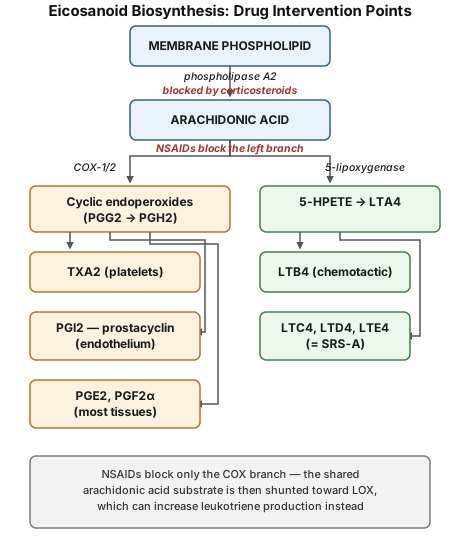
COX pathway → ring compounds (PGs, TXA2, PGI2). COX-1=constitutive, housekeeping (gastric mucus, haemostasis, renal flow). COX-2=inducible by cytokines/inflammation (basis for selective COX-2 inhibitors: celecoxib, etoricoxib — anti-inflammatory with less GI/renal disruption).
LOX pathway → open-chain LTs. 5-LOX→LTB4(chemotactic)+cysteinyl LTC4/D4/E4(=“SRS-A”, MORE important than histamine in human asthma bronchoconstriction).
NSAIDs block ONLY COX (aspirin=irreversible/serine acetylation; others=reversible/competitive) → substrate SHUNTED to LOX → can PARADOXICALLY ↑LT production (aspirin-exacerbated respiratory disease mechanism).
Corticosteroids block PLA2 (via annexins) → suppresses BOTH branches (PGs+TXs+LTs) → broader anti-inflammatory than any single NSAID.
Key antagonistic pair: TXA2(platelet COX-1, →aggregation+vasoconstriction) vs PGI2(endothelial COX mainly COX-2, →anti-aggregation+vasodilation). Aspirin selectively kills TXA2 (platelets can’t resynthesize COX, effect lasts ~platelet lifespan) while endothelium regains PGI2 faster (can make new COX) → net antiplatelet effect.
Ductus arteriosus: PGE2(COX-2) keeps patent in utero; falls at birth→closure. Aspirin/indomethacin can pharmacologically CLOSE a persistent ductus.
Uterus: PGE2+PGF2α → contraction + cervical ripening (labor induction basis). Excess endometrial PG synthesis → primary dysmenorrhoea (why NSAIDs work mechanistically, not just generically analgesic).
Bronchial: PGF2α/PGD2/TXA2=constrictors(>histamine potency); PGE2/PGI2=dilators. Asthma = imbalance toward constrictors+cysteinyl LTs.
Uses: Dinoprostone/misoprostol(PGE analogs)=cervical ripening/labor induction; misoprostol+mifepristone=medical abortion; carboprost(PGF2α)=PPH unresponsive to oxytocin; alprostadil(PGE1)=maintain ductal patency in ductus-dependent CHD; epoprostenol(PGI2)=pulmonary HTN; misoprostol=gastric protection with NSAID co-therapy; latanoprost(PGF2α analog)=glaucoma(↑uveoscleral outflow); alprostadil=ED(intracavernosal).
Platelet-Activating Factor (PAF)
Distinct lipid autacoid (not an eicosanoid but co-generated). Extremely potent platelet aggregator (>>TXA2 potency), bronchoconstrictor, ↑vascular permeability. Contributor to asthma+anaphylaxis alongside LTs — explains why antihistamines alone fail in these conditions.
Clinical relevance
Same lesson 3× over: identify the SPECIFIC receptor subtype mediating the effect, target that subtype only. Aspirin→selective irreversible TXA2 kill (vs PGI2 recovers). Ondansetron→selective 5-HT3 block (leaves mood/vascular 5-HT receptors alone). Sumatriptan→selective 5-HT1B/1D agonism (vs non-selective serotonergic = far broader, less tolerable). Subtype selectivity = the actual design principle across this whole topic.
What Makes a Mediator an Autacoid
Autacoids (“self-remedies”) are a loose category of endogenous signal molecules that, unlike hormones, are not produced by dedicated glands and do not circulate to act at distant sites — they are synthesized locally, on demand, act briefly near their site of production, and are rapidly destroyed. Histamine, serotonin (5-HT), and the eicosanoids (prostaglandins, thromboxanes, leukotrienes) are the three autacoid families of greatest pharmacological importance, each with genuinely distinct chemistry, receptors, and clinical relevance — they are grouped together by shared behaviour (local, autoregulatory signalling) rather than by any chemical or mechanistic similarity to one another.
Histamine
Synthesis, storage, and release. Histamine is synthesized locally from the amino acid histidine by decarboxylation and degraded rapidly by oxidation and methylation. It is stored, positively charged, complexed with heparin and an acidic protein inside mast cell granules — tissues rich in mast cells (skin, gastric and intestinal mucosa, lungs) hold the largest stores, and this mast-cell pool turns over slowly. A separate, fast-turnover, non-mast-cell pool exists in the brain, epidermis, and gastric mucosa. Release from mast cell granules occurs by exocytosis, triggered classically by an IgE-mediated antigen-antibody reaction on the mast cell surface (the FcεRI receptor binds IgE; antigen bridging triggers a signalling cascade ending in calcium-dependent granule exocytosis) — though a separate, non-immunological route exists too: certain basic drugs (tubocurarine, morphine, vancomycin, polymyxin B) and surface-active agents displace stored histamine directly, without requiring calcium or an antigen-antibody reaction, producing an “anaphylactoid” reaction that mimics true allergy without being immunologically mediated.
Receptors. Four subtypes are recognized, but only H1 and H2 have established clinical relevance.
| H1 | H2 | H3 | |
|---|---|---|---|
| Coupling | Gq (↑IP3/DAG, ↑intracellular Ca2+) | Gs (↑cAMP) | Gi/Go (↓cAMP) |
| Main location | Smooth muscle (gut, airway, uterus), vascular endothelium | Gastric parietal cells, cardiac muscle, blood vessels | Presynaptic (brain, gut) |
| Main action | Smooth muscle contraction; endothelial NO/PGI2 release → vasodilatation | Gastric acid secretion; cardiac stimulation; vasodilatation | Autoreceptor — inhibits further histamine release |
| Selective antagonist | Mepyramine, chlorpheniramine (and all classical “antihistamines”) | Cimetidine, ranitidine | Thioperamide |
Actions. Histamine dilates small vessels (through H1-mediated endothelial NO/prostacyclin release, and directly through H2 receptors on vascular smooth muscle) while constricting larger vessels (H1) — the net haemodynamic effect of an intradermal injection is the classic triple response: a red spot (capillary dilatation), a wheal (H1-mediated increased capillary permeability and fluid exudation), and surrounding flare (arteriolar dilatation via an axon reflex). It stimulates the isolated heart (both chronotropically and inotropically, mainly H2), causes bronchoconstriction (H1 — asthmatics are markedly hypersensitive to this), and drives gastric acid secretion powerfully through H2 receptors on parietal cells via the same H+/K+-ATPase proton pump that acetylcholine and gastrin also converge on — the physiological basis for why H2 blockers suppress not just histamine-driven but also much of the ACh- and gastrin-driven component of acid secretion. It also directly stimulates sensory nerve endings (itch at low concentration, pain at higher concentration) and is not currently believed to cross the blood-brain barrier, though centrally-synthesized, non-mast-cell histamine functions as an independent wakefulness-promoting transmitter — the pharmacological basis of first-generation antihistamine sedation.
Histamine has no therapeutic use of its own — its pharmacological role is entirely as a target for blockade (H1 antagonists) or as the mediator whose actions define why certain other drugs work.
H1 Antihistaminics
Competitive H1 antagonists, graded by their sedative liability — largely a function of how well the individual compound penetrates the blood-brain barrier and its relative affinity for central versus peripheral H1 receptors:
| Sedation grade | Examples |
|---|---|
| Highly sedative | Diphenhydramine, dimenhydrinate, promethazine, hydroxyzine |
| Moderately sedative | Pheniramine, cyproheptadine, cinnarizine |
| Mildly sedative | Chlorpheniramine, triprolidine, clemastine |
| Second-generation (practically non-sedating) | Fexofenadine, loratadine, desloratadine, cetirizine, levocetirizine |
Actions beyond simple H1 blockade: effectively block histamine-induced bronchoconstriction, smooth muscle contraction, and the triple response, though they only partially block histamine-induced hypotension (full blockade of the high-dose fall in BP needs an added H2 blocker) and barely touch histamine’s action on gastric acid secretion, which is why they have no role in peptic ulcer management despite blocking so much else histamine does. Many older agents produce variable CNS depression (a minority instead show paradoxical stimulation/insomnia, and toxic doses can cause convulsions); second-generation agents are designed to avoid this by minimizing CNS penetration. Cyproheptadine carries additional 5-HT2 antagonist activity, which underlies its separate use as an appetite stimulant.
Clinical use centres on controlling type I hypersensitivity manifestations — urticaria, angioedema, itching, allergic rhinitis — where they are genuinely effective; they are markedly less useful for asthma and anaphylactic hypotension in humans, because leukotrienes (LTC4, LTD4) and platelet-activating factor, not histamine, are now understood to be the dominant mediators of bronchoconstriction in human asthma specifically.
5-Hydroxytryptamine (Serotonin, 5-HT)
Synthesis, storage, and destruction closely parallel the catecholamines: 5-HT is synthesized from the amino acid tryptophan, actively taken up into storage vesicles by the same vesicular monoamine transporter (VMAT-2) that handles noradrenaline (and is therefore also depleted by reserpine), and degraded primarily by monoamine oxidase (specifically the MAO-A isoform). About 90% of the body’s 5-HT sits in gut enterochromaffin cells; most of the remainder is in platelets (which do not synthesize it themselves, but take it up from the circulation via the serotonin transporter, SERT — the same transporter SSRIs and tricyclic antidepressants block) and the brain.
Receptors. Four families (5-HT1, 5-HT2, 5-HT3, 5-HT4-7) with 14 recognized subtypes, though only a handful are functionally well characterized and clinically exploited:
| Family | Mechanism | Key location/role | Clinically relevant drug |
|---|---|---|---|
| 5-HT1A | Gi/Go, ↓cAMP | Raphe nuclei/hippocampus autoreceptor — inhibits serotonergic firing | Buspirone (partial agonist, antianxiety) |
| 5-HT1D/1B | Gi/Go, ↓cAMP | Constricts cranial blood vessels; inhibits inflammatory neuropeptide release | Sumatriptan and other triptans (agonists, antimigraine) |
| 5-HT2A | Gq, ↑IP3/DAG | The main postjunctional receptor — vascular/visceral smooth muscle contraction, platelet aggregation, cerebral neuron activation | Ketanserin (antagonist) |
| 5-HT3 | Ligand-gated cation channel (the only ionotropic 5-HT receptor) | Rapid depolarization — mediates emesis, gut peristalsis, pain/itch, visceral reflexes (Bezold-Jarisch-type bradycardia) | Ondansetron (antagonist, antiemetic) |
| 5-HT4 | Gs, ↑cAMP | Gut secretion and peristalsis | Cisapride, renzapride (agonists, prokinetic) |
Actions. 5-HT is a potent nerve-ending depolarizer, producing complex, often variable cardiovascular effects (tachyphylaxis develops rapidly with repeated dosing) — a classic triphasic BP response to IV injection (early sharp fall via the coronary chemoreflex/Bezold-Jarisch reflex, a brief rise via vasoconstriction and increased cardiac output, then a more prolonged fall from arteriolar dilatation and fluid extravasation). It is a potent GI stimulant (both directly and via enteric plexus receptors — increased peristalsis, diarrhoea), a weaker bronchoconstrictor than histamine, inhibits gastric acid secretion while increasing protective mucus (a genuinely ulcer-protective action, though not one that is clinically exploited), and acts as an established CNS neurotransmitter involved in sleep, mood, appetite, and the vomiting reflex specifically through 5-HT3 receptors in the area postrema.
Pathophysiological roles worth naming: precursor of pineal melatonin; implicated in the pathogenesis of anxiety/depression (the basis for SSRIs); the central mediator of cytotoxic-drug- and radiotherapy-induced vomiting via 5-HT3 receptors — the pharmacological reason ondansetron is a first-line antiemetic in chemotherapy; contributes to platelet aggregation and clot formation at sites of vascular injury (haemostasis); implicated in the vasoconstrictor phase and neurogenic inflammation of migraine.
Drug Therapy of Migraine
Migraine is graded by severity, and treatment escalates accordingly — the strategy is not “give the strongest drug regardless,” but matching drug class to attack severity:
| Severity | Approach |
|---|---|
| Mild (infrequent, tolerable, <8h) | Simple analgesics (paracetamol, aspirin) ± antiemetic |
| Moderate (more intense, functionally impairing) | NSAIDs/combinations; if inadequate, a triptan or ergot preparation + antiemetic |
| Severe (frequent, incapacitating, 12–48h) | A triptan or ergot alkaloid + antiemetic from the outset; prophylaxis if attacks exceed 2–3/month |
Antiemetics deserve specific mention because migraine causes gastric stasis, which itself delays absorption of oral analgesics — metoclopramide (also prokinetic, directly countering the stasis), domperidone, and prochlorperazine are the standard choices, given parenterally if the patient has already vomited.
Ergot alkaloids (ergotamine, dihydroergotamine) act as partial agonists at 5-HT1B/1D receptors on cranial vessels, causing vasoconstriction of the pathologically dilated vessels and reducing neurogenic inflammation. Effective, but oral absorption is erratic, side effects (nausea, muscle cramps) are frequent, and regular use itself causes a rebound background headache — so they have been substantially displaced by triptans except on cost grounds or when triptans fail. They carry no prophylactic value at all.
Triptans (sumatriptan, rizatriptan, naratriptan, and others) are selective 5-HT1B/1D agonists — a rationally designed drug class built around a specific receptor subtype rather than an empirically discovered compound. They constrict the dilated cranial vessels (particularly carotid arteriovenous shunts, which divert blood away from brain parenchyma during an attack), reduce further 5-HT release from presynaptic 5-HT1D autoreceptors, and suppress neurogenic inflammation and inflammatory neuropeptide release around affected vessels — mechanistically similar to ergotamine’s target but achieved with much greater receptor selectivity, translating clinically into better tolerability and, usefully, suppression rather than worsening of migraine-associated nausea (ergotamine tends to worsen it). Sumatriptan is the prototype and the only triptan available parenterally; recurrence of headache within 24 hours is common (20–40% of patients) due to its short half-life, which longer-acting congeners (naratriptan, frovatriptan) partly address at the cost of slower initial relief. Triptans and ergot alkaloids should never be given within 24 hours of each other (additive vasoconstriction), and triptans are contraindicated in ischaemic heart disease, uncontrolled hypertension, and pregnancy given their vasoconstrictor mechanism.
Migraine prophylaxis (for attacks exceeding 2–3/month) uses an entirely different drug set — propranolol/other β-blockers, tricyclic antidepressants (amitriptyline), calcium channel blockers (flunarizine), and antiepileptics (valproate, topiramate) — none of which act through the serotonergic mechanisms that abort an acute attack, reflecting that acute treatment and prevention of migraine rest on genuinely different pharmacology.
Eicosanoids: Prostaglandins, Thromboxanes, Leukotrienes
Chemistry and biosynthesis. Eicosanoids are 20-carbon derivatives of polyunsaturated fatty acids released from membrane phospholipids — arachidonic acid is the dominant precursor in humans. Unlike histamine or 5-HT, eicosanoids have no preformed stores; they are synthesized entirely on demand, the moment membrane phospholipase A2 (activated by mechanical, chemical, or immunological stimuli, via a rise in intracellular calcium) liberates arachidonic acid from the membrane.
Two enzymatic pathways compete for the same arachidonic acid substrate:
- Cyclooxygenase (COX) pathway produces the ring-structured eicosanoids: prostaglandins, thromboxane (TXA2, chiefly in platelets), and prostacyclin (PGI2, chiefly in vascular endothelium). COX exists as two isoforms — COX-1, constitutively expressed and largely responsible for physiological “housekeeping” functions (gastric mucus protection, haemostasis, renal blood flow maintenance), and COX-2, normally present in only trace amounts but strongly induced by cytokines and inflammatory stimuli (though it also has some constitutive physiological role in kidney, brain, and the foetal ductus arteriosus). This COX-1/COX-2 distinction is the entire pharmacological rationale for selective COX-2 inhibitors (celecoxib, etoricoxib) — the intent being anti-inflammatory efficacy with less disruption of COX-1-dependent gastric and renal protection.
- Lipoxygenase (LOX) pathway, active mainly in lung, leukocytes, and platelets, produces the open-chain leukotrienes — 5-LOX generates LTB4 (a potent leukocyte chemoattractant) and the cysteinyl leukotrienes LTC4/LTD4/LTE4, which together constitute what was historically called the “slow-reacting substance of anaphylaxis” (SRS-A), now understood to be a dominant mediator of human bronchoconstriction, more important than histamine in this specific role.
NSAIDs inhibit only the COX pathway — aspirin does so irreversibly (acetylating a serine residue on the enzyme), other NSAIDs reversibly and competitively. Because NSAIDs leave the LOX pathway untouched, and because blocking COX actually shunts more of the shared arachidonic acid substrate toward LOX, NSAID use can paradoxically increase leukotriene production — one accepted explanation for aspirin-sensitive/aspirin-exacerbated respiratory disease in a subset of asthmatic patients. Corticosteroids act one step further upstream, inhibiting phospholipase A2 itself (via induced annexin proteins) and thereby suppressing the entire cascade — prostaglandins, thromboxane, and leukotrienes together — which is exactly why steroids are more broadly anti-inflammatory than any single NSAID.
Actions and pathophysiological roles. Individual prostaglandins frequently have opposing or context-dependent effects, so generalizing across “prostaglandins” as a single category is usually a mistake — the specific mediator matters:
- Platelets/vasculature: TXA2 (from platelet COX-1) is a potent inducer of platelet aggregation and vasoconstriction; PGI2 (from endothelial COX, mainly COX-2) is a potent inhibitor of platelet aggregation and a vasodilator. These two form a physiologically antagonistic pair — PGI2 keeping circulating platelets from aggregating inappropriately, TXA2 driving aggregation specifically at a site of vascular injury where clot formation is actually needed. Aspirin’s antiplatelet effect (lasting the ~10-day lifespan of the platelet, since platelets cannot resynthesize COX) works precisely because it selectively and irreversibly cripples TXA2 production while endothelial cells — which, unlike platelets, can synthesize new COX protein — regain PGI2 production comparatively quickly, tilting the balance toward reduced aggregation.
- Ductus arteriosus: locally produced PGE2 (via COX-2) keeps the foetal ductus arteriosus patent; at birth, PGE2 synthesis falls and the ductus closes. Aspirin or indomethacin can pharmacologically induce closure of a ductus that has failed to close spontaneously — a genuine, still-used clinical application.
- Uterus: PGE2 and PGF2α both consistently contract the human uterus and soften/ripen the cervix, in both pregnant and non-pregnant states — the mechanistic basis for their use in labour induction and cervical ripening, and separately, excess endometrial PG synthesis is implicated in primary dysmenorrhoea, explaining why NSAIDs are genuinely effective analgesics for this specific pain (not just generic analgesia — they address the actual mechanism).
- Bronchial muscle: PGF2α, PGD2, and TXA2 are bronchoconstrictors (more potent than histamine); PGE2 and PGI2 are bronchodilators — asthma has been framed as reflecting an imbalance between these constrictor and dilator eicosanoids, alongside the cysteinyl leukotrienes on the constrictor side.
Therapeutic Uses of Prostaglandins
- Obstetric: dinoprostone (PGE2) and misoprostol (a PGE1 analogue) for cervical ripening and labour induction; misoprostol combined with mifepristone for medical termination of pregnancy; carboprost (a PGF2α analogue) for postpartum haemorrhage unresponsive to oxytocin.
- Cardiovascular: alprostadil (PGE1) to maintain ductal patency in neonates with ductus-dependent congenital heart disease awaiting surgery; epoprostenol (synthetic PGI2) in pulmonary arterial hypertension.
- Gastric protection: misoprostol protects gastric mucosa and can be co-prescribed with NSAIDs specifically to counteract their COX-1-mediated loss of protective mucosal prostaglandin — a direct application of the same biosynthesis pathway the NSAID itself is blocking.
- Ophthalmic: latanoprost and related PGF2α analogues lower intraocular pressure in glaucoma by increasing uveoscleral outflow.
- Erectile dysfunction: alprostadil, by intracavernosal injection or intraurethral application.
Platelet-Activating Factor (PAF)
A distinct lipid autacoid (not itself an eicosanoid, though generated alongside them and sharing much of the same trigger machinery), synthesized by platelets, neutrophils, macrophages, and endothelium. It is an extremely potent platelet aggregator (far more potent than TXA2 on a molar basis), a potent bronchoconstrictor, and increases vascular permeability — a significant contributor to the pathophysiology of asthma and anaphylaxis, alongside the leukotrienes, and part of why antihistamines alone are inadequate for these conditions.
Clinical Relevance
The pharmacological reasoning that ties this entire topic together is the same shape repeated three times: identify which specific receptor subtype (H1 vs H2; 5-HT1 vs 5-HT2 vs 5-HT3; COX-1 vs COX-2; TXA2 vs PGI2) actually mediates the effect in question, then target that subtype specifically rather than the mediator as a whole. Aspirin’s selective, irreversible action on platelet TXA2 (versus endothelial PGI2, which recovers faster), ondansetron’s selective 5-HT3 blockade for chemotherapy-induced vomiting (leaving mood- and vasculature-relevant 5-HT receptors untouched), and sumatriptan’s selective 5-HT1B/1D agonism for migraine (versus a non-selective serotonergic drug, which would have far broader and less tolerable effects) are all the same underlying lesson: within one autacoid family, different receptor subtypes can drive opposite or unrelated effects, and rational drug design in this area is fundamentally about subtype selectivity.
Diagram 1 — Biosynthesis of Eicosanoids: Where NSAIDs and Steroids Intervene
What to draw: Membrane phospholipid → (phospholipase A2) → arachidonic acid → splits into the COX branch (cyclic endoperoxides → TXA2 / PGI2 / PGE2-PGF2α) and the LOX branch (5-HPETE → LTA4 → LTB4 / cysteinyl leukotrienes). Mark corticosteroid inhibition at the phospholipase A2 step and NSAID inhibition at the COX step specifically.
Labelling requirements: the two inhibition points must be pinned to their exact steps, not floated near the diagram generally — corticosteroids act one step upstream of NSAIDs, blocking the entire cascade (both branches), while NSAIDs block only the COX branch. This difference in scope is the single most important fact this diagram exists to convey, and it is lost if both inhibitors are simply listed somewhere near the pathway rather than anchored to their specific arrows.
Common exam-marking mistakes:
- Showing NSAIDs as blocking leukotriene production — they do not; they block only the COX branch, and can paradoxically increase LT synthesis by shunting substrate toward LOX.
- Omitting that TXA2 and PGI2 come from different cell types (platelets vs endothelium) despite both being COX products — collapsing them into one undifferentiated “COX product” box loses the entire pro-aggregatory/anti-aggregatory contrast that explains aspirin’s antiplatelet effect.
- Drawing corticosteroids as acting at the same step as NSAIDs — they act upstream, at phospholipase A2, which is why steroids suppress the leukotriene branch too and NSAIDs don’t.
Diagram 2 — The Triple Response to Intradermal Histamine
What to draw: A cross-section of skin at the injection site showing three concentric/sequential zones — a central red spot (capillary dilatation), a surrounding wheal (raised, from fluid exudation), and an outer flare (diffuse redness from arteriolar dilatation via axon reflex).
Labelling requirements: label each zone with both its name and its specific mechanism (not just “redness” but “capillary dilatation”; not just “swelling” but “increased capillary permeability/fluid exudation”) — the triple response is tested precisely because each component has a distinct vascular mechanism, and a diagram that shows three rings without naming the mechanism behind each loses that distinction.
Common exam-marking mistakes:
- Treating the flare as simply “more of the same” redness as the central spot — the flare specifically involves an axon reflex extending beyond the direct site of histamine action, a different mechanism from the central capillary dilatation.
- Omitting that this entire response is H1-mediated and blocked by H1 antihistamines — the diagram’s clinical payoff (why antihistamines work on urticaria) is lost without this label.
Long Essays (1)
Short Essays (5)
Essays (2)
Short Answers (38)
Short Notes (12)
My Sticky Notes
Personal revision notes, mnemonics and reminders.
