
Chronic Myeloid Leukaemia
Definition
WHO: stem cell clone with Philadelphia chromosome — t(9;22)(q34;q11), BCR(chr22)-ABL(chr9) fusion → BCR-ABL protein. Confirmed by PCR/FISH.
Mechanism
BCR-ABL transforms progenitors: (1) ABL becomes constitutive tyrosine kinase → activates other kinases, inhibits apoptosis (2) altered DNA-binding (3) ↑binding to cytoskeletal actin.
Blast crisis progression (unclear, implicated): p53/RB alterations, RAS/MYC changes, IL-1β release, PP2A inactivation.
3 phases
- Chronic — excess intermediate myeloid cells (myelocytes, metamyelocytes). Myeloblasts <10%. Basophils up to 10% (rising basophilia = warning sign of transformation).
- Accelerated — rising WBC, thrombocytosis/thrombocytopenia, worsening anaemia. Blasts 10-20%, marrow basophils ≥20%, platelets <100k.
- Blastic (blast crisis) — blasts >20% = meets acute leukaemia definition. Usually myeloid (resembles AML but NO Auer rods); can be lymphoid/erythroid/undifferentiated.
Clinical features
~20% of all leukaemias. Peak 3rd-4th decade. Equal sex. Insidious. Juvenile CML = distinct variant, more lymphadenopathy than splenomegaly + infections/haemorrhage/facial rash.
- Anaemia (weakness, pallor, dyspnoea, tachycardia)
- Hypermetabolism (weight loss, night sweats, anorexia)
- Splenomegaly — almost always present, often massive, can cause pain (infarction)
- Bleeding (bruising, epistaxis, menorrhagia)
- Less common: gout, visual disturbance, neuro symptoms, priapism
Labs
Blood: moderate normocytic normochromic anaemia, marked leucocytosis (all maturation stages), platelets normal/↑ (~50%). Marrow: hypercellular, myeloid predominance, ↑M:E ratio, small megakaryocytes. Cytogenetics: Ph chromosome in 90-95%. Cytochem: ↓NAP score (KEY discriminator vs leukaemoid reaction where NAP is ↑; NAP normalises with Rx/steroids/infection — interpret in context). Other: ↑serum B12+binding capacity, hyperuricaemia.
Treatment
- Imatinib — competitive ABL-kinase ATP-site inhibitor, induces apoptosis in BCR-ABL+ cells. Best in new diagnosis. 97% complete haem. remission at 18mo.
- Allogeneic BMT — only cure, but mortality risk + GVHD
- Interferon-α — historical, pre-imatinib chronic phase drug
- Chemo (busulfan, cyclophosphamide, hydroxyurea) — ↓WBC mass
- Others: splenic irradiation, splenectomy, leucopheresis
Most common cause of death (80%): disease acceleration + blastic transformation.
Clinical relevance
↓NAP(CML) vs ↑NAP(leukaemoid reaction) = key discriminator, but read in context (Rx/steroids/infection normalise NAP). Rising basophilia in chronic phase = early warning of blastic transformation, watch specifically not just total WBC. No Auer rods in CML blast crisis even though it resembles AML = specific distinguishing point. Imatinib = paradigm example of molecularly-targeted cancer therapy (mechanism-based, not just diagnostic marker use).
Definition and Pathophysiology
Chronic myeloid leukaemia (CML) is, by WHO definition, established by identification of a haematopoietic stem cell clone bearing the Philadelphia (Ph) chromosome — a balanced reciprocal translocation t(9;22)(q34;q11) fusing the BCR gene (chromosome 22) to the ABL gene (chromosome 9, named for Abelson murine leukaemia virus), producing the BCR-ABL fusion protein, confirmable by PCR or FISH.
Mechanism
The BCR-ABL fusion protein transforms haematopoietic progenitors by three mechanisms: (1) constitutive activation of ABL as a tyrosine kinase, which activates downstream kinases and inhibits apoptosis; (2) altered DNA-binding function of ABL; (3) increased binding to cytoskeletal actin microfilaments. Progression to blast crisis is incompletely understood but implicates structural alterations in p53 and RB tumour suppressors, RAS and MYC oncogene alterations, IL-1β release, and functional inactivation of the tumour suppressor phosphatase PP2A.
Three Phases of Natural History
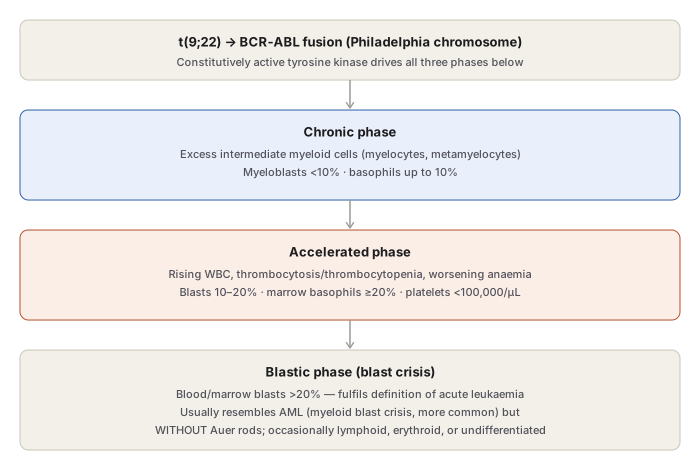
- Chronic phase — a myeloproliferative state with excessive proliferation of intermediate-grade myeloid cells (myelocytes, metamyelocytes) and mature neutrophils; myeloblasts <10%; basophils up to 10% (rising basophilia signals impending transformation).
- Accelerated phase — progressively rising leucocytosis, thrombocytosis or thrombocytopenia, worsening anaemia, splenomegaly; blasts 10–20%, marrow basophils ≥20%, platelets falling below 100,000/µL.
- Blastic phase (blast crisis) — meets the definition of acute leukaemia (blood/marrow blasts >20%); may be myeloid (more common, resembling AML but without Auer rods), lymphoid, erythroid, or undifferentiated.
Clinical Features
Accounts for ~20% of all leukaemias, peak incidence in the 3rd–4th decades, equal sex distribution, insidious onset. Juvenile CML is a distinct paediatric variant, presenting more with lymphadenopathy than splenomegaly, plus frequent infections, haemorrhage, and facial rash.
- Anaemia: weakness, pallor, dyspnoea, tachycardia.
- Hypermetabolic symptoms: weight loss, lassitude, anorexia, night sweats.
- Splenomegaly — almost always present, frequently massive; may cause acute pain from splenic infarction.
- Bleeding tendency: easy bruising, epistaxis, menorrhagia.
- Less common: gout, visual disturbance, neurological symptoms, priapism.
Laboratory Findings
- Blood: moderate normocytic normochromic anaemia; marked leucocytosis with the full spectrum of myeloid maturation stages circulating; platelets normal or raised (about half of cases).
- Marrow: hypercellular, myeloid predominance with increased myeloid:erythroid ratio, reduced erythropoietic cells, conspicuous but smaller-than-normal megakaryocytes.
- Cytogenetics: Philadelphia chromosome in 90–95% of cases.
- Cytochemistry: reduced NAP (neutrophil alkaline phosphatase) score — the key discriminator from myeloid leukaemoid reaction, where NAP is elevated (NAP normalises with successful treatment, corticosteroids, or intercurrent infection, so it must be interpreted in clinical context).
- Other: elevated serum B12 and B12-binding capacity; hyperuricaemia.
Treatment and Prognosis
Modern therapy targets elimination of the BCR-ABL-bearing malignant clone to achieve molecular remission:
- Imatinib (oral tyrosine kinase inhibitor) — competitively inhibits the ATP-binding site of ABL kinase, inducing apoptosis in BCR-ABL-positive cells; most effective in newly diagnosed disease; achieves complete haematologic remission for 18 months in 97% of treated cases.
- Allogeneic bone marrow/stem cell transplantation — the only proven cure, but carries procedural mortality risk and post-transplant GVHD, requiring ongoing immunosuppression.
- Interferon-α — the historical drug of choice before imatinib/transplantation, for chronic-phase disease.
- Chemotherapy (busulfan, cyclophosphamide/melphalan, hydroxyurea) — to lower WBC mass.
- Others: splenic irradiation, splenectomy, leucopheresis.
The most common cause of death (in 80% of cases) is disease acceleration and blastic transformation.
Clinical Relevance
- The reduced NAP score in CML versus elevated NAP in myeloid leukaemoid reaction is the single most exam-relevant discriminator between the two conditions when the blood picture is otherwise similar — but it must be read alongside the clinical context, since successful treatment, steroids, and infection all normalise the score.
- Rising basophilia within the chronic phase is a genuinely useful early warning sign of impending blastic transformation, worth monitoring specifically rather than tracking only the total white cell count.
- The absence of Auer rods in myeloid blast crisis of CML, despite otherwise resembling AML, is a specific morphologic distinction worth retaining precisely because the two conditions can otherwise look identical at this stage.
- Imatinib’s mechanism (competitive ATP-site inhibition of the BCR-ABL kinase) is the paradigm example of rationally designed, molecularly targeted cancer therapy — directly following from understanding the Philadelphia chromosome’s functional consequence, not just its presence as a diagnostic marker.
Diagram 1: The Three Phases of CML
Draw a top box (t(9;22)/BCR-ABL formation) feeding into a single downward sequence of three phase boxes.
- Molecular origin — t(9;22) → BCR-ABL → constitutively active tyrosine kinase.
- Chronic phase — myeloblasts <10%, basophils ≤10%.
- Accelerated phase — blasts 10–20%, marrow basophils ≥20%, platelets <100,000/µL.
- Blastic phase — blasts >20%, meets acute leukaemia definition, usually myeloid without Auer rods.
Labels required
- The exact blast percentage cutoffs for each phase transition (<10% / 10–20% / >20%) must be stated precisely — these are the numbers that actually define phase staging and are frequently tested.
- “Without Auer rods” must be explicitly noted in the blastic phase box, since this is the specific point that distinguishes CML blast crisis from de novo AML despite otherwise resembling it.
Errors commonly made
- Treating the three phases as separate diseases rather than one continuous natural history driven by the same original molecular lesion (BCR-ABL) accumulating additional genetic changes over time.
- Forgetting that rising basophilia specifically (not just rising total WBC) is the clinical signal of impending transformation from chronic to accelerated/blastic phase.
- Assuming myeloid blast crisis in CML would show Auer rods just because it resembles AML morphologically — it specifically does not.
Long Essays (2)
Short Essays (1)
Multiple Choice Questions (4)
My Sticky Notes
Personal revision notes, mnemonics and reminders.
