
Antimicrobial Agents and Antimicrobial Resistance
Classification
By target: antibacterial/antifungal/antiparasitic/antiviral. By action: cidal (kills) vs static (inhibits). By origin: antibiotic (natural) vs chemotherapeutic (synthetic) — terms now used interchangeably. By site: disinfectant (non-living surfaces), antiseptic (living tissue), antibiotic (systemic). By mechanism — the clinically useful classification.
Cell Wall Synthesis Inhibitors
β-lactams (bactericidal): block transpeptidase/PBP, stop peptidoglycan cross-linking.
Penicillin — Gram-positive (Strep pyogenes, pneumococcus, C. diphtheriae, C. tetani, C. perfringens, meningococcus; gonococcus/T. pallidum — resistance rising).
Penicillinase-resistant penicillins (cloxacillin, methicillin, nafcillin) — + penicillinase-producing S. aureus.
Aminopenicillins (ampicillin, amoxicillin) — + Enterococcus, E. coli, H. pylori, Salmonella/Shigella (resistance common).
Antipseudomonal penicillins (piperacillin, ticarcillin) — + Pseudomonas.
Cephalosporins by generation:
- 1st (cefazolin) — Staph, some GNB
- 2nd (cefuroxime, cefoxitin) — + GNB, anaerobes
- 3rd (ceftriaxone, ceftazidime) — ↓Gram+, ↑Gram−, ceftazidime = antipseudomonal
- 4th (cefepime) — good both Gram+/− incl Pseudomonas
- 5th (ceftaroline) — only β-lactam active vs MRSA
BL+BLI combos (amox-clav, pip-tazo) — restore activity vs β-lactamase producers, good anaerobic cover.
Carbapenems (imipenem, meropenem) — broadest spectrum; no MRSA, no Mycoplasma.
Monobactam (aztreonam) — Gram-negative rods only.
Glycopeptides (vancomycin, teicoplanin) — MRSA drug of choice, C. difficile. Resistance: altered D-ala-D-ala target.
Fosfomycin — inhibits MurA. UTI, both Gram+/−.
Bacitracin — topical, Gram-positive.
Protein Synthesis Inhibitors
30S inhibitors:
- Aminoglycosides (gentamicin, amikacin) — bactericidal, aerobic GNB, synergy with cell-wall drugs
- Tetracyclines (doxycycline) — bacteriostatic; DOC for Rickettsia, Chlamydia, Mycoplasma, spirochetes, Brucella, Y. pestis
- Glycylcyclines (tigecycline) — MDR Gram+, Acinetobacter
50S inhibitors:
- Chloramphenicol — bacteriostatic; H. influenzae meningitis, brain abscess, anaerobes
- Macrolides (erythromycin, azithromycin) — Strep, H. influenzae, Mycoplasma
- Lincosamides (clindamycin) — Staph (CA-MRSA), Strep, anaerobes
- Oxazolidinones (linezolid) — MRSA
- Streptogramins (quinupristin-dalfopristin) — MRSA, VRE
Nucleic Acid Synthesis Inhibitors
Fluoroquinolones — inhibit DNA gyrase/topoisomerase IV; Enterobacteriaceae, later gens cover Pseudomonas + Gram+.
Nitroimidazoles (metronidazole) — anaerobes + protozoa (Entamoeba, Giardia, Trichomonas).
Nitrofurantoin — UTI only.
Rifamycins (rifampicin) — inhibits RNA polymerase; TB, leprosy, meningococcal/H. influenzae prophylaxis.
Other Mechanisms
Isoniazid — blocks mycolic acid synthesis, TB-specific.
Sulfonamides + Trimethoprim (co-trimoxazole) — sequential folate pathway block: PABA→DHFA (sulfonamide blocks) →THFA (trimethoprim blocks). UTI/RTI, Shigella, V. cholerae, Toxoplasma, H. ducreyi, Pneumocystis.
Cell membrane agents: Gramicidin (topical), Daptomycin (VRE, MRSA), Polymyxins (bind LPS, Gram-negative).
Antimicrobial Resistance
Acquired — emerges in previously susceptible bacteria via new genes. Driven by antibiotic overuse/misuse → selective pressure → resistant strains survive, spread, transfer genes. Worsened by poor infection control, poor sanitation, irrational prescribing, OTC antibiotic sales.
Intrinsic — innate, structural resistance to a drug class (e.g. Gram-negatives vs vancomycin). Non-transferable, low threat, but must be known to avoid wrong drug choice.
Mutational vs Transferable Resistance
| Mutational | Transferable | |
|---|---|---|
| Mechanism | Mutation of resident gene | Plasmid (R factor) coded |
| Drugs affected | One at a time | Multiple simultaneously |
| Degree | Low | High |
| Overcome by combo? | Yes | No |
| Virulence | May decrease | Unchanged |
| Spread | Vertical only, non-transferable | Horizontal (conjugation, rarely transduction/transformation) |
| Classic example | M. tuberculosis vs anti-TB drugs | R plasmid MDR |
TB uses 4-5 drug combo (isoniazid, rifampicin, pyrazinamide, ethambutol, streptomycin) because mutational resistance = one drug at a time, overcome by combination.
Mechanisms of Resistance (4 strategies)
- Decreased permeability — altered porins (Pseudomonas, Enterobacter, Klebsiella vs carbapenems/aminoglycosides/quinolones)
- Efflux pumps — E. coli/Enterobacteriaceae vs tetracycline/chloramphenicol; Staph vs macrolides/streptogramins; S. aureus/S. pneumoniae vs fluoroquinolones
- Enzymatic inactivation — β-lactamase (both Gram+/−, plasmid-coded, conjugation transfer except Staph = transduction); aminoglycoside-modifying enzymes; chloramphenicol acetyltransferase (Enterobacteriaceae)
- Target site modification — MRSA (PBP→PBP2a, mecA gene); pneumococcus (PBP→PBP2b); M. tuberculosis streptomycin resistance (altered ribosomal protein/16S rRNA); M. tuberculosis rifampicin resistance (RNA polymerase mutation, rpoB gene); quinolone resistance (DNA gyrase mutation); VRE (altered D-ala-D-ala target)
β-Lactamase Hierarchy
| Type | Resistant to | Sensitive to | Overcome by BL/BLI? |
|---|---|---|---|
| ESBL | All penicillins, 1st-3rd gen cephalosporins, monobactam | Carbapenems, cephamycins | Yes |
| AmpC | ESBL pattern + cephamycins | Carbapenems | No |
| Carbapenemase (KPC, NDM) | AmpC pattern + carbapenems | — | No |
Routine β-lactamase detection not needed for individual treatment (AST already answers this) — useful only for epidemiology.
Classifying Antimicrobial Agents
An antimicrobial agent is anything that kills or inhibits the growth of a microorganism. Several independent classification axes are useful together, not as alternatives:
- By target organism — antibacterial, antifungal, antiparasitic, antiviral. This note deals only with antibacterial agents.
- By outcome — bactericidal agents kill the organism outright; bacteriostatic agents merely arrest its growth, leaving host defenses to finish the job.
- By origin — an antibiotic is a substance produced naturally by one microorganism that acts against another; a chemotherapeutic agent is chemically synthesized. In practice this distinction has largely collapsed, since most “antibiotics” in use today are semisynthetic, and both terms are now used interchangeably as “antimicrobial agents.”
- By site of use — a disinfectant is applied to non-living surfaces, an antiseptic to living tissue, and an antibiotic works systemically within the body.
- By mechanism — this is the classification that actually predicts spectrum and cross-resistance, and it structures the rest of this note.
Mechanisms of Action
Cell Wall Synthesis Inhibitors
The β-lactams (penicillins, cephalosporins, carbapenems, monobactams) share a common mechanism: they block the transpeptidase enzyme — the penicillin-binding protein (PBP) — that cross-links peptidoglycan strands, and are bactericidal as a result.
Penicillin itself covers mostly Gram-positive organisms — Streptococcus pyogenes, pneumococcus, Corynebacterium diphtheriae, Clostridium tetani, Clostridium perfringens, meningococcus, and (with growing resistance) gonococcus and Treponema pallidum. Penicillinase-resistant penicillins (cloxacillin, dicloxacillin, flucloxacillin, nafcillin, oxacillin, methicillin) extend this to penicillinase-producing S. aureus. Aminopenicillins (ampicillin, amoxicillin) broaden coverage further to Enterococcus faecalis, E. coli, H. pylori, and (with resistance now common) Salmonella and Shigella. Antipseudomonal penicillins (carbenicillin, ticarcillin, piperacillin) add Pseudomonas aeruginosa coverage on top of that.
Cephalosporins step up in Gram-negative coverage and down in Gram-positive coverage with each generation: 1st generation (cefazolin, cephalexin) covers staphylococci and some Enterobacteriaceae; 2nd generation (cefoxitin, cefaclor, cefuroxime) adds Gram-negative and anaerobic activity; 3rd generation (ceftriaxone, cefotaxime, ceftazidime) trades further Gram-positive activity for stronger Gram-negative and even Pseudomonas cover (ceftazidime); 4th generation (cefepime) restores good activity against both groups including Pseudomonas; 5th generation (ceftaroline, ceftobiprole) is the only β-lactam class effective against MRSA. β-lactam/β-lactamase-inhibitor combinations (amoxicillin-clavulanate, piperacillin-tazobactam, and others) restore activity against β-lactamase producers and typically add strong anaerobic cover. Carbapenems (imipenem, meropenem, doripenem, ertapenem) have the broadest spectrum of any β-lactam class — Gram-positive cocci, Enterobacteriaceae, Pseudomonas, Listeria, and anaerobes including Bacteroides fragilis — but do not touch MRSA or Mycoplasma. Monobactams (aztreonam) work only against Gram-negative rods.
Beyond the β-lactams, glycopeptides (vancomycin, teicoplanin) block peptidoglycan cross-linkage by a different route and are the drugs of choice for MRSA and C. difficile infection; fosfomycin inactivates MurA, an enzyme upstream in cell-wall precursor synthesis, and covers urinary pathogens across both Gram reactions; bacitracin acts topically against Gram-positive cocci.
Protein Synthesis Inhibitors
These split by ribosomal target. Acting on the 30S subunit: aminoglycosides (gentamicin, amikacin, tobramycin, streptomycin) bind irreversibly and are bactericidal, covering aerobic Gram-negative organisms and often paired with a cell-wall agent for synergy in endocarditis; tetracyclines (doxycycline, minocycline) are bacteriostatic and remain the drugs of choice for Rickettsia, Chlamydia, Mycoplasma, spirochetes, and several zoonotic organisms (Brucella, Yersinia pestis); glycylcyclines (tigecycline) extend tetracycline-like activity to resistant Gram-positives and Acinetobacter.
Acting on the 50S subunit: chloramphenicol is bacteriostatic and reserved now mainly for H. influenzae meningitis, brain abscess, and anaerobic infection, since its use in enteric fever has fallen away with resistance; macrolides (erythromycin, azithromycin, clarithromycin) cover streptococci, H. influenzae, and Mycoplasma pneumoniae; lincosamides (clindamycin) cover staphylococci (including CA-MRSA), beta-hemolytic streptococci, and anaerobes; oxazolidinones (linezolid) are one of the few oral options effective against resistant Gram-positives like MRSA; streptogramins (quinupristin-dalfopristin) cover MRSA and VRE.
Nucleic Acid Synthesis Inhibitors
Fluoroquinolones block DNA gyrase and topoisomerase IV, covering Enterobacteriaceae broadly and, in later-generation agents, Pseudomonas and Gram-positive cocci as well. Nitroimidazoles (metronidazole, tinidazole) damage DNA and cover anaerobes as well as protozoa (Entamoeba, Giardia, Trichomonas). Nitrofurantoin damages bacterial DNA and is restricted in practice to urinary tract infection. Rifamycins (rifampicin) inhibit RNA polymerase and are central to tuberculosis and leprosy therapy, plus meningococcal and H. influenzae prophylaxis.
Other Mechanisms
Isoniazid blocks mycolic acid synthesis and is specific to mycobacteria. Sulfonamides and trimethoprim are bacteriostatic folate-pathway inhibitors that act sequentially — sulfonamides block dihydropteroate synthase (PABA → dihydrofolic acid), trimethoprim blocks dihydrofolate reductase (dihydrofolic acid → tetrahydrofolic acid) — which is why they are combined as co-trimoxazole for a synergistic double block; the combination covers urinary and respiratory pathogens, Shigella, Vibrio cholerae, Toxoplasma, Haemophilus ducreyi, and Pneumocystis jirovecii. Agents acting directly on the cell membrane include gramicidin (topical), daptomycin (a lipopeptide effective against VRE and MRSA), and polymyxins (polymyxin B, colistin), which bind LPS to disrupt both outer and inner membranes of Gram-negative organisms.
Antimicrobial Resistance
Acquired vs Intrinsic Resistance
Acquired resistance is the emergence of resistance in an organism that was previously susceptible, through newly gained genes — this accounts for the large majority of clinically important resistance. It is driven above all by antibiotic overuse and misuse: exposure to a drug applies selective pressure, killing susceptible organisms while resistant ones survive and proliferate, and those resistant strains then spread and pass their resistance genes to unrelated bacteria. Poor hospital infection control, inadequate sanitation, careless food handling, irrational prescribing, and unregulated over-the-counter antibiotic sales all accelerate this spread.
Intrinsic resistance is an organism’s built-in, structural or functional inability to be affected by a whole class of drugs — Gram-negative bacteria’s natural resistance to vancomycin is the standard example. It poses little epidemiological threat, since it is fixed and non-transferable, but clinicians still need to know it so as not to prescribe a drug that was never going to work.
Mutational vs Transferable Resistance
Resistance that develops under selective pressure falls into two patterns with quite different clinical consequences.
Mutational resistance arises from mutation of the organism’s own resident genes — the classic example is Mycobacterium tuberculosis developing resistance to anti-tubercular drugs. It is typically low-grade, affects one drug at a time, is not transferable to other organisms (spreading only vertically to offspring), and — because a resistant mutant is often somewhat less fit — may come with reduced virulence. Because it affects one drug at a time, it can usually be overcome by combining several drug classes at once, which is exactly why tuberculosis is treated with four or five agents together (isoniazid, rifampicin, pyrazinamide, ethambutol, streptomycin) rather than one.
Transferable resistance is plasmid-coded (the R plasmid) and spreads by conjugation (or occasionally transduction or transformation). A single R plasmid can carry several resistance genes at once, so it confers high-grade resistance to multiple drugs simultaneously — resistance that a drug combination cannot overcome, because the plasmid already carries genes against each drug in the combination.
Mechanisms of Resistance
Four broad strategies recur across almost every resistant organism:
- Decreased permeability — altering porin channels (frequency, size, or selectivity) so the drug cannot enter the cell, seen in Gram-negatives like Pseudomonas, Enterobacter, and Klebsiella against carbapenems, aminoglycosides, and quinolones.
- Efflux pumps — actively expelling the drug after entry, preventing intracellular accumulation; used by E. coli and other Enterobacteriaceae against tetracyclines and chloramphenicol, by staphylococci against macrolides and streptogramins, and by S. aureus and S. pneumoniae against fluoroquinolones.
- Enzymatic inactivation — β-lactamase enzymes hydrolyze the β-lactam ring itself, produced by both Gram-positive and Gram-negative organisms and usually plasmid-coded (transferred mainly by conjugation, except in S. aureus where transduction is the route); aminoglycoside-modifying enzymes (acetyltransferases, adenyltransferases, phosphotransferases) chemically alter and inactivate aminoglycosides; chloramphenicol acetyltransferase, made by Enterobacteriaceae, inactivates chloramphenicol.
- Target-site modification — altering the molecule the drug is supposed to bind. MRSA expresses an altered PBP (PBP-2a, coded by the chromosomal mecA gene) that binds β-lactams poorly; pneumococcal β-lactam resistance similarly alters PBP to PBP2b; streptomycin resistance in M. tuberculosis comes from modified ribosomal proteins or 16S rRNA; rifampicin resistance in M. tuberculosis comes from mutation in RNA polymerase; quinolone resistance in S. aureus and S. pneumoniae comes from mutated DNA gyrase; vancomycin resistance in enterococci (VRE) comes from an altered D-alanine–D-alanine peptidoglycan target.
β-Lactamase Enzymes — a Graded Hierarchy
β-lactamases are not all equivalent, and the practical distinction lies in which drug classes remain usable against each type:
- Extended-spectrum β-lactamases (ESBL) confer resistance to all penicillins and 1st–3rd generation cephalosporins plus monobactams, but the organism stays sensitive to carbapenems and cephamycins, and resistance can be overcome by combining the β-lactam with a β-lactamase inhibitor (sulbactam, clavulanic acid).
- AmpC β-lactamases add resistance to cephamycins (cefoxitin, cefotetan) on top of the ESBL pattern, but remain sensitive to carbapenems; unlike ESBL, this resistance is not overcome by a β-lactam/β-lactamase-inhibitor combination.
- Carbapenemases extend resistance to carbapenems as well — the most clinically important are Klebsiella pneumoniae carbapenemase (KPC) and New Delhi metallo-β-lactamase (NDM) — and again cannot be overcome by a β-lactamase-inhibitor combination.
Routine laboratory detection of β-lactamase production is not needed to guide individual patient treatment (susceptibility testing already answers that question directly); it matters mainly for epidemiological surveillance.
Diagram 1: Antimicrobial Targets on the Bacterial Cell
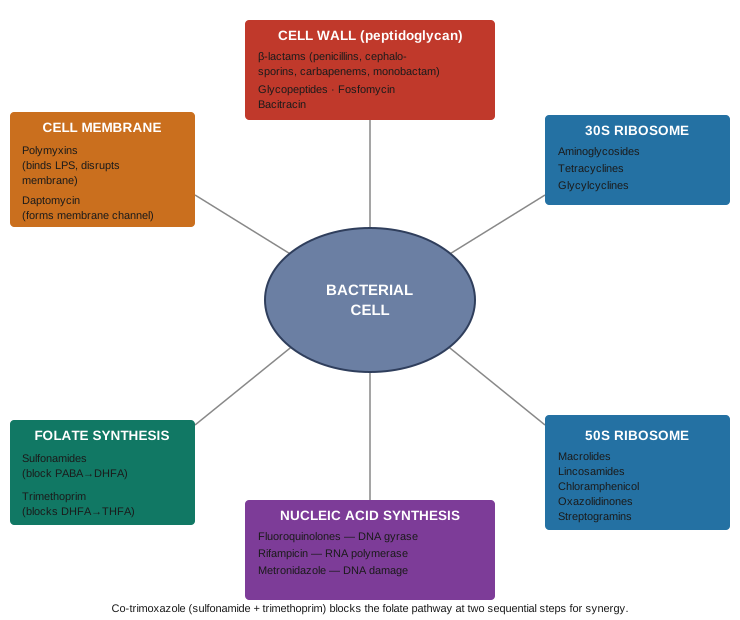
What to draw: A single bacterial cell outline in the centre, with six labelled compartments/structures arranged around it, each connected by a short line: cell wall (peptidoglycan), cell membrane, 30S ribosome, 50S ribosome, nucleic acid synthesis machinery, and the folate synthesis pathway. Against each, list the drug classes that act there and (for nucleic-acid and folate synthesis) the specific enzyme or step targeted.
Common exam-marking mistakes to avoid:
- Do not mix up which ribosomal subunit a drug targets — aminoglycosides and tetracyclines act on 30S; macrolides, chloramphenicol, lincosamides, oxazolidinones and streptogramins act on 50S. This pairing is one of the most frequently tested single facts in this topic.
- Sulfonamides and trimethoprim block different, sequential steps of the same folate pathway (PABA→DHFA vs DHFA→THFA) — do not draw them as acting on the same step, and do not omit the reason co-trimoxazole is synergistic (a double block on one pathway).
- Fluoroquinolones and rifampicin both fall under “nucleic acid synthesis inhibitors” but act on different molecules — DNA gyrase/topoisomerase IV (DNA) versus RNA polymerase (RNA). Metronidazole belongs in the same box but works by direct DNA damage, not enzyme inhibition — worth a distinct sub-label if space allows.
Hand-drawing notes only (no rendered diagram)
Mechanism of acquired resistance (selective pressure). A simple three-panel sequence: (1) a mixed population of susceptible (majority) and resistant (few) bacteria before treatment; (2) antibiotic exposure kills the susceptible cells, leaving resistant ones; (3) the resistant population expands to dominate. Label each panel plainly — this is a conceptual sequence, not a quantitative graph, so no axes or cell counts should be implied.
β-lactamase hierarchy (ESBL → AmpC → Carbapenemase). This is already fully captured as a comparison table in notes.md/lnr.md — a table states the graded “resistant to X but not Y” pattern more precisely than a diagram could, so no rendered figure is warranted here per this pipeline’s diagram policy.
Short Answers (3)
Short Essays (1)
Short Notes (4)
Multiple Choice Questions (4)
My Sticky Notes
Personal revision notes, mnemonics and reminders.
