
Shock
Definition
Cardiovascular collapse = ↓effective circulating volume (hypotension) + inadequate perfusion (hypoperfusion). “True/secondary/circulatory shock” = default meaning.
vs Primary/initial shock = transient vasovagal (neurogenic vasodilatation, seconds-minutes, benign). vs Anaphylactic shock = Type I hypersensitivity, not primary circulatory.
Classification
- Hypovolaemic — haemorrhage, burns, dehydration (vomiting/diarrhoea), diuretics, pancreatitis
- Cardiogenic — normovolaemic, ↓CO: deficient emptying (MI, cardiomyopathy, rupture, arrhythmia) / deficient filling (tamponade) / outflow obstruction (PE, ball-valve thrombus, tension pneumothorax, dissecting aneurysm)
- Septic — Gram-negative (endotoxic, MORE common: E.coli, Proteus, Klebsiella, Pseudomonas, Bacteroides) vs Gram-positive (exotoxic: strep, pneumococci)
- Other — traumatic (hypovolaemic + ongoing plasma loss into tissue) · neurogenic (sympathetic interruption — spinal injury/anaesthesia/head injury) · hypoadrenal (steroid therapy, adrenal destruction)
General pathogenesis (3 derangements)
- ↓Effective circulating volume (true loss OR ↓CO without loss)
- Impaired tissue oxygenation (↓venous return→↓CO→anoxia→cell injury)
- Inflammatory mediator release (TNF-α, IL-1 — protective then injurious)
Septic shock pathogenesis (KEY cascade)
Gram-neg lysis → LPS (endotoxin) → binds LBP → complex binds CD14 on macrophages → TNF-α + IL-1 release →
- ↑endothelial adhesiveness → neutrophil recruitment → free radicals → vascular injury
- ↑NO synthase → NO → vasodilatation, hypotension
PARALLEL: complement (C5a/C3a→microemboli+endothelial damage) + mast cells (histamine→↑permeability) + coagulation (↑thrombosis) + kinin (bradykinin→vasodilatation+↑permeability)
Net: vasodilatation + ↑permeability → hyperdynamic circulation (distinguishes septic from hypovolaemic/cardiogenic low-output) + inflammatory oedema + endothelial injury→DIC risk.
3 stages
- Compensated (reversible) — vasoconstriction (baroreceptor/chemoreceptor/catecholamine/renin-AngII, spares brain/heart, cool pale skin; septic=vasodilate THEN constrict, ↑TXA2) + renal conservation (aldosterone, ADH, ↓GFR, fluid shift) + adrenal medulla catecholamines. Reversible if cause treated.
- Progressive decompensated — ±additional stress. ↑pulm permeability→tachypnoea/ARDS. Anaerobic glycolysis→lactic acidosis→vasomotor failure→vasodilatation/pooling. Confusion, ↓renal function.
- Irreversible decompensated — progressive vasodilatation (arterioles unresponsive) + ↑permeability + myocardial depressant factor (MDF) + anoxic death of myocardium/proximal tubules/CNS neurons (obligate aerobes) + hypercoagulability→microthrombi. Coma, ATN, death despite Rx.
Morphology
- Brain: hypoxic encephalopathy; BP<50mmHg→severe damage/coma/vegetative state. Watershed necrosis (ACA-MCA border). Purkinje cells vulnerable, eosinophilic+pyknotic (12-24h), gliosis.
- Heart: MOST vulnerable organ, affected in ALL shock types. Subepicardial/endocardial haemorrhage+necrosis + zonal contraction bands (near intercalated discs).
- Shock lung: spared in hypovolaemic (dual supply); prominent in SEPTIC. Heavy/wet gross; ARDS pattern micro (congestion, oedema, hyaline membranes, septal fibrosis, fibrin-platelet microthrombi).
- Shock kidney: ATN (WWII crush injury origin). Soft/swollen, blurred architecture. Brown casts if myoglobinuria/haemolysis. →anuria.
- Adrenals: stress response; severe→haemorrhagic necrosis.
- Gut: haemorrhagic gastroenteropathy (mucosal/mural only, NOT full infarct). Burns→Curling’s ulcer (vs Cushing’s ulcer=CNS injury). May progress to pseudomembranous enterocolitis.
- Liver: faint nutmeg; ischaemic shrinkage/hydropic change/focal necrosis/fatty change.
- Other: lymph node/spleen/pancreas necrosis; survivors vulnerable to infection (impaired defence).
Clinical features
4 depressed vitals: ↓↓BP, ↓temp, feeble/irregular pulse, shallow/sighing respiration. + pale face, sunken eyes, cold clammy skin.
Complications = ADAM: ARDS, DIC, ARF, MODS → stupor→coma→death.
Clinical relevance
Hyperdynamic/warm (septic) vs low-output/cool (hypovolaemic/cardiogenic) = bedside differentiator guiding initial resuscitation. Stage determines reversibility (irreversible = cell injury itself now drives deterioration, not just original insult). Myocardium/renal tubule/CNS neuron vulnerability (obligate aerobes) = classic organ-failure triad determining survival. Curling’s (burns) vs Cushing’s (CNS injury) ulcer = commonly paired/contrasted.
Definition
Shock is a life-threatening syndrome of cardiovascular collapse defined by an acute reduction of effective circulating blood volume (hypotension) and inadequate perfusion of cells and tissues (hypoperfusion), which — if uncompensated — impairs cellular metabolism and can be fatal. This is “true” or “secondary”/circulatory shock, a genuine mismatch between oxygen supply and cellular oxygen requirement, and is what “shock” means if unqualified. It is distinct from primary (initial) shock — a transient, usually benign vasovagal attack from sudden neurogenic vasodilatation and peripheral pooling (following trauma, severe pain, or emotional shock), lasting seconds to minutes with brief unconsciousness, pallor, weak rapid pulse and low BP but no true circulatory failure — and from anaphylactic shock, which is a Type I hypersensitivity phenomenon rather than a primary circulatory disorder (see Type I Hypersensitivity).
Classification and Aetiology
- Hypovolaemic shock — inadequate circulating volume from loss of red cell mass and plasma (haemorrhage) or plasma alone (burns, dehydration from vomiting/diarrhoea, excessive diuretic use, acute pancreatitis).
- Cardiogenic shock — acute circulatory failure from sudden fall in cardiac output despite normal blood volume (normovolaemia), from deficient emptying (myocardial infarction, cardiomyopathy, cardiac rupture, arrhythmia), deficient filling (cardiac tamponade), or outflow obstruction (pulmonary embolism, ball-valve thrombus, tension pneumothorax, dissecting aortic aneurysm).
- Septic (toxaemic) shock — from severe bacterial infection, most often Gram-negative septicaemia (endotoxic shock — E. coli, Proteus, Klebsiella, Pseudomonas, Bacteroides — the more common form), less often Gram-positive (exotoxic shock — streptococci, pneumococci).
- Other types: traumatic shock (initially hypovolaemic, but with ongoing plasma loss into injured tissue even after haemorrhage is controlled); neurogenic shock (interrupted sympathetic vasomotor supply — high cervical cord injury, high spinal anaesthesia, severe head injury); hypoadrenal shock (failure of normal stress response from adrenal insufficiency — high-dose glucocorticoid therapy, TB/metastatic/haemorrhagic adrenal destruction).
General Pathogenesis
All forms of shock share three underlying derangements, which set in initially-compensatory mechanisms that eventually become a self-sustaining vicious cycle of cell injury and organ failure:
- Reduced effective circulating blood volume — either true volume loss (hypovolaemic shock) or reduced cardiac output without volume loss (cardiogenic, septic shock).
- Impaired tissue oxygenation — reduced venous return → reduced cardiac output → reduced oxygen delivery → tissue anoxia → cellular injury.
- Release of inflammatory mediators — cellular injury activates innate immunity; released mediators (chiefly TNF-α and IL-1 from monocytes/macrophages and other cells) are protective initially but themselves become injurious as the process continues — most dramatically in septic shock, where bacterial endotoxin directly triggers massive mediator release, but occurring to some degree in late-stage shock of any cause.
Pathogenesis of Septic Shock
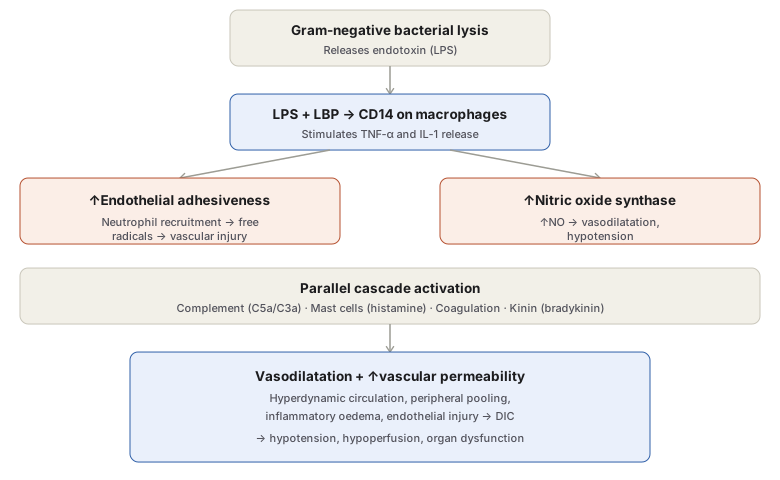
Gram-negative bacterial lysis releases endotoxin (lipopolysaccharide, LPS), which binds LPS-binding protein (LBP); the LPS–LBP complex binds CD14 on monocyte/macrophage surfaces, stimulating release of pro-inflammatory cytokines — chiefly TNF-α and IL-1 — which act by: (a) altering endothelial adhesiveness, recruiting neutrophils that liberate free radicals causing vascular injury, and (b) inducing nitric oxide synthase, driving NO-mediated vasodilatation and hypotension. In parallel, microbial infection activates other cascades: complement (C5a/C3a → microemboli, endothelial damage), mast cells (histamine → increased capillary permeability), the coagulation system (enhanced thrombus formation), and the kinin system (bradykinin → vasodilatation, increased permeability). The net effect is vasodilatation and increased vascular permeability, producing the hyperdynamic circulation with peripheral pooling that distinguishes septic shock from the low-output states of hypovolaemic and cardiogenic shock; increased permeability produces inflammatory oedema; endothelial injury by toxins predisposes to DIC (see Disseminated Intravascular Coagulation); reduced effective flow ultimately produces the same hypotension, hypoperfusion and organ dysfunction as other shock types.
Stages of Shock
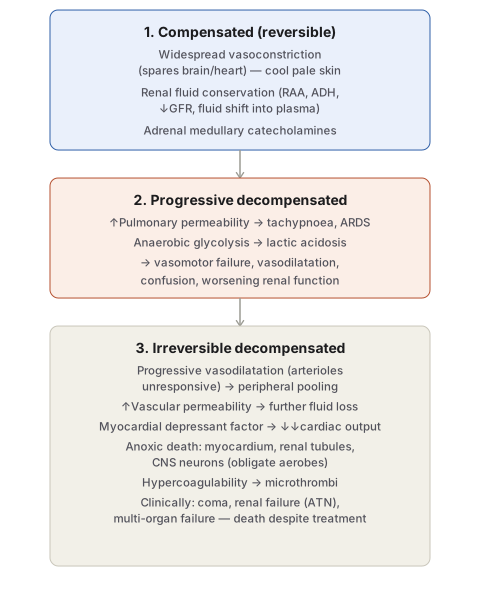
Although deterioration is continuous, shock is conventionally divided into three stages:
- Compensated (non-progressive, reversible) shock — neurohormonal compensation attempts to preserve brain/heart perfusion: widespread vasoconstriction (baroreceptor/chemoreceptor-driven catecholamine, renin-angiotensin II activation, sparing brain/heart at the expense of skin/viscera — cool pale skin clinically; septic shock instead begins with vasodilatation before vasoconstriction, and severe septic shock features elevated vasoconstrictor thromboxane A2); renal fluid conservation (aldosterone via RAA activation, ADH release, reduced GFR from arteriolar constriction, tissue fluid shift into plasma from lowered capillary hydrostatic pressure); and adrenal medullary catecholamine release (raising heart rate/cardiac output). If the underlying cause is treated adequately at this stage, full recovery is possible.
- Progressive decompensated shock — with persistence of shock ± additional stress (pre-existing cardiopulmonary disease), tissue hypoperfusion worsens: pulmonary hypoperfusion with rising vascular permeability produces tachypnoea and evolving ARDS; impaired perfusion forces a switch to anaerobic glycolysis and lactic acidosis, which impairs vasomotor responsiveness, causing vasodilatation and peripheral pooling. Clinically: confusion, worsening renal function.
- Irreversible decompensated shock — despite treatment of the underlying cause, no recovery occurs, from widespread cell injury: progressive vasodilatation (anoxic capillary/venular damage, arteriolar unresponsiveness to vasoconstrictors) worsening peripheral pooling; increased vascular permeability (anoxia-driven mediator release) causing further fluid loss from circulation; myocardial depressant factor (MDF) release from ischaemic myocardium, further depressing cardiac output; worsening pulmonary hypoperfusion/ARDS; anoxic damage to heart, kidney and brain — cells dependent solely on aerobic respiration (myocardium, proximal renal tubules, CNS neurons) undergo ischaemic death; and hypercoagulability (thromboplastin and ADP release activating coagulation, promoting microthrombi that further impair flow and cause tissue necrosis). Clinically: coma, worsening cardiac function, progressive renal failure (acute tubular necrosis).
Morphology (Multisystem Failure)
- Brain — hypoxic encephalopathy: altered consciousness in compensated shock; with BP <50 mmHg or cardiac arrest, severe ischaemic damage, coma, vegetative state. Watershed (border-zone) necrosis between anterior/middle cerebral artery territories; neurons — especially Purkinje cells — show eosinophilic cytoplasm and pyknotic nuclei after 12–24 hours of ischaemia, with eventual gliosis.
- Heart — the organ most vulnerable to hypoxic effects, affected in all shock types (not only cardiogenic): subepicardial/subendocardial haemorrhage and necrosis (small foci to frank infarcts), and zonal lesions — transverse contraction bands near the intercalated discs.
- Shock lung — spared in hypovolaemic shock (dual bronchial/pulmonary supply) but prominent in septic shock: heavy, wet lungs grossly; microscopically ARDS-pattern changes — congestion, interstitial/alveolar oedema, lymphocytic infiltrate, hyaline membranes, septal thickening/fibrosis, fibrin-platelet microvascular thrombi.
- Shock kidney — renal ischaemia from systemic hypotension produces acute tubular necrosis (ATN), historically first described in WWII crush-injury/air-raid victims; grossly soft, swollen kidneys with blurred architecture; brown tubular casts if concurrent muscle injury/haemolysis; typically ends in anuria.
- Adrenals — stress response (aldosterone, glucocorticoid, catecholamine release); severe shock can produce acute adrenal haemorrhagic necrosis.
- Gut — haemorrhagic gastroenteropathy: non-occlusive mucosal/mural ischaemic injury (distinct from full-thickness infarction, which also involves muscularis/serosa); multifocal, superficial, reddish-purple ulcers with congested oedematous adjacent mucosa; burns-associated stress ulceration of stomach/duodenum is termed Curling’s ulcer; secondary infection may progress to pseudomembranous enterocolitis.
- Liver: faint nutmeg gross appearance; microscopically ischaemic shrinkage, hydropic change, focal necrosis, or fatty change depending on injury-to-death interval; hepatic dysfunction may follow.
- Other organs: necrotic foci in lymph nodes, spleen, pancreas; survivors of the acute phase remain vulnerable to overwhelming infection from impaired host defence.
Clinical Features and Complications
Decompensated shock depresses four vital processes: very low blood pressure, subnormal temperature, feeble/irregular pulse, and shallow/sighing respiration — with pale face, sunken eyes, weakness, and cold clammy skin. Life-threatening complications, driven by hypoxic cell injury and cascade activation, can be remembered by the acronym ADAM: Acute respiratory distress syndrome, Disseminated intravascular coagulation, Acute renal failure, Multiple organ dysfunction syndrome — with progression to stupor, coma and death if uncontrolled.
Clinical Relevance
- The hyperdynamic, vasodilated presentation of septic shock (warm, flushed extremities, wide pulse pressure) versus the low-output, vasoconstricted presentation of hypovolaemic/cardiogenic shock (cool, clammy, narrow pulse pressure) is a direct bedside application of their differing pathogenesis, and guides initial resuscitation strategy before a cause is confirmed.
- Recognising which stage of shock a patient is in — reversible compensated versus progressive versus irreversible — is what determines whether aggressive treatment of the underlying cause can still be expected to reverse the process, since by the irreversible stage, cell injury itself (not just the original insult) is driving ongoing deterioration.
- The specific vulnerability of myocardium, proximal renal tubules and CNS neurons to anoxic death (all obligately aerobic) explains why cardiac dysfunction, acute kidney injury and encephalopathy are the classic triad of organ failure that determines survival in prolonged shock.
- Curling’s ulcer as the burns-specific pattern of stress ulceration is worth distinguishing by name from Cushing’s ulcer (the CNS-injury-associated equivalent), since both are commonly paired/contrasted in examinations.
Diagram 1: Pathogenesis of Septic Shock
Draw a downward column from bacterial lysis through the LPS-LBP-CD14-cytokine step, branching into two cytokine effects, then reconverging with a parallel “other cascades” box into a final combined-effect box.
- Gram-negative bacterial lysis → releases endotoxin (LPS).
- LPS + LBP → CD14 on macrophages → TNF-α and IL-1 release.
- Branch: ↑endothelial adhesiveness (neutrophil recruitment, free radicals, vascular injury) and ↑nitric oxide synthase (NO → vasodilatation, hypotension).
- Parallel cascade activation: complement, mast cells, coagulation, kinin — each named with its specific product (C5a/C3a, histamine, thrombosis, bradykinin).
- Combined effect: vasodilatation + increased permeability → hyperdynamic circulation, inflammatory oedema, DIC risk, hypotension/organ dysfunction.
Labels required
- The LPS → LBP → CD14 sequence must be shown as three distinct, named steps, not compressed into “endotoxin activates macrophages” — this exact molecular sequence is specifically and frequently tested.
- Each of the four parallel cascades (complement, mast cell, coagulation, kinin) must carry its own specific mediator, since a common error is naming the cascades without naming what each one actually produces.
- The hyperdynamic circulation outcome must be labelled explicitly as the feature distinguishing septic shock from the low-output state of hypovolaemic/cardiogenic shock.
Errors commonly made
- Describing septic shock as simply “an exaggerated version” of hypovolaemic shock, rather than as a distinct vasodilatory, hyperdynamic process with a completely different hemodynamic starting point.
- Treating TNF-α/IL-1 release as the sole mechanism and omitting the four parallel plasma protease cascades, which contribute independently to the vasodilatation, permeability increase and coagulopathy of septic shock.
Diagram 2: Stages of Shock
Draw a single downward column of three stages, each listing its defining mechanisms and clinical correlate.
- Compensated (reversible) — vasoconstriction, renal fluid conservation, catecholamines; reversible if the cause is treated at this stage.
- Progressive decompensated — lactic acidosis from anaerobic glycolysis, vasomotor failure; confusion, worsening renal function.
- Irreversible decompensated — vasodilatation, permeability increase, myocardial depressant factor, anoxic organ death, hypercoagulability; coma, multi-organ failure, death despite treatment.
Labels required
- Stage 1 must be explicitly labelled “reversible” and stage 3 “irreversible,” since the exam-relevant distinction is precisely when treatment can still be expected to work.
- Lactic acidosis must be shown as the specific mechanism linking stage 2’s anaerobic glycolysis to its vasomotor failure — acidosis is what makes vessels stop responding to compensatory vasoconstrictor signals.
Errors commonly made
- Treating the three stages as differing only in severity of the same process, rather than recognising that stage 3 specifically involves new, self-sustaining injury mechanisms (myocardial depressant factor, anoxic obligate-aerobe cell death, hypercoagulability) not present in stages 1–2.
- Omitting the vicious-cycle nature of stage 3 — vasodilatation worsens perfusion, which worsens anoxia, which worsens vasodilatation — treating it instead as a single static endpoint.
Long Essays (2)
Short Essays (1)
Multiple Choice Questions (3)
My Sticky Notes
Personal revision notes, mnemonics and reminders.
