
Oedema
Definition
Excess free fluid in interstitium/serous cavities. Body cavity = effusion (ascites/hydrothorax/hydropericardium). Pitting vs non-pitting (myxoedema, elephantiasis). Localised vs generalised (anasarca). Transudate (usual) vs exudate (inflammatory).
6 pathogenic mechanisms
- ↓Plasma oncotic pressure — hypoalbuminaemia (albumin=4x globulin’s oncotic contribution) → generalised. Causes: nephrotic/nephritic syndrome, cirrhosis, protein-losing enteropathy.
- ↑Capillary hydrostatic pressure — venular end >12mmHg baseline exceeds oncotic pull. Causes: CCF, constrictive pericarditis, cirrhosis (portal HTN), venous obstruction, postural.
- Lymphatic obstruction → lymphoedema. Causes: axillary clearance, tumour compression, chylothorax/ascites (duct rupture), filariasis (elephantiasis), malignant infiltration (peau d’orange), Milroy’s disease (hereditary).
- Tissue factors — ↑interstitial oncotic pressure, ↓tissue tension (eyelids/genitalia).
- ↑Capillary permeability — capillary poisons (histamine, toxins, anoxia) → gaps → protein leak. Generalised (sepsis, anaphylaxis) or localised (inflammatory, angioneurotic oedema).
- Na+/water retention — ↓effective circulating volume → baroreceptors → renal ischaemia → RAAS: renin (JG cells) → angiotensinogen→angiotensin I → ACE (lung/kidney) → angiotensin II → aldosterone (adrenal cortex) → Na+ reabsorption → ADH (hypothalamus) → water retention. Self-perpetuating VICIOUS CYCLE.
Renal oedema
| Nephrotic | Nephritic | |
|---|---|---|
| Cause | Nephrotic syndrome | GN (acute/RPGN) |
| Proteinuria | Heavy | Moderate |
| Fluid protein | High >1g/dL | Low <0.5g/dL |
| Mechanism | ↓oncotic + Na/water retention | Mainly Na/water retention |
| Severity | Severe, generalised (subQ+viscera) | Mild, loose tissues (periorbital/ankle/genital), NOT gravity-dependent |
Acute tubular injury → gross oedema + oliguria + ↑urea (lost selective reabsorption).
Cardiac oedema
RHF/CCF → 3 mechanisms: (1) ↓CO→hypovolaemia→RAAS/ADH; (2) back pressure hypothesis (↑CVP→↑capillary hydrostatic, favoured — matches transudate); (3) forward pressure hypothesis (chronic hypoxia→↑permeability, weak evidence — would produce exudate not transudate). LHF → pulmonary oedema (localised) not generalised. Cardiac oedema = GRAVITY-DEPENDENT (legs ambulatory, sacrum bedridden) — key discriminator from nephritic oedema.
Pulmonary oedema
- ↑Hydrostatic (haemodynamic) — LHF, mitral stenosis, pulm vein obstruction, thyrotoxicosis, nephrotic syndrome. Interstitial (Kerley’s lines on CXR) → alveolar (once lymphatic capacity, ~10x normal flow, exceeded).
- ↑Permeability (irritant) — infection, toxic inhalation, shock, ARDS, uraemia.
- Acute high-altitude oedema — unacclimatised ascent >2500m, anoxic vascular damage, can be fatal in days.
Morphology: heavy/moist/frothy lungs; congested capillaries; pink granular fluid + RBCs + “heart failure cells” (haemosiderin macrophages); hyaline membranes if organising.
Cerebral oedema (no lymphatics — BBB does the job)
- Vasogenic (commonest) — ↑permeability/filtration, around contusion/infarct/abscess/tumour; widened Virchow-Robin spaces.
- Cytotoxic — BBB INTACT, intracellular fluid (osmoregulation disturbance, hypoxia, toxins); swollen vacuolated cells. Purulent meningitis = both types together.
- Interstitial — fluid crosses ependyma → periventricular white matter; non-communicating hydrocephalus.
Hepatic oedema (cirrhosis)
Hypoalbuminaemia (↓synthesis) + portal HTN (↑hydrostatic) + failed hepatic aldosterone inactivation (2° hyperaldosteronism) + RAAS.
Nutritional oedema
Protein deficiency (kwashiorkor, starvation) / vitamin B1 (beriberi) / alcoholism → hypoproteinaemia + Na/water retention. Kwashiorkor: + mucocutaneous ulceration + hair depigmentation.
Clinical relevance
Cardiac (gravity-dependent, transudate, worse through day) vs nephrotic/nephritic (periorbital, non-gravity, worse on waking) = bedside discriminator. Transudate nature of cardiac oedema favours back-pressure over forward-pressure hypothesis. Kerley’s lines = radiological marker of interstitial-stage pulmonary oedema, catches CHF before alveolar flooding. Cytotoxic oedema (intact BBB) responds poorly to steroids unlike vasogenic oedema (permeability-based) — treatment implication.
Definition and Types
Oedema (Greek oidema, swelling) is the abnormal, excessive accumulation of free fluid in the interstitial tissue spaces and serous cavities. Free fluid within a body cavity is an effusion, named by site — ascites (peritoneal), hydrothorax (pleural), hydropericardium (pericardial); free fluid in the interstitial space is oedema proper. Subcutaneous oedema that displaces on finger pressure to leave a depression is pitting oedema; oedema that does not pit (as in myxoedema or elephantiasis) is non-pitting.
Oedema is localised (confined to an organ or limb — lymphatic, inflammatory, allergic, pulmonary, cerebral oedema) or generalised (anasarca/dropsy — systemic, most evident subcutaneously — renal, cardiac, nutritional oedema). By fluid composition, oedema is a transudate (the usual case, as in cardiac/renal disease) or an exudate (inflammatory oedema) — see Acute Inflammation for the full transudate/exudate comparison.
Pathogenesis
Fluid movement between vessel and interstitium is normally governed by a balance of capillary hydrostatic pressure (pushing fluid out at the arteriolar end) and plasma oncotic pressure (drawing fluid in at the venular end), with any small net outflow cleared by lymphatics. Oedema results when one or more of six mechanisms disturbs this balance:
- Decreased plasma oncotic pressure — hypoproteinaemia (chiefly hypoalbuminaemia, since albumin contributes roughly four times the oncotic pressure of globulin) reduces the inward pull that normally opposes hydrostatic pressure, favouring net outflow; typically produces generalised oedema (anasarca). Causes: nephrotic/nephritic syndrome, liver cirrhosis (impaired albumin synthesis), protein-losing enteropathy.
- Increased capillary hydrostatic pressure — a rise in venular-end pressure (normally only ~12 mmHg) above plasma oncotic pressure prevents reabsorption. Causes: congestive cardiac failure, constrictive pericarditis, cirrhosis (portal hypertension), venous obstruction (thrombosis, varicosities, external compression), and prolonged dependency (postural oedema in those who stand for long periods).
- Lymphatic obstruction — impaired drainage of the normal small net interstitial fluid outflow produces localised lymphoedema. Causes: axillary node clearance (radical mastectomy), external compression of major lymphatic ducts by tumour, chylous leakage (chylothorax/chylous ascites) from duct rupture, filarial lymphangitis (Wuchereria bancrofti — chronic non-pitting lymphoedema of scrotum/legs, elephantiasis), malignant lymphatic infiltration (including the “peau d’orange” skin of breast cancer from superficial lymphatic obstruction), and Milroy’s disease (hereditary lymphoedema from abnormal lymphatic development).
- Tissue factors — elevated interstitial oncotic pressure (from increased permeability and inadequate lymphatic protein removal) or lowered tissue tension (loose subcutaneous tissue of eyelids/genitalia) can contribute alongside other mechanisms.
- Increased capillary permeability — endothelial injury by “capillary poisons” (histamine, toxins, venoms, anoxia, certain drugs) opens interendothelial gaps, letting plasma protein leak out — lowering plasma oncotic pressure while raising interstitial oncotic pressure simultaneously. Produces inflammatory (exudative), generalised (systemic infection, anaphylaxis, anoxia, poisoning), or specific localised (angioneurotic oedema — acute facial/laryngeal/pharyngeal swelling, neurogenic or allergic) oedema.
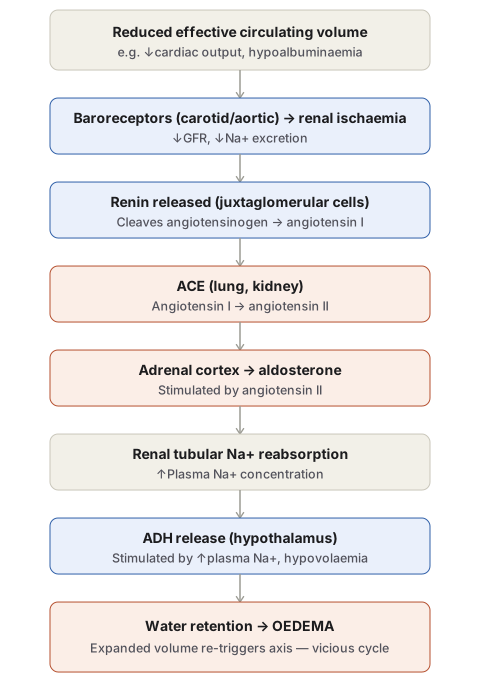
- Sodium and water retention — reduced effective circulating volume (e.g. from reduced cardiac output or hypoalbuminaemia-driven volume depletion) triggers baroreceptor-mediated renal vasoconstriction and the renin-angiotensin-aldosterone (RAA) axis: renal hypoperfusion → renin release from juxtaglomerular cells → cleaves circulating angiotensinogen to angiotensin I → angiotensin-converting enzyme (ACE, in lung/kidney) converts this to angiotensin II → stimulates adrenal aldosterone secretion → renal tubular sodium reabsorption. Sodium retention secondarily drives ADH (vasopressin) release from the hypothalamic supraoptic/paraventricular nuclei, promoting water retention. This mechanism, once triggered, tends to become self-perpetuating — a vicious cycle — since the expanded but still poorly perfused circulation keeps re-triggering the same axis.
Renal Oedema
- Nephrotic oedema — heavy, persistent proteinuria causes hypoalbuminaemia (hence low plasma oncotic pressure), compounded by RAA-driven sodium/water retention as plasma volume falls — a self-sustaining cycle that persists as long as albuminuria continues. Severe, generalised, involving subcutaneous tissue and viscera; oedema fluid protein content is comparatively high (>1 g/dL).
- Nephritic oedema — in diffuse glomerular disease (acute/rapidly progressive glomerulonephritis), oedema is driven mainly by sodium/water retention rather than hypoproteinaemia (albuminuria here is only moderate); oedema fluid protein is low (<0.5 g/dL). Milder, affecting loose tissues first (periorbital, ankles, genitalia), and — unlike cardiac oedema — not gravity-dependent.
- Acute tubular injury — damaged tubules lose selective reabsorptive capacity, causing gross oedema with oliguria and rising blood urea.
Cardiac Oedema
Right-sided/congestive cardiac failure produces generalised oedema via three proposed mechanisms: (1) reduced cardiac output → hypovolaemia → RAA/ADH activation → sodium and water retention; (2) elevated central venous pressure transmitted backward to raise capillary hydrostatic pressure — the “back pressure” hypothesis; (3) chronic hypoxic endothelial injury raising capillary permeability — the “forward pressure” hypothesis, though weaker evidence supports it since it would predict an exudate rather than the transudate actually seen. Left heart failure instead produces venous congestion localised to the lungs (pulmonary oedema) rather than generalised oedema. Cardiac oedema is characteristically gravity-dependent — ankles/legs in an ambulatory patient, sacral/genital region in one who is bedridden.
Pulmonary Oedema
The most functionally serious localised oedema, since fluid fills alveolar air spaces, not just interstitium. Two mechanisms:
- Elevated pulmonary hydrostatic pressure (haemodynamic oedema) — left heart failure, mitral stenosis, pulmonary vein obstruction, thyrotoxicosis, cardiac surgery, nephrotic syndrome, lymphatic obstruction. Fluid first accumulates as interstitial oedema (around bronchioles, vessels, in septa — thickened septa visible on chest X-ray as Kerley’s lines) once lymphatic drainage capacity (which can normally handle up to a ten-fold increase in flow) is exceeded; only with further pressure elevation does alveolar epithelium break down, flooding alveoli (alveolar oedema) and seriously impairing gas exchange.
- Increased vascular permeability (irritant oedema) — damage to the alveolocapillary membrane in fulminant infection, toxic inhalation, aspiration, shock, radiation injury, drug/antisera hypersensitivity, uraemia, ARDS.
A third mechanism, acute high-altitude oedema, results from anoxic pulmonary vascular damage in unacclimatised rapid ascent above ~2500 m, causing oedema, congestion and haemorrhage that can be fatal within days — prevented by gradual acclimatisation (which instead produces polycythaemia, raised pulmonary arterial pressure and increased ventilation).
Morphology: lungs heavy, moist, subcrepitant, exuding frothy fluid on cut section. Microscopically, congested alveolar capillaries with eosinophilic, granular, pink proteinaceous fluid in interstitium and alveolar spaces, admixed with RBCs and haemosiderin-laden alveolar macrophages (“heart failure cells”); organising alveolar oedema can form eosinophilic hyaline membranes along alveolar margins. Long-standing pulmonary oedema predisposes to hypostatic pneumonia.
Cerebral Oedema
The most life-threatening form, since the brain lacks lymphatics — fluid exchange instead depends on the blood-brain barrier. Three types:
- Vasogenic (commonest) — increased filtration pressure or capillary permeability, as around contusions, infarcts, abscess, some tumours; white matter swollen with flattened gyri/narrowed sulci, widened perivascular (Virchow-Robin) spaces.
- Cytotoxic — intact blood-brain barrier, intracellular fluid accumulation from disturbed cellular osmoregulation (metabolic derangement, acute hypoxia, toxins); swollen, vacuolated cells. Purulent meningitis produces both vasogenic and cytotoxic oedema together.
- Interstitial — fluid crosses the ependymal lining into periventricular white matter, as in non-communicating hydrocephalus.
Hepatic and Nutritional Oedema
Hepatic oedema (leg oedema and ascites of cirrhosis) results from combined hypoalbuminaemia (impaired hepatic protein synthesis), portal hypertension (raised abdominal venous hydrostatic pressure), failure of hepatic aldosterone inactivation (secondary hyperaldosteronism), and consequent RAA-driven sodium/water retention.
Nutritional oedema — from protein deficiency (kwashiorkor, starvation, famine), vitamin deficiency (beriberi, vitamin B1), or chronic alcoholism — reflects hypoproteinaemia plus metabolic sodium/water retention; kwashiorkor oedema is classically accompanied by mucocutaneous ulceration and hair depigmentation.
Clinical Relevance
- Distinguishing cardiac oedema (gravity-dependent, transudate, worsens through the day in an ambulatory patient) from nephrotic/nephritic oedema (periorbital, not gravity-dependent, worse on waking) is a bedside clinical discriminator directly derived from their different pathogenic mechanisms.
- The back-pressure vs forward-pressure debate in cardiac oedema is resolved practically by the fluid’s character: cardiac oedema is a transudate, which fits the back-pressure (hydrostatic) mechanism far better than the forward-pressure (permeability, exudate-producing) mechanism.
- Kerley’s lines on chest X-ray are a direct radiological correlate of the interstitial stage of pulmonary oedema, useful for catching heart failure before alveolar flooding (and overt respiratory compromise) develops.
- Recognising cytotoxic cerebral oedema as occurring with an intact blood-brain barrier (unlike vasogenic oedema) has direct treatment implications, since therapies that reduce vascular permeability (e.g. corticosteroids, effective for vasogenic oedema around tumours) are far less useful for the cytotoxic oedema of acute hypoxic injury.
Diagram 1: Renin-Angiotensin-Aldosterone Pathway in Oedema
Draw a single downward column of seven stages, ending in a box that loops conceptually back to the top (label this explicitly as a vicious cycle rather than drawing a literal long feedback arrow).
- Reduced effective circulating volume — name a cause (↓cardiac output, hypoalbuminaemia).
- Baroreceptor activation → renal ischaemia — ↓GFR, ↓Na+ excretion.
- Renin release (juxtaglomerular cells) — cleaves angiotensinogen to angiotensin I.
- ACE (lung, kidney) — converts angiotensin I to angiotensin II.
- Aldosterone secretion (adrenal cortex) — stimulated by angiotensin II.
- Renal tubular Na+ reabsorption — raises plasma sodium concentration.
- ADH release (hypothalamus) — stimulated by rising plasma Na+ and hypovolaemia → water retention → oedema.
Labels required
- Each enzyme/hormone step must be named specifically (renin, ACE, angiotensin I/II, aldosterone, ADH) in the correct order — this exact sequence is one of the most frequently tested cascades in general pathology and physiology alike.
- The site of ACE action (lung and kidney) should be noted, since it is a specific, commonly asked detail.
- The final box must explicitly state that expanded but still poorly perfused volume re-triggers the axis, since this vicious-cycle property is what makes cardiac/hepatic/renal oedema so difficult to break without treating the underlying cause.
Errors commonly made
- Reversing the order of ACE and aldosterone, or describing aldosterone as acting directly on angiotensinogen rather than being downstream of angiotensin II.
- Omitting the ADH step and treating sodium retention alone as sufficient to explain the water retention component of oedema — water retention specifically requires the secondary ADH-mediated step.
My Sticky Notes
Personal revision notes, mnemonics and reminders.
