
Obesity
Definition/measurement
Excess adipose tissue imparting health risk (≥20% over ideal weight = risk threshold, classic). BMI=wt(kg)/ht(m)². Healthy 18.5-25 | Overweight 25-30 | Obese >30 (both sexes). BMI limitation: doesn’t distinguish fat vs muscle/bone composition — supplement with circumference measures. Central/visceral fat (trunk/mesentery/viscera) = higher risk than subcutaneous fat, independent of BMI.
Epidemiology
Major worldwide problem, WHO estimate: 650 million obese adults globally (2016). No longer just a high-income-country problem — urbanisation + diet change + less physical activity are raising rates fast in India and other developing nations too.
Aetiology
Energy balance disorder (intake>expenditure): overeating | sedentary lifestyle | genetic predisposition (familial, ↑concordance identical twins) | carb/fat-heavy diet | secondary obesity: hypothyroidism, Cushing’s, insulinoma, hypothalamic disorders.
Pathogenesis — energy balance circuit
3 components: Afferent → Central processing → Efferent.
Afferent: leptin(adipocytes) + ghrelin(stomach) + PYY/GLP-1(ileum/colon) + insulin(pancreas) → hypothalamus.
Central (arcuate nucleus): 2 first-order neuron populations:
- POMC/CART = “BRAKE pedal”
- NPY/AgRP = “GAS pedal” → signal 2nd-order neurons: MC3/4R(from POMC/CART) or Y1/Y5R(from NPY/AgRP)
Efferent:
- CATABOLIC (MC4R) — α-MSH → ↓food intake(anorexigenic)+↑energy expenditure → weight LOSS
- ANABOLIC (Y1/Y5R) — ↑food intake(orexigenic)+↓energy expenditure → weight GAIN
Leptin: ↑with adipose mass → crosses BBB → STIMULATES POMC/CART(“brake”) + INHIBITS NPY/AgRP(“gas”) → net ↓intake+↑expenditure. ↓fat stores→↓leptin→↑appetite+↓expenditure (reverse). Also ↑physical activity/thermogenesis independently.
Leptin resistance (obesity): obese = HIGH leptin but BLUNTED anorexigenic response (resistance, not deficiency) → explains why exogenous leptin therapy FAILED in typical obese humans (worked in leptin-deficient rodent models only). Rare leptin/leptin-receptor gene mutations→massive obesity (mice+humans, behave “undernourished”). MC4R mutations = 4-5% of massive obesity cases (most common monogenic cause, clearest human evidence).
Adiponectin (“fat-burning molecule”) — directs FA to muscle oxidation, ↓hepatic glucose output, ↑insulin sensitivity → PROTECTIVE (anti-inflammatory, antiatherogenic, cardioprotective). ↓in obesity → contributes to insulin resistance.
Adipocytes also secrete: TNF-α+IL-6(cytokines), adiponectin/resistin/RBP4(insulin sensitivity), PAI(prothrombotic), angiotensinogen(BP) — adipose = active endocrine organ.
Morphology
↑adipose in subcutaneous+skeletal muscle+organs(kidney/heart/liver/omentum); ↑fatty liver. Adipocyte HYPERTROPHY + HYPERPLASIA both contribute.
Effects/sequelae (10)
- Hyperinsulinaemia (tissue insulin resistance; hyperglycaemia despite ↑insulin)
- Type 2 DM (strong assoc.; weight loss→improved control)
- Hypertension (↑blood volume; weight loss→↓systolic BP)
- Hyperlipoproteinaemia (↑↑VLDL, ↑LDL mild, ↑total cholesterol)
- Atherosclerosis (→↑MI+stroke risk with HTN)
- NAFLD (→may progress to cirrhosis)
- Cholelithiasis (6x ↑incidence, ↑total body cholesterol)
- Hypoventilation/Pickwickian syndrome (hypersomnolence day+night, CO2 retention, hypoxia, polycythaemia→cor pulmonale; name from Dickens’ Pickwick Papers “fat boy,” popularised by Osler)
- Osteoarthritis (mechanical wear/trauma)
- Cancer (fat-rich diet→colon, breast, endometrium, prostate)
Clinical relevance
Leptin RESISTANCE (not deficiency) = typical obese state → explains leptin therapy’s clinical failure despite mouse-model promise. Gas-pedal/brake-pedal mnemonic (NPY/AgRP vs POMC/CART) = reconstructs whole circuit from one image instead of memorising 4 neurons+2 receptors separately. Central/visceral vs subcutaneous fat distinction = risk stratification BMI alone can’t capture (same BMI, different real risk). Secondary obesity causes = practical diagnostic habit before assuming pure intake/expenditure imbalance, esp. with atypical onset.
Definition and Measurement
Obesity is an excess of adipose tissue imparting health risk; classically, body weight 20% over ideal (for age, sex, height) is considered a health risk. The standard screening measure is body mass index (BMI) = weight(kg)/height(m)². Healthy BMI: 18.5–25 kg/m²; overweight: 25–30 kg/m²; obese: BMI >30 kg/m² in both sexes. BMI has a known limitation — it reflects total body weight (muscle + bone + fat), not body composition, so a muscular athlete can register a high BMI despite low body fat, and a low-muscle-mass individual can register a “healthy” BMI despite high adiposity; circumference measures should ideally supplement BMI.
Importantly, risk relates not only to the degree of excess fat but to its distribution: central/visceral obesity (fat in the trunk, mesentery, and around viscera) carries substantially higher disease risk than equivalent subcutaneous fat accumulation.
Epidemiology
A major public health problem worldwide — the WHO estimated 650 million obese adults globally in 2016 — and no longer confined to high-income countries: urbanisation, changing diet, and reduced physical activity are driving a rapidly rising prevalence of overweight and obesity in India and other developing nations as well, alongside the already-high rates long documented in high-income countries such as the United States. Causes are complex but relate fundamentally to these same societal shifts in diet and physical activity.
Aetiology
Fundamentally, obesity is a disorder of energy balance — caloric intake exceeding utilisation — regulated by genetic, environmental, and psychological factors:
- Overeating (excess intake).
- Sedentary lifestyle (reduced expenditure).
- Genetic predisposition (obesity clusters in families, and concordance is higher in identical twins).
- Diets weighted toward carbohydrate/fat rather than protein.
- Secondary obesity from an underlying disease — hypothyroidism, Cushing’s disease, insulinoma, hypothalamic disorders.
Pathogenesis — Energy Balance Regulation
Body weight is normally maintained within a narrow range for years by finely tuned neurohumoral regulation of both sides of the energy equation (intake and expenditure), governed by an internal “lipostat” sensing adipose energy stores. This circuitry has three components: an afferent (peripheral) system, a central processing system, and an efferent system.
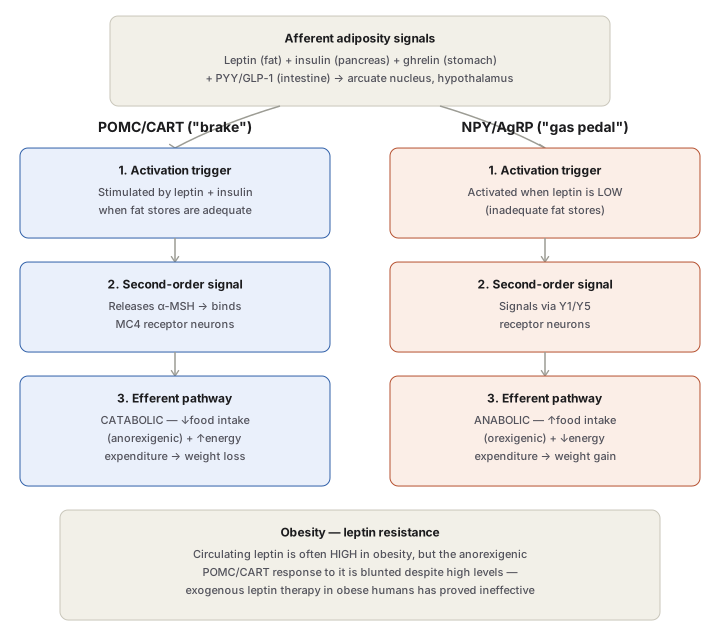
Afferent system: leptin (adipocytes), ghrelin (stomach), peptide YY (PYY) and glucagon-like peptide 1 (GLP-1) (ileum/colon), and insulin (pancreas) — signals reflecting current energy stores/intake, delivered to the hypothalamus.
Central processing (arcuate nucleus, hypothalamus): integrates afferent signals via two first-order neuron populations — POMC/CART neurons (“the brake pedal”) and NPY/AgRP neurons (“the gas pedal”) — which signal onward to second-order neurons bearing MC3/4 receptors (downstream of POMC/CART) or Y1/Y5 receptors (downstream of NPY/AgRP).
Efferent system: two opposing pathways —
- Catabolic (via MC4R) — α-melanocyte-stimulating hormone (α-MSH) reduces food intake (anorexigenic) and increases energy expenditure → weight loss.
- Anabolic (via Y1/Y5R) — promotes food intake (orexigenic) and reduces energy expenditure → weight gain.
Leptin is the key regulator: secretion rises with adipose mass, crosses the blood-brain barrier, and acts on the hypothalamus to stimulate POMC/CART (“brake”) while inhibiting NPY/AgRP (“gas”) — net effect: reduced intake, increased expenditure. When fat stores fall, leptin falls, appetite rises, and expenditure drops. Leptin also independently promotes physical activity and thermogenesis.
Leptin resistance in obesity: paradoxically, obese individuals typically have high circulating leptin, but the anorexigenic hypothalamic response to it is blunted — a state termed leptin resistance. This explains why exogenous leptin therapy, effective in leptin-deficient rodent/human states, has been ineffective as an obesity treatment in typical obese patients (who are leptin-resistant, not leptin-deficient). Rare loss-of-function mutations in the leptin gene or its receptor cause massive obesity in both mice and humans (behaving as if perpetually undernourished); more common are MC4R mutations, found in 4–5% of patients with massive obesity — the clearest human genetic evidence for this pathway’s central importance.
Adiponectin, another adipocyte-derived hormone (a “fat-burning molecule”), directs fatty acids to muscle for oxidation, decreases hepatic glucose production, and increases insulin sensitivity — broadly protective against metabolic syndrome, with anti-inflammatory, antiatherogenic, and cardioprotective effects. Its levels are lower in obese individuals, contributing to obesity-associated insulin resistance.
Adipocytes also secrete other regulatory molecules: cytokines (TNF-α, IL-6), insulin-sensitivity regulators (adiponectin, resistin, RBP4), a prothrombotic factor (plasminogen activator inhibitor), and a blood-pressure regulator (angiotensinogen) — reflecting adipose tissue’s role as an active endocrine organ, not a passive energy store.
Morphology
Increased adipose stores in subcutaneous tissue, skeletal muscle, and internal organs (kidney, heart, liver, omentum); fatty liver is more common in obesity. Adipose mass increases via both hypertrophy (larger adipocytes, more intracellular lipid) and hyperplasia (more adipocytes).
Effects/Sequelae of Obesity
- Hyperinsulinaemia — from tissue insulin resistance; many obese individuals remain hyperglycaemic/frankly diabetic despite raised insulin.
- Type 2 diabetes mellitus — strongly associated; weight reduction often ameliorates glycaemic control.
- Hypertension — strongly associated, likely partly from increased blood volume; weight loss meaningfully reduces systolic BP.
- Hyperlipoproteinaemia — strong association with raised VLDL, milder with LDL; total cholesterol also elevated.
- Atherosclerosis — increased risk, contributing (with hypertension) to elevated myocardial infarction and stroke risk.
- Non-alcoholic fatty liver disease (NAFLD) — may progress to cirrhosis.
- Cholelithiasis — roughly 6× higher gallstone incidence, from increased total body cholesterol.
- Hypoventilation syndrome (Pickwickian syndrome) — hypersomnolence (day and night), CO₂ retention, hypoxia, polycythaemia, eventually right heart failure. (Named after the “fat boy” character in Dickens’ The Pickwick Papers; the term was popularised by Sir William Osler for sleep-apnoea syndrome.)
- Osteoarthritis — degenerative joint disease from mechanical wear/trauma under excess body weight.
- Cancer — diets rich in (especially animal) fat associate with higher incidence of colon, breast, endometrial, and prostate cancer.
Clinical Relevance
- Understanding leptin resistance (not leptin deficiency) as the typical obese state is what explains the clinical failure of leptin-replacement therapy in ordinary obesity — a frequently misunderstood point, since leptin’s mouse-model efficacy suggested a straightforward therapeutic target that has not translated to common human obesity.
- The gas-pedal/brake-pedal framing of NPY/AgRP versus POMC/CART is a genuinely useful mnemonic for reconstructing the entire hypothalamic circuit under exam pressure, rather than memorising four neuron names and two receptor pairs independently.
- The central/visceral versus subcutaneous fat distribution distinction is directly relevant to cardiometabolic risk stratification — two patients with identical BMI can carry very different actual risk depending on fat distribution, which BMI alone cannot capture.
- Recognising secondary obesity causes (hypothyroidism, Cushing’s, insulinoma, hypothalamic disease) is a practical diagnostic habit — before attributing obesity purely to intake/expenditure imbalance, an underlying endocrine or hypothalamic cause should be considered, particularly with atypical onset or accompanying features.
Diagram 1: Hypothalamic Arcuate Nucleus Circuitry Regulating Energy Balance
Draw one shared top box (afferent signals converging on the arcuate nucleus), splitting into two parallel columns (POMC/CART “brake,” NPY/AgRP “gas pedal”) each with three stacked stages, converging finally into one shared bottom box describing leptin resistance in obesity.
- Afferent signals — leptin, insulin, ghrelin, PYY/GLP-1 → arcuate nucleus.
- Activation trigger — POMC/CART stimulated by adequate leptin/insulin vs NPY/AgRP activated when leptin is low.
- Second-order signal — α-MSH → MC4R vs signalling via Y1/Y5R.
- Efferent pathway — catabolic (↓intake, ↑expenditure, weight loss) vs anabolic (↑intake, ↓expenditure, weight gain).
- Shared closing box — leptin resistance in obesity: high leptin, blunted response, explains failure of leptin therapy.
Labels required
- The “brake pedal” / “gas pedal” analogy must be attached to the correct neuron pair (POMC/CART = brake, NPY/AgRP = gas) — reversing this analogy is a common and easily-tested error.
- α-MSH and its receptor (MC4R) must be named explicitly in the catabolic column — MC4R mutation is the most common monogenic cause of human obesity and this diagram is where that fact anchors.
- The leptin resistance closing box must state both halves of the paradox together — leptin is HIGH in obesity, yet the response is blunted — stating only one half loses the point entirely.
Errors commonly made
- Describing obesity as a state of leptin deficiency rather than leptin resistance — this is the most common conceptual error in this topic and directly explains why naive leptin-replacement therapy failed clinically.
- Reversing which neuron pair increases versus decreases food intake (NPY/AgRP increases intake; POMC/CART decreases it) — easy to invert under exam pressure without the gas/brake anchor.
- Treating MC4R mutation as a rare curiosity rather than recognising it as the most common known monogenic obesity cause (4–5% of massive obesity cases) — a specific, testable epidemiological fact, not just a pathway footnote.
Short Essays (1)
Multiple Choice Questions (1)
My Sticky Notes
Personal revision notes, mnemonics and reminders.
