
Vitamin A Deficiency
Physiology
Fat-soluble alcohol, family = retinol(transport form)+retinal+retinoic acid. Sources: preformed retinol (egg yolk, butter, milk, fish, liver, kidney) | provitamin β-carotene (carrots, pumpkin, mango, spinach; ~30% of dietary intake, efficiently converted).
Metabolism: needs bile salts+pancreatic enzymes for absorption. β-carotene→retinol in intestine → chylomicrons→liver (ApoE receptor uptake). >90% body reserve stored in liver (perisinusoidal Ito cells, as retinyl ester) — lasts ≥6 months well-nourished. Transport: retinol+RBP(liver-synthesised)→peripheral RBP receptors→uptake→RBP recycled.
Functions:
- Vision in dim light — retinol→rhodopsin(rods, most light-sensitive)+iodopsins(cones, colour); all ↓ in deficiency
- Epithelial differentiation — retinoic acid→RAR, heterodimerises with RXR→binds retinoic acid response elements(genes incl. GF receptors, TSGs)→governs mucus-secreting epithelium differentiation. Deficiency→keratinising squamous metaplasia
- Cartilage/bone growth
- Immune resistance — supplementation ↓diarrhoeal morbidity
15%/mortality30% in deficient populations - Anti-proliferative (β-carotene antioxidant) — regression of some non-tumorous/premalignant/cancer skin lesions
Epidemiology
Nutritional deficiency common: SE Asia, Africa, Central/South America. Developed countries: conditioned deficiency (malabsorption — coeliac, Crohn’s, colitis; bariatric surgery; chronic mineral-oil laxative use).
Mechanism + organ consequences (shared mechanism: squamous metaplasia via ↓RAR/RXR signalling)
Eye (most obvious/tested): night blindness=EARLIEST sign → xerosis conjunctivae (dry scaly conjunctiva, mucus epithelium→keratinised) → Bitot’s spots (keratin debris plaques, impair light if corneal) → keratomalacia (corneal erosion/softening, ± infection) → blindness. Overall picture = xerophthalmia.
Respiratory epithelium: metaplasia→↓mucociliary clearance→↑pulmonary infection risk
Urothelium: metaplasia→keratin debris desquamation→renal/bladder stones + pyelonephritis predisposition
Pancreatic duct epithelium: metaplasia→ductal obstruction, cystic dilatation
Skin/adnexal glands: follicular hyperkeratosis+keratin plugging→papular dermatosis (“toad skin”, xeroderma)
Bone: retarded growth (animal studies)
Long-standing metaplasia (any organ) → can progress to anaplasia (general metaplasia principle).
Toxicity (hypervitaminosis A)
Acute: historic — polar bear/whale/shark liver ingestion. Sx: headache, dizziness, vomiting, stupor, blurred vision — mimics brain tumour (pseudotumor cerebri). Chronic: weight loss, anorexia, nausea, vomiting, bone/joint pain. Retinoic acid ↑osteoclast production/activity→↑bone resorption+fracture risk. Teratogenicity: synthetic retinoids (acne Tx) — NOT linked to above acute/chronic syndromes, but well-established teratogens — avoid in pregnancy.
Clinical relevance
Night blindness→xerosis conjunctivae→Bitot’s spots→keratomalacia→blindness = classic exam sequence + basis for early screening before irreversible damage. All organs share ONE mechanism (↓RAR/RXR→squamous metaplasia) — reconstruct from principle, not memorise per-organ. Supplementation ↓child mortality = public health rationale beyond eye disease. Retinoid teratogenicity = direct prescribing-relevant fact (contraception counselling for acne patients on oral retinoids).
Physiology
Vitamin A (retinol) is a fat-soluble alcohol, a generic name covering a family of related compounds — retinol (the transport form), retinal, and retinoic acid — collectively with similar biologic activity. Dietary sources are of two kinds:
- Preformed retinol — animal-derived foods (egg yolk, butter, whole milk, fish, liver, kidney).
- Provitamin carotenoids — chiefly β-carotene, from yellow/leafy-green plant sources (carrots, pumpkin, mango, spinach), contributing roughly 30% of dietary vitamin A and efficiently converted to retinol.
Metabolism: like all fat-soluble vitamins, absorption requires bile salts and intact pancreatic function. Retinol and β-carotene are absorbed through the intestinal wall (β-carotene converted to retinol there), transported via chylomicrons to the liver, and taken up via the apolipoprotein E receptor. Over 90% of the body’s vitamin A reserves are stored in the liver, chiefly as retinyl ester in the perisinusoidal stellate (Ito) cells — a store sufficient to meet the body’s needs for at least 6 months in a well-nourished individual. For transport to peripheral tissue, retinol binds retinol-binding protein (RBP), synthesised in the liver; peripheral uptake depends on cell-surface RBP receptors, after which retinol is released and RBP recycles back into the circulation.
Functions:
- Vision in reduced light — retinol is oxidised to form rhodopsin (the dominant, most light-sensitive pigment, in rod cells) and the iodopsins (colour-specific pigments in cone cells, active in bright light); all four pigments’ synthesis falls when vitamin A is deficient.
- Differentiation of specialised epithelium — retinoic acid activates retinoic acid receptors (RAR), which heterodimerise with the retinoid X receptor (RXR); RAR/RXR heterodimers bind retinoic acid response elements in gene regulatory regions (including genes for growth factor receptors and tumour suppressors), governing orderly differentiation of mucus-secreting columnar epithelium. Deficiency causes these epithelia to differentiate abnormally into keratinising squamous epithelium — squamous metaplasia.
- Cartilage and bone growth.
- Immune resistance to infection — vitamin A supplementation reduces diarrhoeal morbidity/mortality by roughly 15–30% in deficient populations, and appears to support epithelial regeneration and optimal immune function generally.
- Anti-proliferative/anti-oxidant effect — β-carotene’s anti-oxidant properties can cause regression of certain non-tumorous skin conditions, premalignant lesions, and some cancers.
Epidemiology
Nutritional vitamin A deficiency is common in South-East Asia, Africa, and Central/South America; in developed countries, deficiency is usually conditioned rather than primary — from fat malabsorption syndromes (coeliac disease, Crohn’s disease, colitis), bariatric surgery, or chronic mineral-oil laxative use.
Mechanism and Consequences of Deficiency
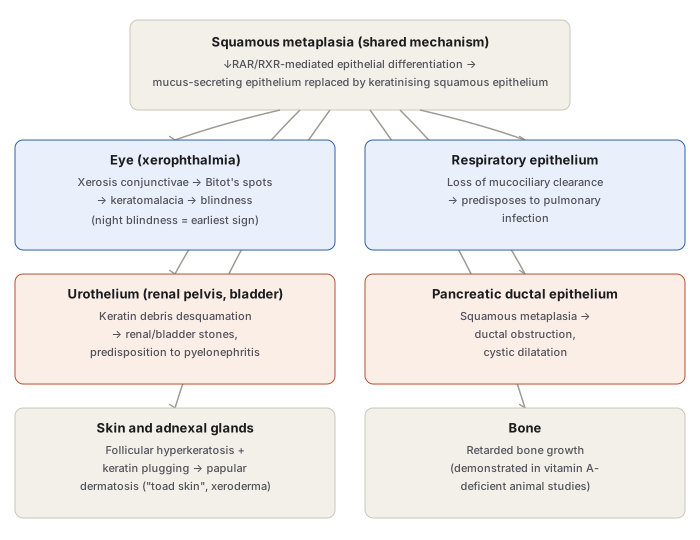
The shared underlying lesion across organs is squamous metaplasia with keratinisation of specialised epithelium, a direct consequence of losing RAR/RXR-mediated differentiation control:
- Eye — the most obvious and clinically significant site. Night blindness is typically the earliest sign. Progressive xerophthalmia (dry eye): replacement of the normal lacrimal/mucus-secreting conjunctival epithelium by keratinised epithelium produces dry, scaly xerosis conjunctivae; keratin debris accumulates as opaque plaques (Bitot’s spots, which impair light transmission when on the cornea); the roughened corneal surface then erodes, softens, and can be secondarily infected (keratomalacia); the endpoint is scarring, opacity, and blindness.
- Respiratory epithelium — squamous metaplasia of bronchial/tracheal epithelium causes loss of mucociliary clearance, predisposing to secondary pulmonary infection.
- Urothelium — squamous metaplasia of the renal pelvis/urinary tract epithelium sheds keratin debris, predisposing to renal and bladder stones and to pyelonephritis.
- Pancreatic ductal epithelium — metaplasia can obstruct ducts, producing cystic dilatation.
- Skin and adnexal glands — follicular hyperkeratosis and keratin plugging of sebaceous glands produce a papular, “toad-skin” dermatosis (xeroderma).
- Bone — growth is retarded in vitamin A-deficient animal studies.
- Long-standing metaplasia can, in some circumstances, progress toward anaplasia — the general principle (seen elsewhere with metaplasia of any cause) that persistent abnormal differentiation is a potential substrate for further dysplastic/neoplastic change.
Toxicity (Hypervitaminosis A)
Acute toxicity — historically described from ingesting polar bear, whale, or shark liver (extremely vitamin-A-rich); presents with headache, dizziness, vomiting, stupor, and blurred vision — a picture that can mimic a brain tumour (pseudotumour cerebri).
Chronic toxicity — weight loss, anorexia, nausea, vomiting, and bone/joint pain; retinoic acid stimulates osteoclast production and activity, increasing bone resorption and fracture risk.
Teratogenicity — synthetic retinoids (used therapeutically, e.g. for acne) are not associated with the acute/chronic toxicity syndromes above, but carry well-established teratogenic risk and must be avoided in pregnancy.
Clinical Relevance
- Night blindness as the earliest sign, followed by the specific ocular sequence (xerosis conjunctivae → Bitot’s spots → keratomalacia → blindness), is the classic examination vignette and also the practical basis for early clinical screening in at-risk populations before irreversible eye damage occurs.
- Recognising that all the affected organs share one mechanism (loss of RAR/RXR-driven epithelial differentiation → squamous metaplasia) rather than requiring separate explanations per organ makes the whole multi-organ picture easier to reconstruct from first principles rather than memorising each lesion independently.
- Vitamin A supplementation’s measurable reduction in child mortality (via improved immune function/epithelial integrity) is why it remains a global public health intervention in deficiency-endemic regions, not merely a treatment for isolated eye disease.
- The teratogenicity of retinoids is a directly prescribing-relevant fact — any patient of childbearing potential on oral retinoid therapy for acne or another dermatologic indication requires effective contraception counselling, independent of the separate acute/chronic toxicity syndromes from dietary/supplement excess.
Diagram 1: Squamous Metaplasia as the Shared Mechanism Across Organs
Draw one top box (the shared mechanism: loss of RAR/RXR-mediated epithelial differentiation control → squamous metaplasia) fanning out to six independent branch boxes in a 2-column × 3-row grid. The branches are parallel organ-specific consequences of one mechanism, not sequential steps of each other — except within the eye branch, which itself contains an internal four-step progression.
- Eye — xerosis conjunctivae → Bitot’s spots → keratomalacia → blindness (xerophthalmia); night blindness is the earliest sign.
- Respiratory epithelium — loss of mucociliary clearance → pulmonary infection risk.
- Urothelium — keratin debris desquamation → renal/bladder stones, pyelonephritis.
- Pancreatic ductal epithelium — obstruction, cystic dilatation.
- Skin/adnexal glands — follicular hyperkeratosis + keratin plugging → papular dermatosis (xeroderma).
- Bone — retarded growth (animal studies).
Labels required
- The eye branch must preserve its internal four-step order (xerosis conjunctivae → Bitot’s spots → keratomalacia → blindness) — this is the single most examined sequence in the whole topic and must not be collapsed into “eye damage.”
- Every branch must be traceable back to the same root cause (squamous metaplasia from lost epithelial differentiation control) — the point of this diagram is that six seemingly unrelated lesions share one mechanism, and losing that shared root in the drawing defeats its purpose.
Errors commonly made
- Treating each organ’s lesion as requiring a separate, unrelated explanation rather than recognising all six as expressions of the same underlying squamous metaplasia.
- Placing keratomalacia before Bitot’s spots, or blindness before keratomalacia — the ocular sequence has a fixed clinical order that is frequently tested and easy to scramble.
- Omitting that night blindness (a functional, rhodopsin-related deficit) precedes the structural xerophthalmia sequence — the two ocular manifestations arise from different vitamin A functions (visual pigment synthesis vs epithelial differentiation) occurring in the same organ, not one continuous process.
My Sticky Notes
Personal revision notes, mnemonics and reminders.
