
Protein-Energy Malnutrition
Overview
PEM = SAM (WHO term now). Inadequate protein+calorie intake → ↓body mass+adipose tissue. Mostly infants/children, low-resource settings. WHO: ~50 million children affected; ~45% of under-5 deaths (low-resource countries) = undernutrition-related. Worse in refugee/famine settings (Syria camps, Afghanistan).
WHO SAM definition: weight-height ≥3SD below median, OR visible wasting, OR nutritional oedema.
Spectrum: marasmus ←→ kwashiorkor (+ mixed marasmic-kwashiorkor forms).
Key framework — 2 protein compartments (regulated separately):
- Somatic = skeletal muscle protein
- Visceral = visceral organ (mainly liver) protein stores, reflected by serum albumin/transferrin
Marasmus = somatic compartment hit hardest. Kwashiorkor = visceral compartment hit hardest. This ONE distinction explains almost every other feature difference.
Marasmus
Global CALORIE deficiency (± protein too), typically infants <1yr.
Mechanism: somatic (muscle) protein catabolised adaptively for energy → albumin normal/near-normal (visceral spared). Subcutaneous fat also mobilised as fuel. ↓Leptin→↑HPA axis→↑cortisol→lipolysis+wasting.
Clinical: growth failure; muscle+fat BOTH wasted; emaciated limbs, head looks too big (“monkey face”), thin limbs, protuberant abdomen (weak ab wall, NOT organomegaly); NO oedema; NO fatty liver; anaemia; multivitamin deficiency; T-cell immune deficiency → concurrent infections.
Kwashiorkor
PROTEIN deficiency disproportionate to calories. Classic: early-weaned child (name = Ga language, Ghana — “disease of displaced child” when new baby born) onto near-exclusive carb diet. Age 6mo-3yr. Also secondary: chronic diarrhoea, protein-losing enteropathy, nephrotic syndrome, burns; rare US cases from fad diets/rice-milk substitution.
Mechanism: visceral protein compartment severely depleted → hypoalbuminaemia → generalised/dependent OEDEMA (masks true weight loss; actual weight often 60-80% normal but disguised). Muscle+subcutaneous fat relatively SPARED (any loss also masked by oedema). ↓Apolipoprotein synthesis (hepatic) → enlarged FATTY liver.
Clinical: growth failure; oedema (ascites, facial/limb puffiness); flag sign hair (alternating pale/dark bands = nutrition-status history); skin: alternating hyperpigmentation/desquamation/hypopigmentation; hair fine/straightened/poorly-attached; enlarged fatty liver+potbelly; apathy/listlessness/anorexia; vitamin deficiencies+immune defects+secondary infection also typical.
Comparison table
| Marasmus | Kwashiorkor | |
|---|---|---|
| Deficit | Calories(±protein) | Protein>>calories |
| Age | <1yr | 6mo-3yr |
| Compartment | Somatic | Visceral |
| Albumin | Normal/near-normal | Low |
| Oedema | Absent | Present |
| Subcut fat | Wasted | Preserved |
| Liver | Normal | Enlarged/fatty |
| Hair | — | Flag sign |
| Face | Monkey face | Puffy |
| Weight loss | Overt | Masked |
Shared: growth failure, ↓serum protein overall, anaemia, vitamin deficiency, immune impairment+infection risk.
Gut microbiome (emerging)
SAM children’s gut flora differs substantially from well-nourished children — evidence suggests altered microbiome CONTRIBUTES to causing SAM, not just a consequence.
Clinical relevance
Somatic-vs-visceral compartment concept = single organising idea explaining whole marasmus/kwashiorkor contrast — derive features from “which compartment spared,” don’t memorise 2 lists separately. Kwashiorkor weight masked by oedema = genuine diagnostic trap (looks less wasted than true severity — check albumin/serum protein). Kwashiorkor from non-dietary causes (protein-losing enteropathy/nephrotic/burns/diarrhoea) = visceral-depletion MECHANISM defines syndrome, not the malnutrition setting per se. Shared immune deficiency (esp. T-cell) → always actively look for concurrent infection in malnourished child — major mortality driver.
Overview
Protein-energy malnutrition (PEM), now more commonly termed severe acute malnutrition (SAM) by the WHO, is inadequate consumption of protein and calories relative to the body’s needs, causing loss of body mass and adipose tissue. It is primarily a disease of infants and children in low-resource settings — the WHO estimates roughly 50 million children affected worldwide, with undernutrition responsible for about 45% of deaths in children under 5 in low-resource countries; refugee and famine settings (e.g. Syrian refugee camps, Afghanistan) show particularly severe rates.
WHO definition: weight-to-height ratio ≥3 standard deviations below the median growth standard, visible wasting, or the presence of nutritional oedema.
PEM occupies a spectrum, with two named ends: marasmus and kwashiorkor; mixed marasmic-kwashiorkor presentations also occur. The key to understanding both is a distinction between two functionally separate body protein compartments, each regulated differently:
- Somatic compartment — protein in skeletal muscle.
- Visceral compartment — protein stores in visceral organs, principally the liver (reflected clinically by serum proteins such as albumin and transferrin).
Marasmus preferentially depletes the somatic compartment; kwashiorkor preferentially depletes the visceral compartment. This single distinction explains nearly every other difference between the two syndromes.
Marasmus
Develops from a diet globally deficient in calories (protein deficient too, but the defining problem is overall energy lack); classically affects infants under 1 year.
Mechanism: the body adaptively catabolises the somatic (skeletal muscle) protein compartment to supply amino acids as an energy source, while the visceral compartment — presumably more critical for survival — is depleted only marginally. Serum albumin is therefore normal or only slightly reduced. Subcutaneous fat is also mobilised as fuel. Low leptin production stimulates the hypothalamic-pituitary-adrenal axis, raising cortisol, which drives lipolysis and contributes to the wasting.
Clinical features: growth failure; wasting of muscle and adipose tissue together (unlike kwashiorkor); emaciated extremities with a head that appears disproportionately large for the body (“monkey-like face,” thin limbs, protuberant abdomen from weakness of abdominal wall muscle rather than organomegaly); no oedema; no fatty liver (visceral compartment spared); anaemia; multivitamin deficiency features; and T-cell-mediated immune deficiency, predisposing to concurrent infections that add further catabolic stress.
Kwashiorkor
Occurs when protein deprivation is disproportionately greater than the reduction in total calories — the classic setting is a child weaned early (often when a younger sibling is born, which is the origin of the name, from the Ga language of Ghana) onto an almost exclusively carbohydrate diet. Typically affects children 6 months to 3 years. Less severe forms occur secondary to chronic diarrhoeal states (malabsorbed protein), protein-losing enteropathy, nephrotic syndrome, or extensive burns; rare cases in high-income countries have followed fad diets or replacing milk with rice-based beverages.
Mechanism: marked protein deprivation severely depletes the visceral protein compartment. The resulting hypoalbuminaemia produces generalised or dependent oedema, which masks the true degree of weight loss — affected children’s weight is typically 60–80% of normal, though this is disguised by fluid retention. In contrast to marasmus, subcutaneous fat and muscle mass are relatively spared (any modest loss further masked by oedema). Reduced hepatic synthesis of the carrier protein component of lipoproteins produces an enlarged, fatty liver.
Clinical features: growth failure; generalised/dependent oedema (ascites, facial and limb puffiness); the “flag sign” — alternating bands of light (depigmented) and dark (pigmented) hair, reflecting alternating periods of adequate/inadequate nutrition; skin lesions with alternating zones of hyperpigmentation, desquamation, and hypopigmentation; hair that is fine-textured, straightened, poorly attached to the scalp; enlarged fatty liver with protuberant abdomen; apathy, listlessness, and loss of appetite; as in marasmus, vitamin deficiencies and immune defects with secondary infection are typically also present.
Comparative Summary
| Feature | Marasmus | Kwashiorkor |
|---|---|---|
| Primary deficit | Calories (± protein) — overall starvation | Protein disproportionate to calories |
| Age | Usually <1 year | 6 months–3 years |
| Compartment affected | Somatic (muscle) | Visceral (liver/serum) |
| Serum albumin | Normal/near-normal | Low → hypoalbuminaemia |
| Oedema | Absent | Present (generalised/dependent) |
| Subcutaneous fat | Wasted | Relatively preserved |
| Liver | Not enlarged | Enlarged, fatty |
| Hair sign | — | Flag sign |
| Facial appearance | ”Monkey face,” thin limbs | Puffy (oedema) |
| Weight loss | Overt | Masked by oedema |
Both share: growth failure, low serum protein overall, anaemia, vitamin deficiency, and immune impairment with secondary infection risk.
Emerging Concept — Gut Microbiome
Recent evidence implicates alterations in the gut microbiome in the pathogenesis of SAM, not merely as a consequence of malnutrition — the microbial flora of children with SAM differs substantially from that of well-nourished children, and current evidence suggests these alterations actively contribute to causing the malnourished state rather than simply resulting from it.
Clinical Relevance
- The somatic-versus-visceral protein compartment framework is the single organising concept that explains nearly the entire clinical contrast between marasmus and kwashiorkor — rather than memorising two independent feature lists, deriving each feature from “which compartment is spared” makes the whole topic reconstructable from one idea.
- Recognising that kwashiorkor’s weight is masked by oedema (typically 60–80% of normal but not appearing so on casual inspection) is a genuine diagnostic trap — a child can look less wasted than they actually are, and serum albumin/protein measurement is what reveals the true severity.
- Kwashiorkor arising from causes other than primary dietary deprivation (protein-losing enteropathy, nephrotic syndrome, burns, chronic diarrhoea) is a useful reminder that the visceral-protein-depletion mechanism, not the malnutrition setting specifically, is what actually defines the syndrome.
- The immune deficiency common to both syndromes (particularly T-cell mediated) means concurrent infection should always be anticipated and actively looked for in a malnourished child, since infection is both a common precipitant and a major driver of mortality in PEM/SAM.
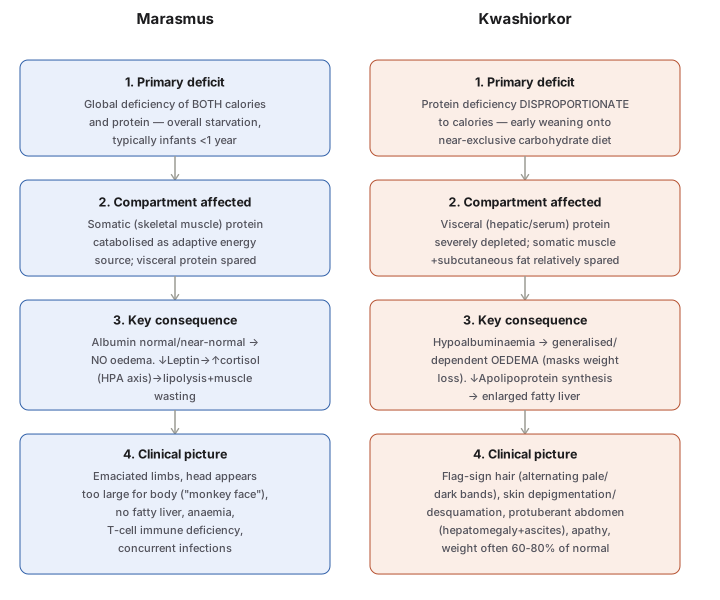
Diagram 1: Marasmus versus Kwashiorkor — Two Ends of the SAM Spectrum
Draw two parallel columns (Marasmus, Kwashiorkor), each with four stacked stages matched step-for-step: primary deficit → compartment affected → key consequence → clinical picture.
- Primary deficit — global calorie(±protein) deficiency (marasmus) vs disproportionate protein deficiency relative to calories (kwashiorkor).
- Compartment affected — somatic/muscle catabolised, visceral spared (marasmus) vs visceral depleted, somatic/fat spared (kwashiorkor).
- Key consequence — normal albumin/no oedema, leptin-cortisol-driven lipolysis (marasmus) vs hypoalbuminaemia/oedema, fatty liver from reduced apolipoprotein synthesis (kwashiorkor).
- Clinical picture — emaciated “monkey face,” no fatty liver, T-cell deficiency (marasmus) vs flag-sign hair, skin changes, potbelly, apathy, masked weight loss (kwashiorkor).
Labels required
- The compartment distinction (somatic vs visceral) must be named explicitly at step 2 in both columns — this is the single fact that generates every downstream difference, and a diagram that shows the differences without naming the shared organising principle defeats its own purpose.
- Step 3 must show oedema as the direct consequence of hypoalbuminaemia in kwashiorkor, not as an independent, coincidental feature — the causal chain (↓visceral protein → ↓albumin → ↓oncotic pressure → oedema) is what is actually being tested.
- The “weight loss is masked by oedema” point (kwashiorkor, step 3/4) must be explicit, since it is the detail that makes kwashiorkor a genuine bedside diagnostic trap.
Errors commonly made
- Reversing which form has oedema — a surprisingly common slip given both names are unfamiliar; anchoring it to “kwashiorkor = ↓visceral protein = ↓albumin = oedema” prevents the reversal.
- Assuming marasmus is simply “a milder form” of kwashiorkor rather than a distinct compartment-selective process — the two are different mechanisms sitting at two ends of a spectrum, not different severities of the same mechanism.
- Omitting that both forms share immune deficiency and vitamin deficiency — treating the differentiating features as the entire clinical picture rather than recognising a large shared core on top of which the compartment-specific differences sit.
My Sticky Notes
Personal revision notes, mnemonics and reminders.
