
Patau Syndrome
Definition
Trisomy 13. Extra copy of chromosome 13. Incidence ~1 in 15,000 births. Rarer than Down syndrome and Edwards syndrome.
Cytogenetic types (same pattern as Down syndrome)
- Standard trisomy — karyotype 47,+13. From meiotic nondisjunction. Most cases.
- Translocation type — karyotype 46,+13,der(13;14)(q10;q10). Extra chromosome 13 fused to chromosome 14 (Robertsonian translocation).
- Mosaic type — karyotype 46,XX/47,XX,+13. From nondisjunction after fertilisation. Milder phenotype.
Same 3-way split as Down syndrome and Edwards syndrome. Translocation type again carries a real recurrence risk (parent may carry balanced translocation) — unlike standard trisomy.
Clinical features
Microcephaly with severe intellectual disability · microphthalmia · cleft lip and palate · polydactyly · cardiac defects · umbilical hernia · rocker-bottom feet · renal defects.
Clinical relevance
Same standard/translocation/mosaic logic as Down syndrome applies here too — translocation-type Patau means check parents’ karyotype for a balanced translocation, same as translocation Down syndrome. No need to learn this separately for each trisomy.
Definition
Patau syndrome (trisomy 13) is caused by an extra copy of chromosome 13, with an incidence of approximately 1 in 15,000 live births — making it rarer than both Down syndrome (trisomy 21) and Edwards syndrome (trisomy 18). It shares its underlying cytogenetic mechanisms with the other autosomal trisomies.
Cytogenetic Types
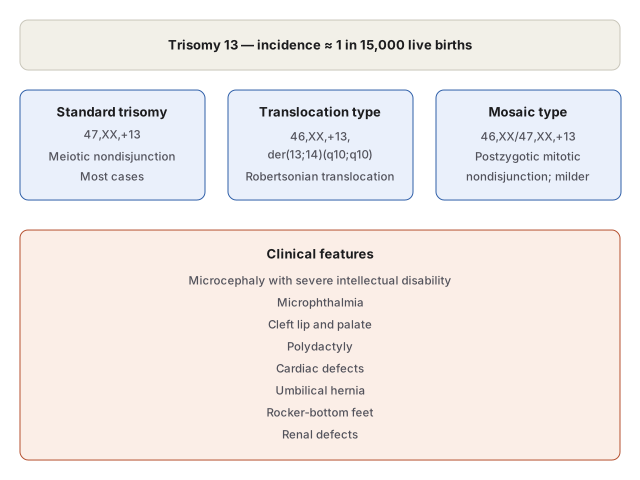
- Standard trisomy (karyotype 47,+13) — from meiotic nondisjunction; the majority of cases.
- Translocation type (karyotype 46,+13,der(13;14)(q10;q10)) — the extra chromosome-13 material is fused via Robertsonian translocation to chromosome 14.
- Mosaic type (karyotype 46,XX/47,XX,+13) — from postzygotic mitotic nondisjunction, producing a mixture of normal and trisomic cell lines and a correspondingly milder phenotype.
This three-way classification — standard/translocation/mosaic — is the same mechanistic framework that applies to Down syndrome (trisomy 21) and Edwards syndrome (trisomy 18); the translocation form again carries a heritable recurrence risk distinct from the sporadic standard form.
Clinical Features
- Microcephaly with severe intellectual disability.
- Microphthalmia (abnormally small eyes).
- Cleft lip and palate.
- Polydactyly (extra digits).
- Cardiac defects.
- Umbilical hernia.
- Rocker-bottom feet.
- Renal defects.
Clinical Relevance
Recognising the shared standard/translocation/mosaic framework across the autosomal trisomies means the recurrence-risk logic learned for Down syndrome transfers directly here — a translocation-type Patau syndrome likewise implies a parent may carry a balanced Robertsonian translocation, with genetic counselling and parental karyotyping indicated in exactly the same way as for translocation Down syndrome, rather than this being a separate fact to memorise for each trisomy individually.
Diagram 1: Cytogenetic Types and Clinical Features
Draw three parallel karyotype boxes (standard, translocation, mosaic) above a single shared clinical-features box.
- Standard trisomy — 47,+13, meiotic nondisjunction.
- Translocation type — 46,+13,der(13;14)(q10;q10), Robertsonian translocation.
- Mosaic type — 46,XX/47,XX,+13, postzygotic mitotic nondisjunction, milder.
- Shared features box — microcephaly/intellectual disability, microphthalmia, cleft lip/palate, polydactyly, cardiac defects, umbilical hernia, rocker-bottom feet, renal defects.
Labels required
- Each karyotype notation must be written out exactly as shown — the der(13;14)(q10;q10) notation specifically is a common source of transcription errors and worth deliberate attention.
- Polydactyly and microphthalmia should be flagged as the two features most useful for distinguishing Patau syndrome from Edwards syndrome at a glance, since the two trisomies share several overlapping features (cardiac defects, rocker-bottom feet, microcephaly).
Errors commonly made
- Confusing Patau syndrome’s features with Edwards syndrome’s — both share rocker-bottom feet and cardiac defects, so the distinguishing features (polydactyly and cleft lip/palate for Patau; clenched overlapping fingers for Edwards) must be actively memorised rather than assumed interchangeable.
- Treating the translocation type as equally low-recurrence-risk as the standard type — it is not; it carries the same elevated familial recurrence risk logic established for translocation Down syndrome.
My Sticky Notes
Personal revision notes, mnemonics and reminders.
