
Paraneoplastic Syndromes
Definition
Symptom complex in cancer patient NOT explained by local invasion/metastasis/expected hormone from tissue of origin. 10-15% advanced cancer. May be earliest sign of occult cancer. Most common overall: hypercalcaemia, Cushing’s, non-bacterial thrombotic endocarditis. Most frequent culprits: lung, breast, haematologic malignancies.
Endocrine (ectopic hormone secretion — shared mechanism)
- Hypercalcaemia — PTHrP (+TGF-α, active vit D) — SCC lung, kidney, breast, ATLL
- Cushing’s — ACTH/ACTH-like — small cell lung Ca (classic), pancreas, neural tumours
- SIADH — ADH/atrial natriuretic factor — small cell lung Ca, prostate, intracranial tumour
- Hypoglycaemia — Insulin/insulin-like — islet cell tumour, mesothelioma, fibrosarcoma
- Carcinoid syndrome — serotonin+bradykinin — bronchial carcinoid, pancreas/stomach Ca
- Polycythaemia — erythropoietin — kidney, liver (HCC), cerebellar haemangioma
Neuromuscular (immunologic)
- Myasthenia gravis — thymoma
- Other neuromuscular d/o (Lambert-Eaton etc) — small cell lung, breast Ca, teratoma
Osseous/joint/soft tissue
- Hypertrophic osteoarthropathy + finger clubbing — bronchogenic Ca; mechanism unknown
Haematologic/vascular
- Trousseau’s phenomenon (migratory thrombophlebitis) — pancreas/lung/GIT Ca — mechanism: tumour mucins directly activate clotting (specific, ≠ generic hypercoagulability)
- Non-bacterial thrombotic endocarditis — advanced cancers — hypercoagulability
- DIC — AML, adenocarcinoma — chronic clotting activation
- Red cell aplasia/anaemia — thymoma — immunologic
GI/renal
- Malabsorption — small bowel lymphoma — hypoalbuminaemia
- Nephrotic syndrome — advanced cancers — renal vein thrombosis / systemic amyloidosis / immune complex deposition
Cutaneous (mostly immunologic/growth factor)
- Acanthosis nigricans — stomach, large bowel, lung, uterus — EGF/growth factor secretion
- Dermatomyositis — bronchogenic, breast Ca — immunologic
- Seborrhoeic dermatitis — bowel Ca — immunologic
- Exfoliative dermatitis — lymphoma — immunologic
Amyloidosis
- Primary (AL) — multiple myeloma — monoclonal light chain deposition
Clinical relevance
New hypercalcaemia/Cushing’s/migratory thrombophlebitis in adult → search for occult cancer (esp lung/pancreas). PTHrP-hypercalcaemia ≠ bone-met hypercalcaemia (can occur without skeletal mets — treat the humoral mechanism). Trousseau’s = classic pancreatic Ca vignette (mucin-driven, distinct mechanism). Syndrome resolving with Tx / recurring with relapse = same logic as tumour marker monitoring.
Definition
Paraneoplastic syndromes (PNS) are symptom complexes occurring in cancer patients that cannot be explained by direct local invasion, distant metastatic spread, or the usual hormone elaboration expected from the tumour’s tissue of origin. They occur in 10–15% of patients with advanced cancer; rarely, a paraneoplastic syndrome may be the earliest manifestation of an otherwise occult malignancy.
Clinical recognition matters for three reasons:
- It may reveal an occult, otherwise undetected cancer.
- The syndrome itself may cause significant morbidity or be independently lethal.
- It may mimic metastatic disease, confounding staging and treatment decisions.
The most common paraneoplastic syndromes overall are hypercalcaemia, Cushing’s syndrome, and non-bacterial thrombotic endocarditis; the neoplasms most frequently responsible across the various syndromes are lung and breast cancers and haematologic malignancies.
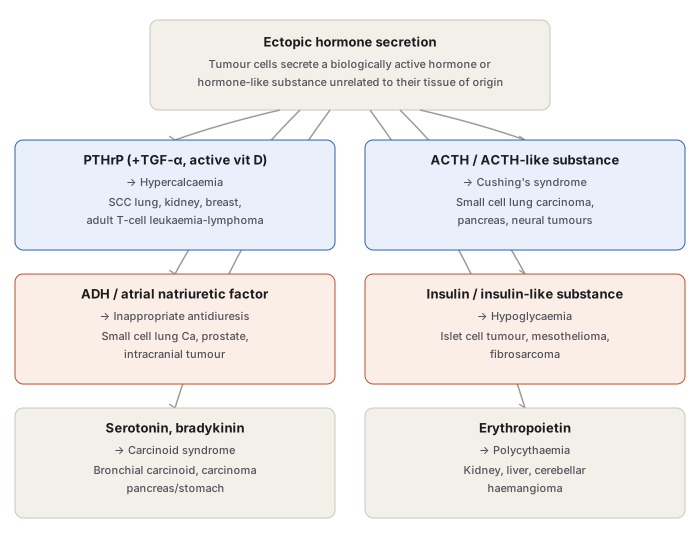
Endocrine Syndromes (Ectopic Hormone Secretion)
The single shared mechanism across this category is ectopic secretion of a biologically active hormone or hormone-like substance by a tumour unrelated in origin to any endocrine tissue:
- Hypercalcaemia — most often multifactorial, but the dominant paraneoplastic mechanism is parathyroid hormone-related protein (PTHrP) secretion; TGF-α and the active form of vitamin D also contribute. Underlying tumours: squamous cell carcinoma of lung, kidney, breast, adult T-cell leukaemia-lymphoma.
- Cushing’s syndrome — ectopic ACTH or ACTH-like polypeptide, classically from small cell carcinoma of lung; also pancreatic and neural tumours.
- Inappropriate antidiuresis (SIADH) — ectopic ADH or atrial natriuretic factor, from small cell lung carcinoma, prostate carcinoma, or intracranial tumours.
- Hypoglycaemia — insulin or insulin-like substance, from islet cell tumours of the pancreas, mesothelioma, or fibrosarcoma.
- Carcinoid syndrome — serotonin and bradykinin, from bronchial carcinoid tumour, or carcinoma of pancreas/stomach.
- Polycythaemia — ectopic erythropoietin, from renal cell carcinoma, hepatocellular carcinoma, or cerebellar haemangioma.
Neuromuscular Syndromes
Immunologically mediated (cross-reactive antibody/immune response against tumour antigens that also targets neuromuscular tissue):
- Myasthenia gravis — associated with thymoma.
- Other neuromuscular disorders (e.g. Lambert-Eaton myasthenic syndrome, peripheral neuropathies) — associated with small cell lung carcinoma, breast carcinoma, teratoma.
Osseous, Articular and Soft-Tissue Syndromes
- Hypertrophic osteoarthropathy and clubbing of the fingers — classically associated with bronchogenic carcinoma; mechanism not well established.
Haematologic/Vascular Syndromes
- Thrombophlebitis (Trousseau’s phenomenon) — migratory venous thrombosis associated with pancreatic, lung, and gastrointestinal carcinoma; mechanism is tumour-derived mucin products that directly activate the clotting cascade, superimposed on the general hypercoagulable state of malignancy.
- Non-bacterial thrombotic endocarditis — sterile fibrin-platelet vegetations from tumour-associated hypercoagulability, seen with advanced cancers of any type.
- Disseminated intravascular coagulation — associated with acute myeloid leukaemia and adenocarcinomas, via chronic low-grade activation of the clotting cascade by tumour procoagulant products.
- Red cell aplasia/anaemia — associated with thymoma; immunologically mediated.
Gastrointestinal and Renal Syndromes
- Malabsorption — small bowel lymphoma, via tumour-associated hypoalbuminaemia.
- Nephrotic syndrome — a range of advanced cancers, via renal vein thrombosis, systemic amyloidosis, or tumour-antigen-driven immune complex deposition in the glomerulus.
Cutaneous Syndromes
Predominantly immunologically mediated, or driven by tumour-secreted growth factors:
- Acanthosis nigricans — gastric carcinoma, large bowel, lung, uterine carcinoma; linked to tumour secretion of epidermal growth factor or related growth factors.
- Dermatomyositis — bronchogenic and breast carcinoma; immunologic.
- Seborrhoeic dermatitis — bowel carcinoma; immunologic.
- Exfoliative dermatitis — lymphoma; immunologic.
Amyloidosis
- Primary (AL-type) amyloidosis — associated with multiple myeloma, from monoclonal light-chain deposition.
Clinical Relevance
- Recognising a paraneoplastic syndrome as the presenting feature of an occult cancer is a genuine diagnostic shortcut — new-onset hypercalcaemia, Cushing’s features, or unexplained migratory thrombophlebitis in an adult should always prompt a search for an underlying malignancy, particularly lung.
- The distinction between hypercalcaemia caused by bone metastasis (a local/direct effect) and hypercalcaemia caused by PTHrP secretion (a true paraneoplastic effect) matters clinically, since the paraneoplastic form can occur without any skeletal metastasis at all, and treating it requires targeting the humoral mechanism, not just the tumour burden.
- Trousseau’s phenomenon (migratory thrombophlebitis) preceding a diagnosis of pancreatic carcinoma is a classic clinical vignette precisely because the mechanism (tumour mucin activating clotting) is distinct from ordinary malignancy-associated hypercoagulability, and its recognition can lead to earlier cancer diagnosis.
- Successful tumour treatment typically resolves the paraneoplastic syndrome, and a syndrome’s reappearance — much like a rising tumour marker — can be an early signal of tumour recurrence.
Diagram 1: Ectopic Hormone Secretion as the Shared Mechanism of the Endocrine Paraneoplastic Syndromes
Draw one top box (the shared mechanism: ectopic secretion of a biologically active hormone/hormone-like substance) fanning out to six independent branch boxes, arranged as a 2-column × 3-row grid. The six branches are examples of the same mechanism, not sequential steps — no branch connects to any other branch.
- PTHrP (+TGF-α, active vitamin D) → hypercalcaemia — SCC lung, kidney, breast, ATLL.
- ACTH/ACTH-like → Cushing’s syndrome — small cell lung Ca, pancreas, neural tumours.
- ADH/atrial natriuretic factor → inappropriate antidiuresis — small cell lung Ca, prostate, intracranial tumour.
- Insulin/insulin-like substance → hypoglycaemia — islet cell tumour, mesothelioma, fibrosarcoma.
- Serotonin + bradykinin → carcinoid syndrome — bronchial carcinoid, pancreas/stomach Ca.
- Erythropoietin → polycythaemia — kidney, liver, cerebellar haemangioma.
Labels required
- Each branch must carry both the secreted substance AND the resulting clinical syndrome — a branch naming only the hormone or only the syndrome loses half the testable pairing.
- The underlying tumour list per branch should include at least the single most classic association (small cell lung Ca for both Cushing’s and SIADH is the most frequently tested pairing and must not be dropped).
Errors commonly made
- Confusing SIADH and Cushing’s syndrome underlying tumour — both are classically small cell lung carcinoma, which is precisely why they are easy to mix up; the diagram should make clear these are two distinct ectopic products (ADH vs ACTH) from the same tumour type, not two names for one syndrome.
- Attributing all cancer-associated hypercalcaemia to this mechanism — PTHrP-mediated hypercalcaemia is the paraneoplastic (humoral) form specifically; hypercalcaemia from direct bone metastasis is a separate, non-paraneoplastic mechanism and should not be folded into this diagram.
- Treating the six branches as steps in one pathway rather than six independent, parallel examples of the same underlying principle.
My Sticky Notes
Personal revision notes, mnemonics and reminders.
