
Necroptosis
Definition
Regulated cell death with features of both necrosis and apoptosis. Programmed like apoptosis (specific signalling pathway), but ends in membrane rupture and inflammation like necrosis. Usually TNF-triggered, typically when caspase-8-dependent apoptosis is blocked/unavailable.
Mechanism
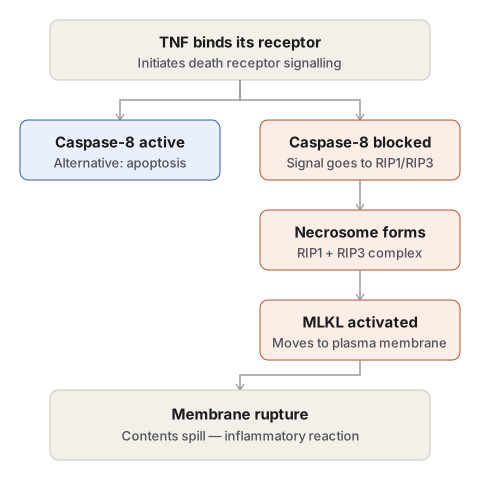
TNF binds its receptor → normally would drive caspase-8 (extrinsic apoptosis) → if caspase-8 blocked, signal redirects through RIP1 + RIP3 → forms the necrosome → activates MLKL → MLKL disrupts plasma membrane (pores) → necrosis-like rupture, but molecularly programmed, not accidental → contents spill → inflammation.
Comparison
| Necroptosis | Apoptosis | Necrosis | |
|---|---|---|---|
| Trigger | TNF, caspase-8 blocked | Regulated signal | Overwhelming injury |
| Mediators | RIP1, RIP3, MLKL | Caspases | Lysosomal enzymes |
| Membrane | Lost | Preserved till phagocytosed | Lost early |
| Inflammation | Present | Absent | Present |
| Regulated? | Yes | Yes | No |
Related pathways
Pyroptosis — inflammasome activation → IL-1 release → inflammation/fever. Ferroptosis — iron-dependent regulated cell death.
Clinical relevance
Explains why blocking apoptosis alone doesn’t guarantee cell survival — necroptosis is a backup death pathway that still causes inflammation. TNF-driven, so relevant wherever TNF signalling dominates; a distinct therapeutic target from anti-apoptotic/anti-inflammatory strategies. Necrosis on a slide isn’t automatically “accidental” — some is molecularly programmed (necroptosis, pyroptosis, ferroptosis) despite looking identical to ordinary necrosis under the microscope.
Definition
Necroptosis is a regulated form of cell death that shares features of both necrosis and apoptosis, a hybrid character reflected directly in its name. Like apoptosis, it is triggered by a specific, genetically programmed signalling pathway rather than by overwhelming, unregulated injury. Like necrosis, it culminates in loss of plasma membrane integrity, spillage of cell contents, and a resulting inflammatory reaction — the outcome that ordinary apoptosis is specifically designed to avoid. Necroptosis is most often triggered by the cytokine tumour necrosis factor (TNF), typically in circumstances where the conventional caspase-8-dependent apoptotic pathway is blocked or unavailable.
Mechanism
- Signalling begins with TNF engaging its receptor on the cell surface, the same initiating event that, under normal circumstances, would drive the extrinsic (death receptor) pathway of apoptosis through caspase-8.
- When caspase-8 activity is inhibited or insufficient, signalling is redirected through the receptor-interacting protein kinases RIP1 and RIP3, which assemble into a complex known as the necrosome.
- The necrosome activates the effector protein MLKL, which translocates to and disrupts the plasma membrane, producing pores.
- This membrane disruption produces necrosis-like rupture and release of cell contents — but because the entire sequence is driven by a specific, regulated kinase cascade rather than by direct, overwhelming cell injury, the process is executed rather than accidental.
- Because contents spill into the surrounding tissue, necroptosis provokes an inflammatory reaction, in contrast to the immunologically silent clearance of apoptotic cells.
Necroptosis Compared with Apoptosis and Necrosis
| Feature | Necroptosis | Apoptosis | Necrosis |
|---|---|---|---|
| Trigger | Regulated signal (TNF), typically when caspase-8 is blocked | Regulated physiologic or pathologic signal | Overwhelming injurious agents |
| Key mediators | RIP1, RIP3, MLKL | Caspases | Lysosomal hydrolases |
| Membrane integrity | Lost | Preserved until phagocytosed | Lost early |
| Inflammatory reaction | Present | Absent | Present |
| Regulation | Programmed | Programmed | Unregulated |
Related Programmed Necrotic Pathways
Necroptosis is one of several named pathways of regulated cell death recognised alongside the two classical mechanisms, each triggered by a distinct stimulus but converging on a similarly uncontrolled, inflammatory outcome.
- Pyroptosis is triggered by activation of inflammasomes and results in release of the cytokine interleukin-1, producing inflammation and fever.
- Ferroptosis is a form of regulated cell death dependent on intracellular iron levels.
Clinical Relevance
- Necroptosis provides a molecular explanation for why blocking apoptosis alone does not necessarily protect a cell from dying — a cell denied the caspase-8 route to apoptosis can still die, and can still provoke inflammation, through this alternative regulated pathway.
- Because necroptosis is TNF-driven and produces genuine tissue inflammation, it is of particular interest in conditions where TNF signalling is prominent, and it represents a potential therapeutic target distinct from classical anti-apoptotic or anti-inflammatory strategies.
- Recognising necroptosis, pyroptosis, and ferroptosis as a group underscores that “necrosis” on a histology slide no longer implies a single, purely accidental process — some necrotic-appearing cell death is in fact tightly regulated at the molecular level, even though it looks identical to unregulated necrosis under the microscope.
Diagram 1: Necroptosis Signalling Pathway
Draw a short vertical flowchart from a cell membrane receptor down to a ruptured cell membrane.
- TNF binding to its receptor on the cell surface (draw the receptor as a simple Y-shaped structure spanning the membrane, with a small ligand bound at the top).
- A branch point showing two possible routes: one labelled “caspase-8 active” leading sideways to a small box marked “apoptosis (alternative outcome)”; the main route continuing downward labelled “caspase-8 blocked or unavailable.”
- RIP1 and RIP3 shown joining together as a complex, explicitly labelled “necrosome.”
- An arrow from the necrosome to MLKL, shown as a protein translocating to the plasma membrane.
- The plasma membrane shown with visible pores where MLKL has inserted, and cell contents leaking outward, with small inflammatory cells drawn nearby responding to the spill.
Labels required
- RIP1, RIP3, and MLKL must each be individually named at the step where they act, not grouped into a single “signalling proteins” box.
- The branch point must explicitly show that caspase-8 activity is what determines whether the cell goes to apoptosis or necroptosis — this is the specific decision point the diagram exists to illustrate.
- The final step must show both membrane rupture and the resulting inflammatory response, tying necroptosis to necrosis-like consequences.
Errors commonly made
- Omitting the branch point with caspase-8, which is what actually explains why necroptosis is the pathway taken in a given cell rather than apoptosis.
- Naming only “the necrosome” without identifying RIP1 and RIP3 as its components.
- Drawing the outcome as inflammation-free, which contradicts the defining feature that separates necroptosis from apoptosis.
Diagram 2: Necroptosis, Apoptosis, and Necrosis Positioned Together
Draw a simple triangular diagram with “Necrosis” at one corner, “Apoptosis” at another, and “Necroptosis” at a third, positioned between the other two.
- Draw a short connecting line between Necrosis and Necroptosis labelled “membrane rupture, inflammation” — the shared feature.
- Draw a short connecting line between Apoptosis and Necroptosis labelled “regulated, programmed signalling” — the other shared feature.
- Draw a line between Necrosis and Apoptosis labelled “no shared features — opposite ends” to make clear that necroptosis, not necrosis, is what bridges the two classical categories.
Labels required
- Both connecting labels (to necrosis, to apoptosis) must state the specific shared feature, not just “similar to.”
Errors commonly made
- Drawing necroptosis as identical to necrosis rather than sharing specific, named features with each of the two classical categories — the point of this diagram is the hybrid nature, not a simple equivalence.
My Sticky Notes
Personal revision notes, mnemonics and reminders.
