
Immune Thrombocytopenic Purpura
Overview
ITP = thrombocytopenia from anti-platelet antibodies, shortened platelet survival. Two forms — acute and chronic — different enough to be near-separate entities.
Acute ITP
- Post-viral, mainly children
- Mechanism: immune complexes (viral Ag-Ab) stick to platelet surface → platelets destroyed as bystanders during complex clearance
- Self-limited, weeks to 6 months
- ~90% spontaneous recovery
Chronic ITP
- Adults, mainly women 20-40yr
- Mechanism: antiplatelet IgG against platelet GpIIb-IIIa/GpIb-IX → splenic macrophage destruction (like warm AIHA)
- Persistent/relapsing; <10% spontaneous recovery
Clinical features (both)
Petechiae, bruising, mucosal bleeding (epistaxis, gum bleeding, menorrhagia). Chronic: splenomegaly/hepatomegaly possible. Both: NO lymphadenopathy (helps rule out lymphoproliferative cause).
Lab findings
- Platelet count 10,000-50,000/µL
- Smear: large platelets
- Marrow: increased non-lobulated megakaryocytes (compensating, not failing)
- Anti-platelet IgG demonstrable
- Platelet survival <1hr (normal 7-10 days)
Treatment
Acute: supportive (high spontaneous recovery). Chronic: corticosteroids, immunosuppressants, splenectomy for refractory cases.
Clinical relevance
Acute vs chronic isn’t just duration — different mechanism (bystander immune complexes vs true autoantibody), which is why age group, course, and treatment all differ. Increased non-lobulated megakaryocytes = marrow compensating for peripheral loss, not failing — confirms this is a destruction disorder, not a production disorder, which changes the whole workup. No lymphadenopathy despite organomegaly in chronic ITP helps rule out lymphoproliferative disease.
Overview
Immune (idiopathic) thrombocytopenic purpura (ITP) is thrombocytopenia caused by anti-platelet antibodies shortening platelet survival. It presents in two clinically distinct forms — acute and chronic — that differ enough in age group, mechanism, course, and treatment response to be considered almost separate entities sharing a common antibody-mediated destructive process.
Acute ITP
- Typically follows a viral infection, most often in children.
- Mechanism: immune complexes (viral antigen–antibody) adsorb onto the platelet surface, and platelets are then destroyed as “innocent bystanders” during clearance of these complexes — rather than the antibody being directed against a platelet antigen itself.
- Course: self-limited, typically resolving within weeks to 6 months.
- Spontaneous recovery in roughly 90% of cases.
Chronic ITP
- Occurs mainly in adults, with a striking predominance in women aged 20–40 years.
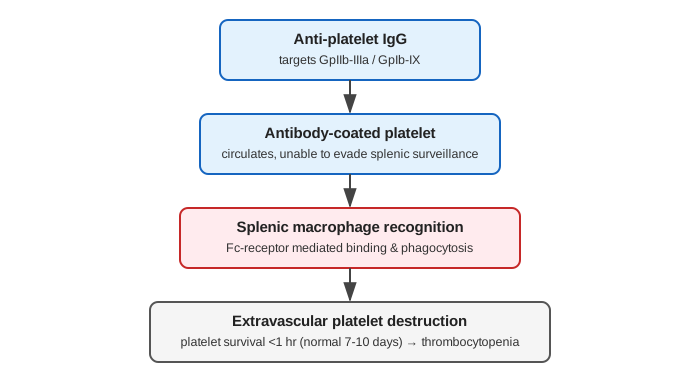
- Mechanism: antiplatelet IgG autoantibodies directed against specific platelet membrane glycoproteins, chiefly GpIIb-IIIa and GpIb-IX. Antibody-coated platelets are recognised and destroyed by splenic macrophages (splenic destruction), analogous to the extravascular haemolysis mechanism in warm-antibody autoimmune haemolytic anaemia.
- Course: persistent, relapsing; spontaneous recovery in under 10%.
Clinical Features (Both Forms)
- Petechiae and easy bruising (ecchymoses).
- Mucosal bleeding — epistaxis, gum bleeding, menorrhagia.
- Splenomegaly and hepatomegaly may be present in chronic ITP (from the sustained work of platelet clearance); lymphadenopathy is absent in both forms — a feature that helps exclude a lymphoproliferative cause for the thrombocytopenia.
Laboratory Findings
- Platelet count: 10,000–50,000/µL.
- Peripheral smear: large platelets (megathrombocytes), reflecting increased marrow output in response to peripheral destruction.
- Bone marrow: increased numbers of non-lobulated (immature-appearing) megakaryocytes — the marrow is compensating for peripheral platelet loss, not failing to produce platelets.
- Anti-platelet IgG: demonstrable on the platelet surface or in serum.
- Platelet survival: markedly reduced, under 1 hour (normal 7–10 days).
Treatment
- Acute ITP: largely supportive, given the high rate of spontaneous recovery.
- Chronic ITP: corticosteroids, immunosuppressants, and splenectomy (removing the principal site of antibody-mediated platelet destruction) for refractory cases.
Clinical Relevance
- The acute-versus-chronic distinction is not just a matter of duration — it reflects two different immunological mechanisms (bystander immune-complex adsorption in acute ITP versus a true autoantibody against platelet glycoproteins in chronic ITP), which is why their age distribution, natural history, and treatment approach differ so much.
- Increased, non-lobulated megakaryocytes on marrow examination is the finding that correctly identifies ITP as a peripheral destruction disorder rather than a marrow production failure — a distinction that changes the entire differential and management approach for thrombocytopenia.
- The absence of lymphadenopathy in ITP, despite the presence of splenomegaly/hepatomegaly in the chronic form, is a genuinely useful discriminator against lymphoproliferative disorders that can also present with thrombocytopenia and organomegaly.
Diagram 1: Chronic ITP — Splenic Destruction Mechanism
Draw a single vertical chain of four boxes, top to bottom.
- Anti-platelet IgG — targets GpIIb-IIIa/GpIb-IX.
- Antibody-coated platelet — circulates, marked for clearance.
- Splenic macrophage recognition — Fc-receptor mediated binding and phagocytosis.
- Extravascular platelet destruction — platelet survival <1hr (normal 7-10 days), thrombocytopenia.
Labels required
- Name the specific glycoprotein targets (GpIIb-IIIa, GpIb-IX) rather than a generic “platelet antigen” — these are the actual epitopes named in sources and distinguish this from a nonspecific process.
- The destruction site must be labelled extravascular/splenic — this is the same category of destruction as warm-antibody AIHA, worth noting as a parallel when comparing the two topics.
Errors commonly made
- Confusing this chronic-ITP mechanism (true autoantibody against a platelet antigen) with the acute-ITP mechanism (bystander destruction of platelets carrying adsorbed immune complexes) — these are genuinely different processes, not the same mechanism at two ages.
- Treating ITP as an intravascular/complement-mediated destruction process — it is extravascular, macrophage/Fc-receptor mediated, same category as warm AIHA, not cold AIHA or intravascular haemolysis mechanisms.
Short Essays (2)
Short Answers (1)
Multiple Choice Questions (1)
My Sticky Notes
Personal revision notes, mnemonics and reminders.
