
HIV Infection and AIDS
Epidemiology
Pandemic. Sub-Saharan Africa ~70%. India: Maharashtra/TN/AP (heterosexual) + Manipur (IVDU).
Organism
HIV = RNA retrovirus, cytopathic group (vs transforming HTLV-I/II). HIV-1 (worldwide) vs HIV-2 (West Africa, parts of India). Zoonotic (chimpanzee origin).
Virion: core (p24 capsid, p17 matrix, RNA×2, reverse transcriptase, integrase, protease) + lipid bilayer (host-derived) + gp120 (binding) + gp41 (fusion).
Genes: gag (core), pol (enzymes), env (envelope), tat (regulates amplification/budding/replication).
Transmission
Sexual (~75%, M-M/M-F > F-M, STD cofactors) · blood (~25%: IVDU, haemophiliacs, transfusion) · perinatal (transplacental/peripartum/breast milk) · occupational (needle-stick). NOT via casual contact. Inactivated by bleach/formaldehyde/ethanol/glutaraldehyde/heat(56°C/30min).
Pathogenesis (life cycle)
- Attachment — gp120→CD4 + coreceptor: CCR5 (R5/M-tropic, macrophages, early/transmitted) or CXCR4 (X4/T-tropic, T cells, later). CCR5-Δ32 homozygous (~1% Europeans) = resistant; heterozygous (~20%) = delayed progression. Basis of CCR5-mutant transplant “cures” + maraviroc drug.
- Fusion — gp41 fusion peptide → membrane fusion → core enters cytoplasm
- Reverse transcription — RNA→ssDNA→dsDNA (error-prone → resistance mutations)
- Integration — integrase → HIV provirus in host genome
- Replication — tat + T-cell cytokines (Th1: IL-2/IFN-γ; Th2: IL-4/5/6/10) drive it; TNF-α → CNS spread
- Latency — long incubation; host mounts CD4+/CD8+/macrophage/Ab attack, eventually overwhelmed
- CD4+ destruction — budding damages membrane → apoptosis; also necrosis of precursors, syncytial giant cells (gp120-mediated fusion)
- Dissemination — viraemia → lymphoid tissue (NOT blood) = main reservoir
- Other immune cells — macrophages/follicular DCs infected but NOT destroyed (reservoir; FDC infection → follicular hyperplasia → PGL). B/NK/CD8+ cells not infected but dysfunctional 2° to CD4 loss (↓Ig+hypergammaglobulinaemia, ↓NK cytotox, ↓ADCC, reversed CD4:CD8)
- CNS — via infected macrophages/endothelium to microglia; direct astrocyte/oligodendrocyte infection; neurons NOT infected but injured by gp120 + macrophage cytokines
Natural history (3 phases)
- Acute (3-6wk) — high viraemia, transient CD4 dip+recovery, ↑CD8, flu/mono-like illness 50-70% (resolves 2-3wk), seroconversion 3-6wk
- Chronic (up to 10yr) — ongoing lower viraemia, moderate CD4 decline despite proliferation, high CD8, latent/mild/PGL
- Crisis — ↑↑viraemia, CD4<200, full AIDS, ~2yr survival untreated. Children: rapid, 4-8yr age.
CDC classification
A (asymptomatic/acute/PGL) · B (symptomatic, impaired CMI) · C (AIDS-indicator conditions) × CD4 (1:>500, 2:200-499, 3:<200). CD4<200 = AIDS regardless of symptoms.
Organ involvement (4 mechanisms: direct viral, opportunistic infection, 2° tumour, drug toxicity)
Wasting (>10% wt loss) · PGL (>1cm, ≥2 extrainguinal sites, >3mo) · GI (diarrhoea, candidiasis) · pulmonary (PCP, TB, CMV — major death cause) · mucocutaneous (Kaposi, exanthem) · haematologic (cytopenias) · AIDS dementia complex (AIDS-defining) · gynae (cervical dysplasia/Ca) · nephropathy · hepatobiliary · cardiomyopathy · CMV retinitis · musculoskeletal · lipodystrophy.
Diagnosis
Ab: ELISA (gag/env, screen) → Western blot (confirm). Window period 2-4wk (infectious, seronegative). Direct: p24 Ag, RNA-PCR, DNA-PCR, culture. Immunity defects: ↓CD4 (staging), ↑CD8, reversed ratio, lymphopenia, hypergammaglobulinaemia, ↑β2-microglobulin, thrombocytopenia.
Clinical relevance
CCR5-Δ32 = mechanistic basis of HIV “cure” via mutant-donor transplant + maraviroc drug target. Window period → why single early Ab test insufficient, use PCR/p24 instead. CD4<200 rule → classify/treat asymptomatic patients as AIDS. Macrophage/FDC reservoir (not destroyed) → why ART can’t eradicate HIV even with undetectable viral load.
Definition and Epidemiology
Acquired immunodeficiency syndrome (AIDS) is the end-stage manifestation of infection with the human immunodeficiency virus (HIV), a disease that has been pandemic since its first description in the United States in 1981. Global burden remains dominated by Sub-Saharan Africa (around 70% of cases), with South and South-East Asia, Latin America, Eastern Europe and Central Asia following; in India, the epidemic is concentrated in Maharashtra, Tamil Nadu and Andhra Pradesh (largely heterosexual transmission) and, distinctly, in Manipur (largely intravenous drug use).
Causative Organism
HIV is an RNA retrovirus of the cytopathic group of human retroviruses (distinct from the transforming HTLV-I/II group implicated in leukaemia/lymphoma). HIV-1 is the dominant cause of AIDS worldwide; HIV-2 is largely confined to West Africa and parts of India. Both are zoonotic in origin, traced to chimpanzee reservoirs.
The 100–140 nm spherical virion has a core containing capsid protein (p24), matrix protein (p17), two strands of genomic RNA, and the enzymes reverse transcriptase, integrase and protease; the core is enclosed by a host-cell-derived lipid bilayer studded with envelope glycoproteins gp120 (receptor binding) and gp41 (membrane fusion). Three genes are diagnostically and functionally central: gag (core proteins), pol (reverse transcriptase/integrase/protease), and env (envelope glycoproteins); tat additionally regulates viral gene amplification, budding and replication.
Transmission
- Sexual transmission — the dominant route (~75% of cases); male-to-male and male-to-female transmission are more efficient than female-to-male; concurrent STDs (especially gonococcal/chlamydial infection) act as cofactors.
- Blood-borne transmission (~25%) — intravenous drug use (shared needles), hemophiliacs receiving pooled clotting factor concentrate, and transfusion recipients.
- Perinatal transmission — transplacental, or peripartum via maternal blood/amniotic fluid/breast milk.
- Occupational transmission — needle-stick injury in healthcare workers.
- HIV has been isolated from many other body fluids (saliva, tears, urine, CSF, synovial/pleural/pericardial fluid) but transmission via these alone is not established; casual non-sexual contact does not transmit HIV, and the virus is readily inactivated by standard germicides (sodium hypochlorite, formaldehyde, ethanol, glutaraldehyde) and by heat (56°C for 30 minutes).
Pathogenesis
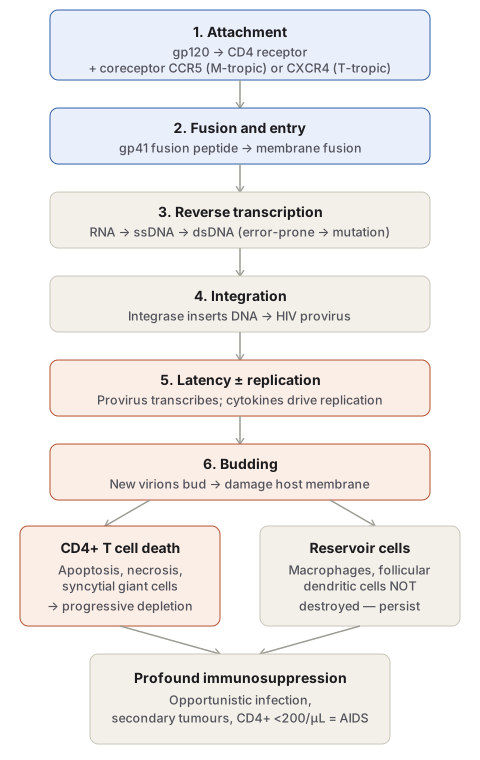
The pathogenesis is fundamentally the progressive depletion of CD4+ T (helper) cells, producing profound cell-mediated immunosuppression:
- Selective tropism. gp120 binds the CD4 receptor, explaining tropism for CD4+ T cells and other CD4-bearing cells (monocyte-macrophages, microglia, cervical epithelial cells, Langerhans cells, follicular dendritic cells). Binding to CD4 alone is not sufficient — a chemokine coreceptor is also required: CCR5 (used by M-tropic/“R5” strains, which preferentially infect monocyte-macrophages and dominate early/transmitted infection) or CXCR4 (used by T-tropic/“X4” strains, which preferentially infect T cells and dominate as infection spreads); some strains (R5X4) use either. A well-characterised CCR5 mutation (32-bp deletion) confers resistance to R5 strains when homozygous (~1% of Europeans) and delays disease progression when heterozygous (~20%) — the basis of the only reported cases of HIV cure via CCR5-mutant stem cell transplantation.
- Internalisation. gp120–CD4 binding triggers a conformational change exposing a coreceptor-binding site; coreceptor engagement then exposes the gp41 fusion peptide, which inserts into the host membrane and drives fusion, delivering the viral core into the cytoplasm.
- Uncoating and reverse transcription. Viral reverse transcriptase converts genomic RNA into single-stranded, then double-stranded, DNA (destroying the original RNA template in the process). This step is highly error-prone, producing frequent mutations — the molecular basis of HIV’s resistance to antiretroviral therapy and of immune evasion.
- Integration. Viral integrase inserts the double-stranded DNA into the host cell genome, forming the HIV provirus, which may remain transcriptionally silent for a variable period.
- Replication. Provirus-directed transcription (facilitated by tat) generates new viral RNA and proteins; cytokines from T-helper subsets (Th1: IL-2, IFN-γ; Th2: IL-4, IL-5, IL-6, IL-10) further drive viral multiplication, and TNF-α contributes to spread to other sites, notably the CNS.
- Latency and immune counterattack. Infection can remain latent in an inactive infected T cell for a prolonged period (contributing to HIV’s long incubation), while CD4+/CD8+ T cells, macrophages and antibody all mount an initial attack — ultimately overwhelmed by the virus.
- CD4+ T-cell destruction. New virions bud from the host cell membrane, damaging it and causing apoptotic death of the CD4+ T cell; additional proposed mechanisms include necrosis of CD4+ precursors and formation of multinucleated syncytial giant cells from gp120-mediated fusion of multiple CD4+ cells.
- Dissemination. Released virions infect further CD4+ cells and produce viraemia, with the virus establishing lymphoid tissue (lymph node, spleen) — rather than blood — as its principal reservoir.
- Effect on other immune cells. Monocyte-macrophages and follicular dendritic cells are infected but not destroyed, instead becoming a persistent viral reservoir (follicular dendritic cell infection also drives the follicular hyperplasia underlying persistent generalised lymphadenopathy). B cells, NK cells and CD8+ cells are not themselves infected but become dysfunctional secondary to CD4+ T-cell depletion — declining immunoglobulin synthesis with paradoxical hypergammaglobulinaemia, reduced NK cytotoxicity, and reduced ADCC despite a rising absolute CD8+ count (reversed CD4:CD8 ratio).
- CNS involvement — carried by infected monocyte-macrophages or endothelium to microglia, with direct infection of astrocytes/oligodendrocytes; neurons themselves are not infected but are injured indirectly by gp120 attachment and cytokines from infected macrophages.
Natural History
Untreated HIV infection in an immunocompetent host passes through three phases:
- Acute HIV syndrome (3–6 weeks post-exposure) — high plasma viraemia, transient marked CD4+ fall with recovery, rising CD8+ count, and in 50–70% of adults a self-limited flu-like or infectious-mononucleosis-like illness (sore throat, fever, myalgia, rash, occasionally aseptic meningitis), resolving in 2–3 weeks; seroconversion (anti-HIV antibody appearance) occurs 3–6 weeks after exposure.
- Middle chronic phase (may last up to 10 years) — ongoing but initially lower-grade viraemia, moderate CD4+ decline despite continued proliferation, persistently high CD8+ count; clinically latent or with mild constitutional symptoms and persistent generalised lymphadenopathy.
- Final crisis phase — marked rise in viraemia, CD4+ falls below 200/µL, full-blown AIDS; average survival after this point is roughly 2 years untreated. Children progress far more rapidly, reaching full-blown AIDS by 4–8 years of age.
CDC Classification
The revised CDC system classifies HIV infection by clinical category (A — asymptomatic/acute syndrome/persistent generalised lymphadenopathy; B — symptomatic conditions from impaired cell-mediated immunity, e.g. oral hairy leukoplakia, mucosal candidiasis, ITP, cervical dysplasia; C — AIDS-indicator conditions, e.g. Pneumocystis pneumonia, tuberculosis, histoplasmosis, cervical cancer, wasting) crossed with CD4+ count (1: >500/µL; 2: 200–499/µL; 3: <200/µL). Any HIV-positive individual with a CD4+ count <200/µL is classified as AIDS regardless of symptoms.
Organ Involvement
Disease manifests through four mechanisms — direct viral infection (immune system, CNS, lymph nodes), opportunistic infection, secondary malignancy, and drug toxicity (see Opportunistic Infections in Immunocompromised Hosts for the organism list). Key manifestations: wasting syndrome (involuntary weight loss >10%, multifactorial); persistent generalised lymphadenopathy (nodes >1 cm, ≥2 extrainguinal sites, >3 months, with follicular hyperplasia progressing to lymphoid depletion in advanced disease); GI disease (chronic diarrhoea, candidiasis, opportunistic enteric infection); pulmonary disease (Pneumocystis, TB, CMV — a major cause of death); mucocutaneous disease (viral exanthem at seroconversion, opportunistic and neoplastic skin lesions including Kaposi sarcoma); cytopenias from marrow suppression; HIV encephalopathy/AIDS dementia complex (an AIDS-defining condition) plus opportunistic CNS infection and CNS lymphoma; gynaecologic disease (candidal vaginitis, cervical dysplasia/carcinoma); HIV-associated nephropathy; hepatobiliary disease (viral hepatitis coinfection, granulomatous hepatitis); HIV-associated dilated cardiomyopathy; ocular disease (CMV retinitis); musculoskeletal disease (osteoporosis, septic arthritis); and endocrine/metabolic derangement (lipodystrophy).
Diagnosis
- Establishing infection: antibody screening by ELISA (against gag/env proteins), confirmed by Western blot; the window period (2–4 weeks post-exposure, infectious but seronegative) is a key limitation. Direct viral detection: p24 antigen assay, HIV RNA assay (RT-PCR, branched DNA, NASBA), proviral DNA-PCR, or culture.
- Defects in immunity: falling CD4+ count (central to both diagnosis and CDC staging), rising CD8+ count, reversed CD4:CD8 ratio, lymphopenia, polyclonal hypergammaglobulinaemia, raised β2-microglobulin, thrombocytopenia.
- Opportunistic infection/tumour detection: FNAC/exfoliative cytology or biopsy as for the corresponding primary disease.
Clinical Relevance
- The CCR5-Δ32 deletion is more than a curiosity — it is the mechanistic basis of the small number of documented HIV “cures” achieved via haematopoietic stem cell transplant from CCR5-Δ32 homozygous donors, and directly explains why CCR5-antagonist drugs (maraviroc) work only against R5-tropic virus.
- The 2–4 week ELISA window period explains why a single negative antibody test shortly after a high-risk exposure cannot exclude infection, and why direct viral detection (p24 antigen, RNA PCR) is used for early or occupational-exposure testing rather than antibody testing alone.
- The CDC’s CD4+ <200/µL criterion for AIDS regardless of symptoms is what allows a clinically asymptomatic HIV-positive patient to be correctly classified (and treated) as having AIDS, rather than waiting for an AIDS-defining illness to appear.
- Recognising that monocyte-macrophages and follicular dendritic cells are infected but not destroyed — becoming persistent viral reservoirs rather than casualties — is the pathologic basis for why HIV cannot be eradicated by antiretroviral therapy alone, even when plasma viral load becomes undetectable.
Diagram 1: HIV Life Cycle and CD4+ T-Cell Depletion
Draw a single downward column of six stages, then branch into two boxes (CD4+ T-cell death, reservoir cells), converging into a final “profound immunosuppression” box.
- Attachment — gp120 to CD4, plus a named coreceptor (CCR5 or CXCR4).
- Fusion and entry — gp41 fusion peptide.
- Reverse transcription — RNA to DNA, noting the error-prone step that generates resistance mutations.
- Integration — integrase forms the provirus.
- Latency ± replication — provirus transcription driven by cytokines.
- Budding — new virions damage the host cell membrane.
- Branch: CD4+ T-cell death (apoptosis/necrosis/syncytial giant cells) versus reservoir cells (macrophages, follicular dendritic cells — infected but not destroyed).
- Converge: profound immunosuppression — opportunistic infection, tumours, AIDS (CD4+ <200/µL).
Labels required
- The coreceptor at step 1 must be named specifically (CCR5 or CXCR4), not left as a generic “coreceptor,” since the CCR5-Δ32 resistance mutation and the maraviroc drug class both depend on this specific molecule being identified.
- The branch into CD4+ death versus reservoir cells must be shown as two separate outcomes of the same budding step, since the reservoir-cell branch is the reason antiretroviral therapy alone cannot eradicate the virus even when it fully suppresses plasma viraemia.
Errors commonly made
- Describing CD4 binding alone as sufficient for viral entry, omitting the coreceptor step — a common simplification that loses the entire CCR5/CXCR4 tropism distinction.
- Treating every infected cell type as destroyed by the virus, rather than distinguishing CD4+ T cells (destroyed) from macrophages and follicular dendritic cells (infected but preserved as a persistent reservoir).
Short Essays (1)
Multiple Choice Questions (1)
My Sticky Notes
Personal revision notes, mnemonics and reminders.
