
Disseminated Intravascular Coagulation
Definition
= Defibrination syndrome / consumption coagulopathy. Widespread intravascular coagulation + haemorrhage SIMULTANEOUSLY. Always SECONDARY to underlying disease.
Aetiology (4 groups)
- Massive tissue injury — abruptio placentae, amniotic fluid embolism, retained dead fetus, trauma, metastatic cancer, surgery
- Infections — endotoxaemia (Gram-neg/meningococcal sepsis), viral, malaria, aspergillosis
- Widespread endothelial damage — aortic aneurysm, HUS, severe burns, acute GN
- Misc — snake bite, shock, intravascular haemolysis, heat stroke
Pathogenesis (4 phases)
- Activation of coagulation — tissue factor release, widespread pathway activation
- Thrombotic phase — endothelial damage → platelet aggregation/adhesion → microvascular fibrin thrombi/emboli
- Consumption phase — platelets + clotting factors depleted
- Secondary fibrinolysis — protective counter-activation → plasmin degrades fibrin → FDPs generated
Net: simultaneous widespread thrombosis (organ ischaemia) + bleeding (factor consumption + FDP anticoagulant effect).
Clinical features
Bleeding (most common) + organ ischaemia (kidney, brain — from microthrombosis). Less common: MAHA (schistocytes from fibrin-strand RBC fragmentation), large vessel thrombosis.
Labs
↓Platelets · schistocytes/fragmented RBCs (MAHA) · ↑PT, TT, APTT (all prolonged) · ↓fibrinogen (consumed) · ↑FDPs (PRESENT — key distinguishing feature) · ↓Factor VIII, ↓Factor IX.
| Platelets | PT | APTT | TT | FDPs | |
|---|---|---|---|---|---|
| Vit K deficiency | N | ↑ | ↑ | ↑ | Absent |
| Liver disease | N | ↑ | ↑ | N | Absent |
| Haemophilia A/B/vWD | N | N | ↑ | ↑ | Absent |
| DIC | ↓ | ↑ | ↑ | ↑ | PRESENT |
Clinical relevance
FDPs (D-dimer) = THE discriminator vs vitamin K deficiency/liver disease (both prolong PT/APTT but NO ongoing fibrinolysis = no FDPs). Treatment = fix underlying trigger, not just replace blood products (supportive only). Must manage bleeding AND thrombotic ischaemia simultaneously in same patient. Recurring endpoint across topics: septic shock (endothelial toxin injury), amniotic fluid embolism (thromboplastin release), liver disease (impaired factor clearance) — same final pathway, different triggers.
Definition
Disseminated intravascular coagulation (DIC) — also called defibrination syndrome or consumption coagulopathy — is a complex thrombo-haemorrhagic disorder in which widespread intravascular coagulation and haemorrhage coexist, occurring as a secondary complication of an underlying systemic disease rather than as a primary disorder in its own right. It sits conceptually opposite to thrombophilia (see Thrombosis) on the same haemostatic spectrum — where thrombophilia is a tendency to excessive clotting, DIC is a state in which the coagulation system is so extensively and diffusely activated that it consumes its own components, paradoxically producing bleeding.
Aetiology
A very wide range of conditions can trigger DIC; the most frequent fall into four groups:
- Massive tissue injury — obstetric catastrophes (abruptio placentae, amniotic fluid embolism, retained dead foetus — see Embolism), major trauma, metastatic malignancy, extensive surgery.
- Infections — particularly endotoxaemia from Gram-negative and meningococcal septicaemia, some viral infections, malaria, aspergillosis.
- Widespread endothelial damage — aortic aneurysm, haemolytic-uraemic syndrome, severe burns, acute glomerulonephritis.
- Miscellaneous — snake bite, shock, acute intravascular haemolysis, heat stroke.
Pathogenesis
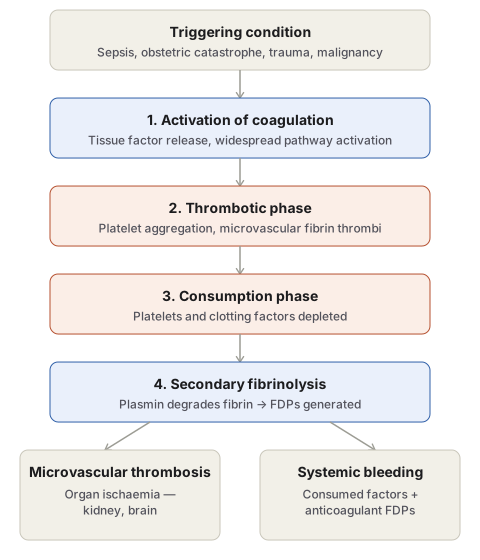
Although each underlying cause has its own specific trigger, the downstream sequence is common to all:
- Activation of coagulation — the causative condition releases tissue factor, widely activating the coagulation pathway.
- Thrombotic phase — endothelial damage from the thrombogenic stimulus causes generalised platelet aggregation and adhesion, depositing small thrombi and emboli throughout the microvasculature.
- Consumption phase — the preceding thrombotic activity consumes coagulation factors and platelets faster than they can be replaced.
- Secondary fibrinolysis — the fibrinolytic system is activated at sites of intravascular coagulation as a protective counter-mechanism, breaking down fibrin and generating circulating fibrin degradation products (FDPs).
The net effect is that a single process produces both widespread microvascular thrombosis (from the thrombotic phase) and systemic bleeding tendency (from consumption of clotting factors/platelets plus the anticoagulant effect of circulating FDPs) in the same patient simultaneously.
Clinical Features
Two principal manifestations: bleeding — the most common presentation — and organ damage from ischaemia, caused by widespread microvascular thrombosis, particularly affecting the kidney and brain. Less common manifestations include microangiopathic haemolytic anaemia (red cells fragmented by passage through fibrin-strand-obstructed microvasculature) and thrombosis of larger arteries and veins.
Laboratory Findings
- Thrombocytopenia (platelet consumption).
- Microangiopathic haemolytic anaemia on blood film — schistocytes and fragmented red cells from mechanical trauma passing through fibrin thrombi.
- Prolonged prothrombin time (PT), thrombin time (TT) and activated partial thromboplastin time (APTT) — all consumption-related.
- Reduced plasma fibrinogen — consumed in ongoing microvascular coagulation.
- Raised fibrin degradation products (FDPs) — from secondary fibrinolysis; DIC is the one major haemostatic disorder in which FDPs are actually present, distinguishing it from the other bleeding disorders below.
| Disorder | Platelets | BT | PT | APTT | TT | FDPs | Factor VIII | Factor IX |
|---|---|---|---|---|---|---|---|---|
| Vascular purpura | N | N | N | N | N | Absent | N | N |
| ITP | ↓ | ↑ | N | N | N | Absent | N | N |
| Haemophilia A | N | ↑ | N | ↑ | ↑ | Absent | ↓ | N |
| Haemophilia B | N | ↑ | N | ↑ | ↑ | Absent | N | ↓ |
| von Willebrand disease | N | ↑ | N | ↑ | ↑ | Absent | ↓ | N |
| Vitamin K deficiency | N | ↑ | ↑ | ↑ | ↑ | Absent | N | N |
| Liver disease | N | ↑ | ↑ | ↑ | N | Absent | N | N |
| DIC | ↓ | ↑ | ↑ | ↑ | ↑ | Present | ↓ | ↓ |
Clinical Relevance
- The presence of FDPs (D-dimer being the modern clinical correlate) is the single laboratory finding that most reliably separates DIC from the other causes of a prolonged PT/APTT with thrombocytopenia listed above — vitamin K deficiency and liver disease both prolong clotting times but do not generate FDPs, since there is no ongoing secondary fibrinolysis in those conditions.
- Recognising that DIC always occurs secondary to an identifiable trigger — obstetric catastrophe, sepsis, malignancy, massive trauma — means the definitive treatment is addressing the underlying cause; supportive blood product replacement alone (platelets, FFP, cryoprecipitate) treats the consequence, not the driver, and DIC will not resolve until the trigger is controlled.
- The coexistence of thrombosis and haemorrhage in the same patient is the conceptually difficult but clinically vital point of DIC — clinicians must be prepared to manage bleeding and thrombotic organ ischaemia (renal, cerebral) simultaneously in the same patient, rather than treating it as a purely haemorrhagic or purely thrombotic disorder.
- DIC is a recurring downstream complication across several topics already covered — septic shock (endothelial toxin injury, see Shock), amniotic fluid embolism (thromboplastin release, see Embolism) and liver disease (impaired clearance of activated factors) — worth recognising as the same final common pathway triggered by very different upstream mechanisms.
Diagram 1: Pathogenesis of DIC
Draw a triggering-condition box leading into a single downward column of four phases, then branching into two simultaneous consequence boxes.
- Triggering condition — name a category (sepsis, obstetric catastrophe, trauma, malignancy).
- Activation of coagulation — tissue factor release.
- Thrombotic phase — platelet aggregation, microvascular fibrin thrombi.
- Consumption phase — platelets and clotting factors depleted.
- Secondary fibrinolysis — plasmin degrades fibrin, generating FDPs.
- Branch: microvascular thrombosis (organ ischaemia — kidney, brain) and systemic bleeding (consumed factors plus the anticoagulant effect of circulating FDPs).
Labels required
- The final branch must show both consequences arising from the same process at the same time, not as alternative or sequential outcomes — this is the conceptually difficult point of DIC that the diagram exists to convey.
- FDPs must be labelled explicitly as the product of secondary fibrinolysis (phase 4), since their presence is the specific laboratory feature that distinguishes DIC from every other bleeding disorder in the comparison table.
Errors commonly made
- Presenting DIC as a purely thrombotic or purely haemorrhagic process, rather than showing that both occur together as different consequences of the same underlying cascade.
- Omitting the secondary fibrinolysis step and its FDP product, which is the single most diagnostically useful part of the whole pathway.
Short Essays (1)
Multiple Choice Questions (2)
My Sticky Notes
Personal revision notes, mnemonics and reminders.
